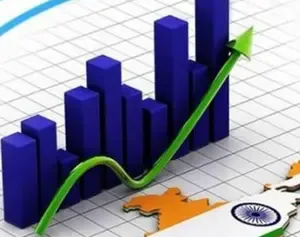
Pralhad Joshi Hails 7.7% GDP Growth for FY 2025-26

Synopsis
Union Minister Pralhad Joshi cited provisional estimates on June 5, 2026, showing India's real GDP grew 7.7% in FY 2025–26, reaching ₹323.12 lakh crore, with Q4 growth at 7.8%, driven by agriculture, industry, and services.
Key Takeaways
India's provisional real GDP growth for FY 2025–26 stands at 7.7% , according to government estimates.
The economy reached ₹323.12 lakh crore at constant prices in FY 2025–26.
Q4 FY 2025–26 recorded the year's strongest quarterly growth at 7.8% .
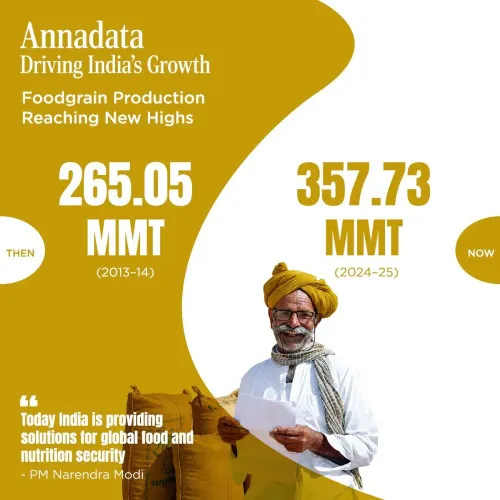
Growth was driven by record agricultural output , rising industrial activity, and resilient services.
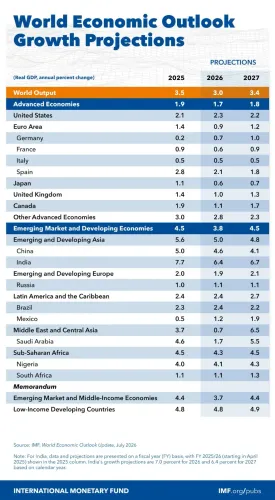
India maintains its position as one of the fastest-growing major economies in the world.
Final GDP figures from the Ministry of Statistics are expected in the coming months.
Union Consumer Affairs Minister Pralhad Joshi on Friday, June 5, 2026, cited provisional government estimates to declare that India's real GDP grew 7.7% in FY 2025–26, with the economy reaching ₹323.12 lakh crore at constant prices, attributing the performance to the leadership of Prime Minister Narendra Modi.
Context
Joshi shared the figures from a Press Information Bureau release, noting that the fourth quarter of FY 2025–26 alone recorded real GDP growth of 7.8% — the strongest quarterly print of the year. The minister described the trajectory as evidence that 'India's growth story continues to gain momentum' under the present government.
The provisional estimates place India among the fastest-growing major economies in the world, a distinction the country has held for several consecutive years. For context, India recorded 8.2% real GDP growth in FY 2023–24 as per earlier provisional estimates from the Ministry of Statistics.
Policy Backdrop
The growth figure rests on three pillars cited in the post: record agricultural output, rising industrial activity, and resilient services. These sectors have been the recurring drivers of India's post-pandemic economic recovery, with domestic demand providing an additional buffer against global headwinds.
The current government has consistently pointed to sustained GDP expansion as validation of its macroeconomic policy choices, including capital expenditure push, production-linked incentive schemes, and rural welfare programmes. Provisional GDP estimates are typically followed by revised and final figures released by the Ministry of Statistics and Programme Implementation in subsequent months.
Stakeholders and Impact
Indian farmers stand out as a key constituency in this narrative, with 'record agricultural output' cited as a lead driver — a signal that the rural economy contributed meaningfully to overall growth rather than acting as a drag. Industrial manufacturers and service-sector firms are the other primary beneficiaries of the headline number.
For ordinary consumers, sustained GDP growth of this magnitude theoretically supports employment generation, wage growth, and fiscal space for government welfare spending. However, the translation of aggregate growth into household-level gains remains a subject of ongoing policy debate.
What's Next
The provisional estimates cited by Joshi are subject to revision. The Ministry of Statistics is expected to release component-wise data and, eventually, final GDP figures in the coming months, which will provide a more granular picture of sectoral contributions and expenditure-side drivers.
With general economic sentiment shaped significantly by these headline numbers, the 7.7% provisional growth figure is likely to feature prominently in the government's policy communication through the remainder of 2026. Any downward revision in final estimates, or a slowdown in subsequent quarters, would draw equal scrutiny.
Point of View
Using an official PIB release as the anchor to reinforce the ruling party's core narrative of sustained, Modi-era growth. The 7.7% provisional figure, if it holds through revisions, would represent a slight moderation from the 8.2% recorded in FY 2023–24, a detail the post does not foreground. The emphasis on Q4's 7.8% print is a deliberate framing choice — ending the year on an accelerating note is politically more potent than the full-year average alone. Broader credibility will hinge on how component-wise data and final estimates align with the provisional headline.
NationPress
21 Oct 2026
Frequently Asked Questions
What is India's GDP growth rate for FY 2025-26?
According to provisional government estimates cited by Union Minister Pralhad Joshi on June 5, 2026, India's real GDP grew by 7.7% in FY 2025–26.
What is India's GDP in rupees for FY 2025-26?
The provisional estimates place India's economy at ₹323.12 lakh crore at constant prices for FY 2025–26.
What was India's GDP growth in Q4 FY 2025-26?
Real GDP grew by 7.8% in the fourth quarter of FY 2025–26, the strongest quarterly performance of the year, according to provisional estimates.
What sectors drove India's GDP growth in FY 2025-26?
The government cited record agricultural output, rising industrial activity, and resilient services as the three primary drivers of growth in FY 2025–26.
Are India's FY 2025-26 GDP figures final?
No. The figures cited are provisional estimates. The Ministry of Statistics is expected to release revised and final GDP data in the coming months.