Pralhad Joshi Quotes PM Modi on 50 Crore Lifted from Poverty
Synopsis
Union Minister Pralhad Joshi amplified a statement by PM Narendra Modi claiming 50 crore Indians were lifted out of poverty in 12-13 years through right policies, citing the government's welfare delivery architecture as the driver.
Key Takeaways
Union Minister Pralhad Joshi quoted PM Narendra Modi claiming 50 crore people were lifted out of poverty in 12 to 13 years .
The government credits targeted welfare programs — direct benefit transfers, food security, and infrastructure access — as the primary drivers since 2014 .
NITI Aayog's Multidimensional Poverty Index reports from 2021 onward provide the institutional data framework supporting the narrative.
The specific 500 million figure lacks a single independently attributable source and has not been verified against a standalone dataset.
Key schemes cited in the broader welfare push include PM-KISAN , Ayushman Bharat , Ujjwala Yojana , and Jan Dhan Yojana .
The next NITI Aayog MPI update will be a critical marker for assessing the verifiability of the claim.
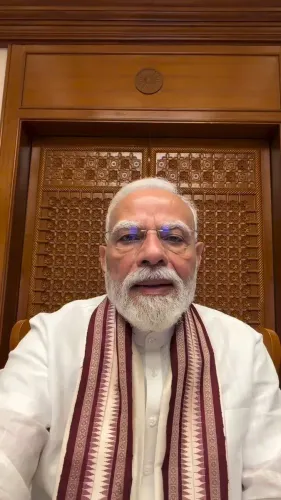
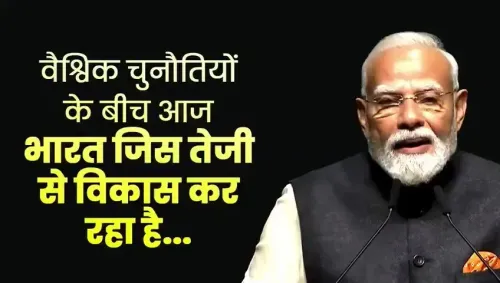
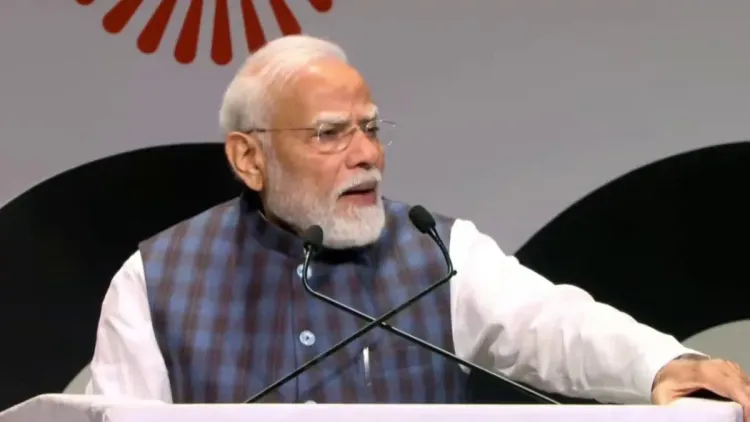
A striking claim about the scale of India's poverty reduction landed on social media on Thursday, November 19, 2026, when Union Consumer Affairs Minister Pralhad Joshi amplified a statement attributed to Prime Minister Narendra Modi — that the right policies, pursued with the right intent, pulled 50 crore people out of poverty in just 12 to 13 years.
Quoting the Prime Minister directly, Joshi posted: 'When India adopted the right policies with the right intent, 50 crore people were lifted out of poverty in just 12 to 13 years.' The figure, if borne out, would represent one of the largest poverty-reduction episodes in recorded human history — affecting more people than the entire population of the European Union.
The Policy Machinery Behind the Claim
Since 2014, the central government has anchored its welfare architecture on three pillars: direct benefit transfers that cut middlemen out of subsidy delivery, an expanded food security net, and infrastructure access — from toilets and cooking gas to bank accounts and electricity connections — reaching households that had long been left out.
NITI Aayog's Multidimensional Poverty Index reports, released from 2021 onward, have tracked declining deprivation across health, education, and living-standard indicators, lending an institutional data backbone to the government's narrative. The MPI methodology measures poverty beyond income alone — a framing that tends to show sharper gains from welfare-delivery improvements than conventional income-based measures.
A Number That Demands Scrutiny
The 50 crore figure — 500 million people — is an extraordinary claim that researchers and opposition voices have consistently pressed for granular sourcing. No single publicly attributable dataset has been independently verified to that precise number within the stated timeframe. The government draws on a combination of NITI Aayog MPI data, National Family Health Survey rounds, and direct-benefit-transfer enrolment figures to build its composite picture.
What is not disputed: India's official poverty metrics have moved significantly across multiple measurement frameworks since the mid-2010s, and programs like PM-KISAN, Pradhan Mantri Ujjwala Yojana, Ayushman Bharat, and Jan Dhan Yojana have enrolled hundreds of millions of previously excluded citizens into formal welfare systems.
Why Joshi Is Amplifying This Now
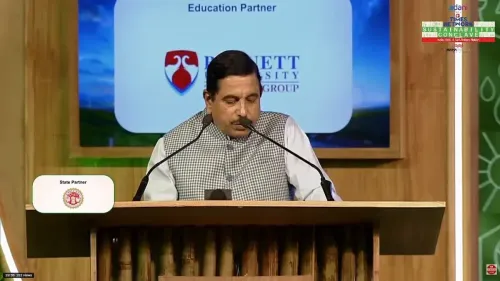
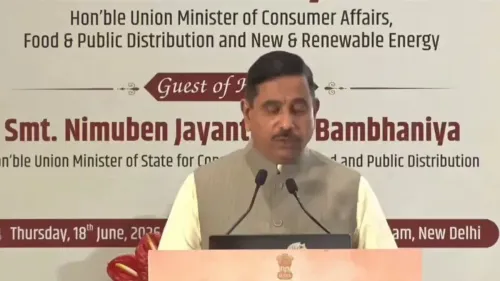
As Minister of Consumer Affairs, Food and Public Distribution, Joshi sits at the intersection of food security and welfare delivery — the very machinery the government credits for the poverty decline. His amplification of the Prime Minister's statement signals a coordinated effort to anchor the BJP's development narrative ahead of the next political cycle, with welfare outcomes replacing infrastructure optics as the headline metric.
The next NITI Aayog MPI update and any related parliamentary questions on poverty metrics will be the clearest test of whether the 50 crore claim can be pinned to a defensible, granular source — or whether it remains a powerful political headline awaiting a footnote.
Point of View
However eye-catching, will face intensifying scrutiny as opposition parties and independent researchers demand disaggregated data to match the headline number. If NITI Aayog's next MPI update corroborates the scale of the claim, it would substantially strengthen the government's pre-election narrative; if it falls short, the gap between assertion and evidence becomes a political liability. Either way, poverty measurement methodology — rarely a dinner-table topic — is about to become a frontline political battleground.
NationPress
19 Nov 2026
Frequently Asked Questions
What is the claim about 50 crore people being lifted out of poverty in India?
PM Narendra Modi has stated that 50 crore Indians — 500 million people — were lifted out of poverty in 12 to 13 years through targeted government policies including direct benefit transfers, food security programs, and welfare infrastructure expansion since 2014. The claim has not been verified against a single independently attributable dataset.
What is India's Multidimensional Poverty Index and who publishes it?
NITI Aayog publishes India's Multidimensional Poverty Index, tracking deprivation across health, education, and living standards — not just income. Reports have been released from 2021 onward and are the primary institutional basis for the government's poverty-reduction narrative.
Which government schemes are credited for India's poverty reduction?
The government points to schemes including PM-KISAN (farmer income support), Ayushman Bharat (health insurance), Pradhan Mantri Ujjwala Yojana (cooking gas), and Jan Dhan Yojana (financial inclusion) as key drivers of welfare delivery that reduced poverty metrics.
Who is Pralhad Joshi and why is he sharing this statement?
Pralhad Joshi is the Union Minister for Consumer Affairs, Food and Public Distribution, and New and Renewable Energy, and a senior BJP leader from Karnataka. As the minister overseeing food security and public distribution, he is directly involved in the welfare architecture the government credits for poverty reduction.
Is the 50 crore poverty reduction figure verified?
The specific claim of 50 crore people lifted in 12-13 years does not have a single publicly attributable standalone source that has been independently verified. The government derives its figures from a combination of NITI Aayog MPI data, national health surveys, and welfare enrolment statistics.