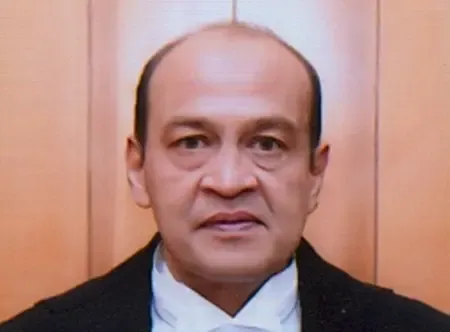
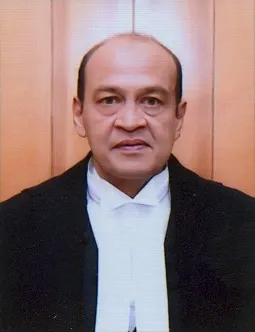
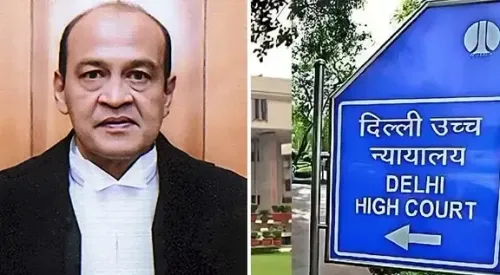
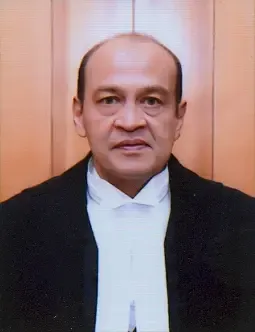
Justice Yashwant Varma Resigns from Allahabad High Court Amid Impeachment
Synopsis
In a shocking turn of events, Justice Yashwant Varma of the Allahabad High Court has resigned effective immediately, amidst serious impeachment proceedings. This decision has sparked discussions about judicial accountability and integrity.
Key Takeaways
Justice Yashwant Varma has resigned amid impeachment proceedings.
Allegations include the discovery of burnt cash at his residence.
The resignation was submitted to President Droupadi Murmu .
The Supreme Court upheld the inquiry committee's formation.
This event emphasizes the importance of judicial accountability.
New Delhi, April 10 (NationPress) Justice Yashwant Varma from the Allahabad High Court has officially submitted his resignation to President Droupadi Murmu effective immediately, marking a sudden conclusion to his term amidst ongoing impeachment discussions.
In his resignation letter, Justice Varma expressed, “I do not wish to burden your esteemed office with the reasons that led to this decision,” adding that he was resigning with “deep anguish” from his position as a Judge of the High Court of Judicature at Allahabad.
“Serving in this capacity has been a privilege,” the letter stated.
A copy of the resignation letter has also been sent to Chief Justice of India (CJI) Surya Kant.
Justice Varma has been embroiled in controversy since cash was reportedly found on March 14, 2025, in an outhouse at his official residence during his service as a judge of the Delhi High Court.
Impeachment notices, supported by 145 members from the Lok Sabha and 63 members from the Rajya Sabha, were introduced in both Houses of Parliament in July 2025.
Consequently, the Lok Sabha Speaker established a three-member investigative committee under the Judges (Inquiry) Act, 1968, to look into the allegations.
This year, the Supreme Court dismissed a plea from Justice Varma challenging the decision of the Lok Sabha Speaker to form the inquiry committee.
In delivering the verdict, a Bench of Justices Dipankar Datta and Satish Chandra Sharma stated: “We conclude that the petitioner is not entitled to any relief in this matter.”
Justice Varma previously raised concerns regarding the formation of the inquiry panel, arguing that simultaneous impeachment notices in both Houses necessitated joint consultation between the Lok Sabha Speaker and the Rajya Sabha Chairman before setting up the investigative committee.
Earlier, Justice Varma also contested the findings of a three-member internal inquiry committee established by the Supreme Court, which determined that he had “secret or active control” over the cash reportedly found at his residence.
The Supreme Court dismissed that challenge as well, affirming that the internal inquiry process was “fair and just” and did not undermine judicial independence.
Based on the inquiry report, former Chief Justice of India (CJI) Sanjiv Khanna recommended initiating removal proceedings, which led to the formation of a parliamentary inquiry committee, recently restructured following the retirement of Madras High Court Chief Justice Maninder Mohan Shrivastava.
Point of View
Justice Yashwant Varma's resignation highlights a significant moment in India's judicial history. It underscores the importance of accountability and the rule of law within the judiciary, especially amid allegations that have stirred public debate.
NationPress
21 Oct 2026
Frequently Asked Questions
Why did Justice Yashwant Varma resign?
Justice Yashwant Varma resigned amid ongoing impeachment proceedings related to allegations of misconduct.
What were the allegations against Justice Varma?
Allegations included the discovery of burnt cash at his official residence during his tenure as a judge.
What triggered the impeachment proceedings?
The impeachment proceedings were initiated by 145 Lok Sabha and 63 Rajya Sabha members due to the serious allegations.
What did the Supreme Court rule regarding Justice Varma's plea?
The Supreme Court dismissed Justice Varma's plea challenging the formation of the inquiry committee, stating he was not entitled to relief.
What is the significance of this resignation?
This resignation raises critical questions about the integrity of the judiciary and the accountability of its members.