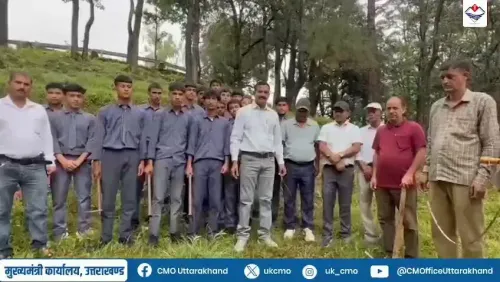
Uttarakhand CMO: Kalinga Canal Restored After Monsoon Damage

Synopsis
The Chief Minister's Office of Uttarakhand confirmed on August 11, 2026 that the Kalinga Canal in Dehradun, damaged by heavy monsoon rains, has been restored and irrigation water is now reaching paddy fields in time for the kharif harvest.
Key Takeaways
The Kalinga Canal in Dehradun district was damaged by heavy monsoon rainfall.
The Chief Minister's Office of Uttarakhand confirmed restoration of the irrigation system on August 11, 2026 .
Irrigation water is now flowing to paddy fields, securing the kharif season crop cycle.
Uttarakhand faces recurring monsoon damage to rural infrastructure due to its hilly terrain and high rainfall.
Timely restoration is critical — paddy crops require consistent water supply during the summer-to-autumn growing season.
Paddy farmers in Dehradun can breathe again. The Kalinga Canal, battered by heavy monsoon rains, has been restored to working order — and irrigation water is once again flowing into the rice fields that depend on it, the Chief Minister's Office of Uttarakhand confirmed on Tuesday, August 11, 2026.
The CMO posted in Hindi: 'देहरादून में भारी बारिश से क्षतिग्रस्त हुई कलिंगा नहर की सिंचाई व्यवस्था हुई सुचारू। धान की फसल के लिए सिंचाई का पानी खेतों में पहुंचा।' — ('The irrigation system of Kalinga Canal, damaged by heavy rains in Dehradun, has been restored. Irrigation water has reached the fields for the paddy crop.')
Why the Kalinga Canal Matters for Kharif Season
The Kalinga Canal is a key irrigation artery in Dehradun district, supplying water to agricultural fields during the kharif season — the summer-to-autumn crop cycle when paddy is the dominant crop. A disruption at this stage of the growing season, when rice plants need consistent water supply, can directly threaten yields. Restoration before the crop matures is the difference between a harvest and a loss.Monsoon Damage: A Recurring Battle for Uttarakhand
This is not an isolated incident. Uttarakhand's hilly terrain and intense monsoon rainfall make rural infrastructure — canals, roads, bridges — perennially vulnerable. Every rainy season, the state's administrative machinery races to repair irrigation assets before kharif crops reach critical growth stages. The speed of this restoration, confirmed publicly by the CMO, signals that authorities moved quickly enough to protect the paddy cycle in Dehradun. For the farmers who depend on the canal, the update means water in the field — and that is the only metric that counts.Point of View
But it reflects a broader administrative pattern in Uttarakhand: monsoon damage to irrigation infrastructure is so predictable that rapid-response repair has become a standard governance expectation. The political calculus is straightforward — kharif crop failure in a hill state translates directly into rural distress and electoral consequences. Proactive public updates also serve as accountability signals, positioning the state government as responsive during a period of recurring climate stress. The real test will be whether repeated monsoon cycles prompt longer-term investment in canal resilience rather than season-by-season patch-ups.
NationPress
25 Sept 2026
Frequently Asked Questions
What is the Kalinga Canal in Dehradun?
The Kalinga Canal is an irrigation canal in Dehradun district, Uttarakhand, that supplies water to agricultural fields, particularly for paddy cultivation during the kharif season.
Why was the Kalinga Canal damaged?
Heavy monsoon rainfall in Dehradun caused damage to the Kalinga Canal's irrigation system, temporarily disrupting water supply to paddy fields.
Has the Kalinga Canal been repaired?
Yes. The Chief Minister's Office of Uttarakhand confirmed on August 11, 2026 that the canal has been restored and irrigation water is now reaching the fields.
Which crops depend on the Kalinga Canal?
Paddy (rice) is the primary crop dependent on the canal, with the kharif season — running through the monsoon months — being the critical period for irrigation.
Is monsoon damage to canals common in Uttarakhand?
Yes. Uttarakhand's hilly terrain and intense monsoon rainfall make irrigation canals and other rural infrastructure routinely vulnerable to seasonal damage every year.