Could the India-UK FTA Revitalize Kanchipuram Silk Weavers' Businesses?
Synopsis
The Kanchipuram silk weavers face challenges but are optimistic about the India-UK Free Trade Agreement (FTA) revitalizing their businesses. With government support, they hope to seize new opportunities in silk production and exports.
Key Takeaways
Kanchipuram is a vital hub for handloom silk production.
The India-UK FTA may rejuvenate the local silk industry.
Weavers are facing challenges from power-loom sarees .
Increasing prices of gold and silver are affecting incomes.
Government action is sought to stabilize gold and silver prices .
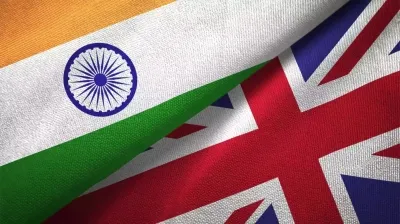
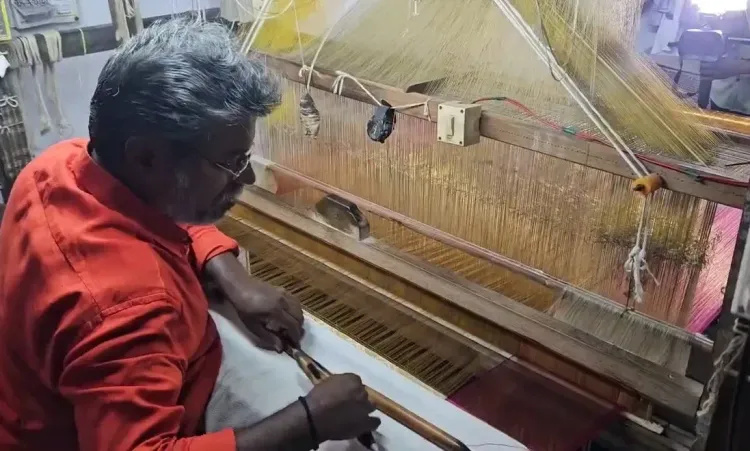
Chennai, July 30 (NationPress) Kanchipuram, a significant pilgrimage destination in Tamil Nadu, is eagerly looking forward to positive impacts stemming from the Free Trade Agreement (FTA) established between India and the United Kingdom.
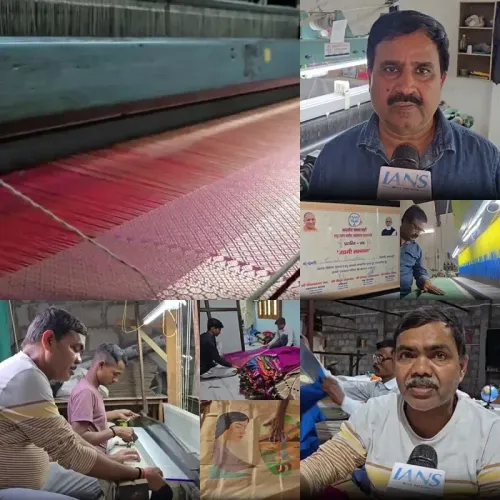
This culturally rich town, home to approximately a thousand temples, is proud of its community of over 6,000 handloom weavers primarily located in neighborhoods like Pillayar Palayam and Ayyampettai.
These artisans market their exquisite sarees to private enterprises and cooperative societies. However, the proliferation of ‘power-loom sarees’ masquerading as authentic Kanchi silk sarees has adversely affected the livelihoods of the true Kanchi silk saree weavers.
The recent spike in gold and silver prices has further compounded their difficulties, leading to reduced sales and adversely impacting their earnings. In response to these challenges, the weavers are calling for government intervention to regulate gold and silver prices, aiming to alleviate their financial strain.
Despite these hurdles, the India-UK agreement emerges as a beacon of hope, as weavers anticipate it will enhance silk production and open up more avenues for their craft. This deal has the potential to not only increase production but also enhance exports, thereby benefiting local weavers.
Mohan, a local silk saree producer, expressed optimism about this agreement, viewing it as a significant opportunity for industry growth.
In summary, the Kanchipuram silk sector needs robust support to navigate its current challenges and to seize opportunities presented by the India-UK FTA.
The FTA, formally known as the Comprehensive Economic and Trade Agreement (CETA), is projected to substantially boost jewellery exports from India, as reported by industry experts.
Importantly, the FTA was established to strengthen economic connections between both nations, aiming to enhance trade by lowering tariffs, simplifying customs procedures, and fostering collaboration across diverse sectors.
Point of View
It is crucial to highlight the resilience of Kanchipuram's silk weavers. The India-UK FTA represents a significant opportunity for economic growth, and our commitment remains to support local artisans and ensure their voices are heard in the national dialogue.
NationPress
2 Oct 2026
Frequently Asked Questions
What is the India-UK Free Trade Agreement?
The India-UK Free Trade Agreement is a comprehensive trade deal aimed at enhancing economic ties between India and the UK by reducing tariffs and promoting trade across multiple sectors.
How will the FTA benefit Kanchipuram silk weavers?
The FTA is expected to boost silk production and exports, providing new opportunities for Kanchipuram weavers and helping to revive their struggling businesses.
What challenges do Kanchipuram silk weavers currently face?
Kanchipuram silk weavers are affected by the rise of power-loom sarees, increasing gold and silver prices, and reduced sales, which have impacted their livelihoods.
How many weavers are there in Kanchipuram?
Kanchipuram is home to over 6,000 handloom weavers, primarily located in areas like Pillayar Palayam and Ayyampettai.
What is the expected impact of the FTA on jewellery exports?
Experts anticipate the FTA will significantly enhance jewellery exports from India, as it promotes trade and collaboration between the two countries.