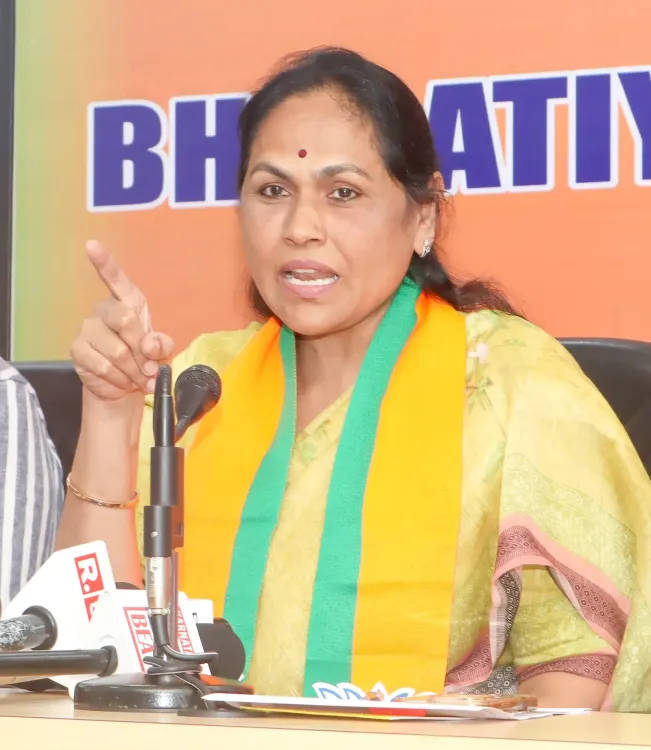
Karandlaje urges ECI to halt Karnataka SEC's 'parallel SIR' in GBA constituencies
Synopsis
Union Minister Shobha Karandlaje has written to the Chief Election Commissioner demanding a halt to what she calls a 'parallel' electoral roll revision by the Karnataka State Election Commission in Bengaluru constituencies — a move she argues is unconstitutional, confusing for voters, and in direct conflict with the ECI's own ongoing Phase III SIR process.
Key Takeaways
Union Minister Shobha Karandlaje wrote to the Chief Election Commissioner on 3 July urging intervention against the Karnataka State Election Commission (KSEC) .
She alleged the KSEC initiated a 'parallel' Special Intensive Revision (SIR) in Greater Bengaluru Authority (GBA) Assembly constituencies with independent timelines and different cut-off dates.
Karandlaje argued that revision of Assembly electoral rolls falls exclusively under the ECI's authority under Article 324 of the Constitution.
She cited a recent Supreme Court ruling in the Association for Democratic Reforms vs ECI case as backing for the ECI's exclusive mandate.
The minister sought directions to restrain the KSEC from any independent Assembly roll revision and to ensure a single uniform SIR under ECI supervision.
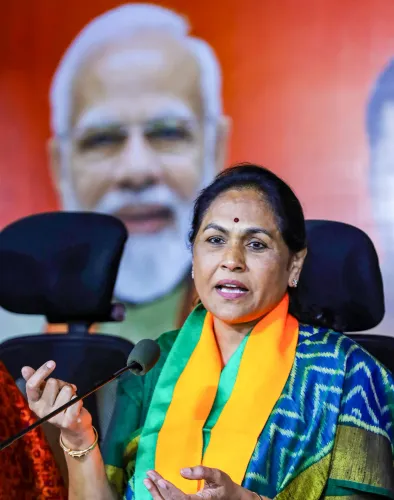
Union Minister of State Shobha Karandlaje on Friday, 3 July wrote to the Chief Election Commissioner of India (ECI), urging immediate intervention against what she described as a 'parallel' Special Intensive Revision (SIR) of electoral rolls allegedly initiated by the Karnataka State Election Commission (KSEC) in Assembly constituencies falling under the Greater Bengaluru Authority (GBA). The minister, who holds charge of Micro, Small and Medium Enterprises and Labour and Employment, contended that the KSEC's move is unconstitutional and risks undermining the integrity of the electoral roll process.
What Karandlaje Alleged
In her representation to the ECI, Karandlaje alleged that despite the poll body having already notified the schedule for Phase III of the SIR in Karnataka — with electoral rolls frozen as per the ECI's programme — the KSEC issued independent notifications for a separate revision exercise in certain GBA Assembly constituencies, complete with different timelines and cut-off dates.
She argued that this parallel process is likely to generate confusion among voters, political parties, and election officials, and could produce inconsistencies in the electoral rolls that compromise the integrity of future elections. She also flagged the risk of duplication of work and unnecessary expenditure of public resources.
The Constitutional Argument
Karandlaje grounded her objection in constitutional provisions, asserting that the preparation and revision of Assembly electoral rolls fall exclusively within the ECI's domain under Article 324 of the Constitution, read with the Representation of the People Act, 1950.
While she acknowledged that the KSEC is constituted under Articles 243K and 243ZA and is empowered to conduct elections to urban local bodies and other local authorities, she maintained that it holds no independent authority to undertake a SIR of Assembly electoral rolls. 'The preparation and revision of Assembly electoral rolls fall exclusively within the domain of the Election Commission of India,' she stated in her letter.
Supreme Court Backing Cited
The Union Minister also invoked a recent Supreme Court judgment — in the case of Association for Democratic Reforms and Others vs Election Commission of India and Others — which, she said, upheld the ECI's authority to undertake the SIR of electoral rolls and reinforced its exclusive constitutional mandate to ensure a uniform, transparent, and credible electoral roll across the country.
What Karandlaje Has Sought
In her dual representations to the ECI, Karandlaje made the following specific requests: that the poll body examine the legality of the KSEC's alleged parallel SIR process; that it issue directions ensuring only one uniform SIR of Assembly electoral rolls is conducted under its supervision; and that the KSEC be restrained from undertaking any independent revision of Assembly electoral rolls, instead adopting the rolls finalised by the ECI for the conduct of local body elections.
Separately, she also urged the ECI to address what she described as an alleged dilution of the SIR process in Karnataka more broadly. The ECI is yet to issue a public response to her representations.
Point of View
But the political timing — with local body elections in GBA constituencies on the horizon — is hard to ignore. The ECI's response, or lack thereof, will signal how seriously it guards its constitutional turf. If the KSEC's parallel process is allowed to stand, it sets a precedent that could fragment electoral roll authority across every state with large urban bodies.
NationPress
2 Oct 2026
Frequently Asked Questions
What is the 'parallel SIR' controversy involving Karnataka's election commission?
Union Minister Shobha Karandlaje has alleged that the Karnataka State Election Commission (KSEC) initiated a separate Special Intensive Revision (SIR) of electoral rolls in Assembly constituencies under the Greater Bengaluru Authority, even as the ECI's own Phase III SIR was already underway. She contends this dual process is unconstitutional and risks creating inconsistencies in voter rolls.
Why does Karandlaje say the KSEC cannot revise Assembly electoral rolls?
She argues that under Article 324 of the Constitution and the Representation of the People Act, 1950, the preparation and revision of Assembly electoral rolls fall exclusively within the Election Commission of India's jurisdiction. While the KSEC is empowered under Articles 243K and 243ZA to conduct local body elections, it has no independent authority to undertake a SIR of Assembly rolls.
What has Karandlaje specifically asked the ECI to do?
She has made three key requests: examine the legality of the KSEC's parallel SIR process; issue directions ensuring only one uniform SIR is conducted under ECI supervision; and restrain the KSEC from any independent Assembly electoral roll revision, directing it instead to adopt rolls finalised by the ECI.
Which Supreme Court judgment did Karandlaje cite in her letter?
She cited the Supreme Court's ruling in Association for Democratic Reforms and Others vs Election Commission of India and Others, which she said upheld the ECI's exclusive authority to conduct the SIR of electoral rolls and reinforced its constitutional mandate for a uniform and credible electoral roll nationwide.
What is the Greater Bengaluru Authority and why is it relevant here?
The Greater Bengaluru Authority (GBA) is the administrative body governing the Bengaluru metropolitan region. The KSEC's alleged parallel SIR was initiated specifically in Assembly constituencies falling within the GBA's jurisdiction, making those constituencies the flashpoint of the constitutional dispute between the two election bodies.