EC accountable for SIR irregularities, not Karnataka govt: Priyank Kharge
Synopsis
Karnataka Home Minister Priyank Kharge has publicly shifted accountability for SIR irregularities onto the Election Commission of India, revealing that the state sent 12 formal questions to the ECI that remain unanswered. With marginalised communities reportedly anxious about losing welfare access and the ECI yet to grant the state an appointment, the standoff signals a deepening institutional friction ahead of electoral roll finalisation.
Key Takeaways
Priyank Kharge asserted on 5 July 2025 that the Election Commission of India , not the Karnataka government, is accountable for any SIR irregularities.
Karnataka submitted 12 formal questions to the ECI regarding the SIR process; none have been answered.
The state also sought an appointment with the Commission but has not received one.
Scheduled Castes, minorities, and backward classes are reportedly most anxious, fearing loss of welfare scheme access if excluded from the SIR list.
Kharge said Booth Level Officers function under ECI directions, placing process responsibility firmly with the Commission.
Separately, Bengaluru's registered vehicles have crossed 1.5 crore , growing at 10.7 per cent annually; the government plans an Urban Mobility Plan committee within 7–10 days .
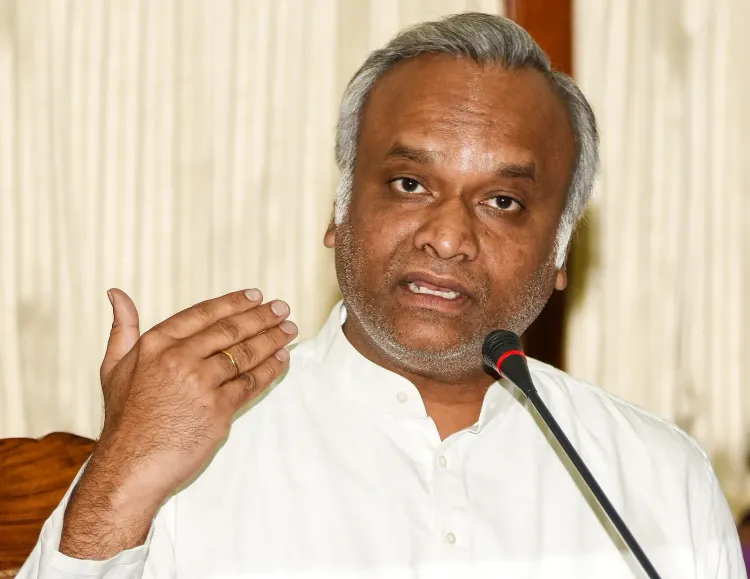
Karnataka Home Minister Priyank Kharge on Saturday, 5 July 2025, squarely placed the accountability for any irregularities in the ongoing Special Intensive Revision (SIR) of electoral rolls on the Election Commission of India (ECI), asserting that the state government had neither violated any rules nor directed officials to deviate from prescribed procedures. Speaking to reporters in Bengaluru, Kharge said the ECI's own observers were monitoring the process and any procedural lapses were the Commission's responsibility to address.
Kharge's Core Argument
Responding to Opposition allegations of irregularities in the SIR process, Kharge drew a clear line between state administration and electoral oversight. 'Election Commission observers are monitoring the process. If there are any procedural lapses, the Election Commission can take action,' he said.
He further clarified that the state government had not compelled anyone to conduct the SIR exercise and had not instructed officials to hold the process in community halls or government offices. He acknowledged, however, that public anxiety over the revision was real and legitimate.
12 Unanswered Questions to the ECI
Kharge revealed that the Karnataka government had formally submitted 12 questions to the Election Commission regarding the SIR process, none of which had received a response. 'The public has concerns and doubts about this process. If there are doubts, the responsibility lies with the Election Commission, not the State government,' he said.
He also noted that the state government had sought an appointment with the Commission to discuss these concerns but had not been granted one. Booth Level Officers (BLOs), he emphasised, operate under ECI directions even though they are drawn from the state administration — making the Commission, not the state, the appropriate authority to act if the SIR is being conducted improperly.
MLA Photographs Row and Political Participation
On criticism over photographs of legislators being displayed during the SIR exercise, Kharge deflected, noting that elected representatives across all political parties were assisting voters. 'All parties are working to help voters. If displaying photographs is prohibited, what exactly happened in Jayanagar? Was it only our MLA?' he asked, suggesting the practice was not confined to any single party.
He added that every political party participates in the SIR because they want their supporters' names included in the electoral rolls, and that this was not a community-specific phenomenon.
Concerns Among Marginalised Communities
Kharge alleged that Scheduled Castes, minorities, and backward classes were currently the most apprehensive about the SIR exercise. Drawing on reports from Bihar and West Bengal, he said fears were circulating that people not included in the SIR list could lose access to state and Central government welfare schemes.
'It is the Election Commission's responsibility to remove such fears,' he said. This comes amid broader national debate over the SIR's scope and its potential impact on voter rolls in states with large marginalised populations.
BJP's Demand and Bengaluru Traffic
Reacting to Union Ministers H.D. Kumaraswamy and Shobha Karandlaje demanding that the Central Election Commission directly monitor the SIR process, Kharge said the Bharatiya Janata Party (BJP), being in power at the Centre, was free to pursue such a move. 'Let them get it done. No one is opposing the SIR. Our only demand is that it should be conducted transparently,' he said.
Separately, Kharge addressed Bengaluru's worsening traffic crisis, citing a recent review meeting that found nearly 66 per cent of the city's traffic congestion was caused by vehicle breakdowns, with a majority involving buses. He said the government was preparing an Urban Mobility Plan and planned to constitute a committee within 7 to 10 days to examine systemic improvements. Bengaluru's population stands at around 1 crore, while registered vehicles have crossed 1.5 crore — growing at 10.7 per cent annually against a population growth rate of 3 per cent.
The ECI has not publicly responded to Karnataka's 12 questions as of the time of this report. How the Commission addresses mounting concerns from multiple states is likely to shape the SIR's credibility in the weeks ahead.
Point of View
Why did it take a press briefing — rather than a formal legal challenge — to make that case? The 12 unanswered questions to the Commission suggest a breakdown in institutional communication that neither side has moved urgently to fix. More significantly, the anxiety among Scheduled Castes and minorities over welfare scheme exclusion points to a ground-level information failure that the ECI, the state, and political parties across the spectrum have collectively allowed to fester. The BJP's demand for Central monitoring while simultaneously holding Central power is a contradiction that mainstream coverage has largely let pass unchallenged.
NationPress
3 Oct 2026
Frequently Asked Questions
What is the Special Intensive Revision (SIR) of electoral rolls?
The Special Intensive Revision (SIR) is a periodic exercise conducted under the Election Commission of India to update and verify voter rolls, ensuring eligible citizens are registered and ineligible entries are removed. It involves Booth Level Officers visiting households and collecting information to revise the electoral rolls.
Why is Karnataka's SIR process controversial?
The Opposition has alleged irregularities in how the SIR is being conducted in Karnataka, including concerns about where the process is held and the display of MLA photographs at SIR venues. Marginalised communities are also reportedly anxious that exclusion from the SIR list could affect their access to government welfare schemes.
What has the Karnataka government asked the Election Commission?
The Karnataka government submitted 12 formal questions to the Election Commission of India regarding the SIR process. As of the time of reporting, the ECI has not responded to those questions and has also not granted the state an appointment to discuss the concerns.
Who is responsible for Booth Level Officers during the SIR?
According to Priyank Kharge, Booth Level Officers are drawn from the state administration but function under the directions of the Election Commission of India during the SIR. He argued this makes the ECI, not the state government, responsible for how the process is conducted.
What is Karnataka's Urban Mobility Plan?
The Karnataka government is preparing an Urban Mobility Plan to address Bengaluru's traffic crisis, where registered vehicles have crossed 1.5 crore against a city population of around 1 crore. Kharge said a committee will be constituted within 7 to 10 days, involving Traffic Police, the Greater Bengaluru Authority, corporates, and educational institutions.