Karnataka Assembly Discusses Safari Operations Amid Wildlife Conflicts
Synopsis
A heated debate in the Karnataka Legislative Assembly over safari operations and trekking regulations reveals tensions between wildlife conservation and local livelihoods, as leaders clash over government policies amid rising man-wildlife conflicts.
Key Takeaways
Safari operations in Karnataka have faced significant scrutiny due to rising man-wildlife conflicts.
Many locals depend on safari activities for their livelihoods, with concerns over abrupt government bans.
The government has implemented safety measures, including anti-poaching camps and monitoring technologies.
Revised trekking regulations aim to enhance safety for trekkers in wildlife areas.
The debate highlights the tension between conservation efforts and economic needs of local communities.
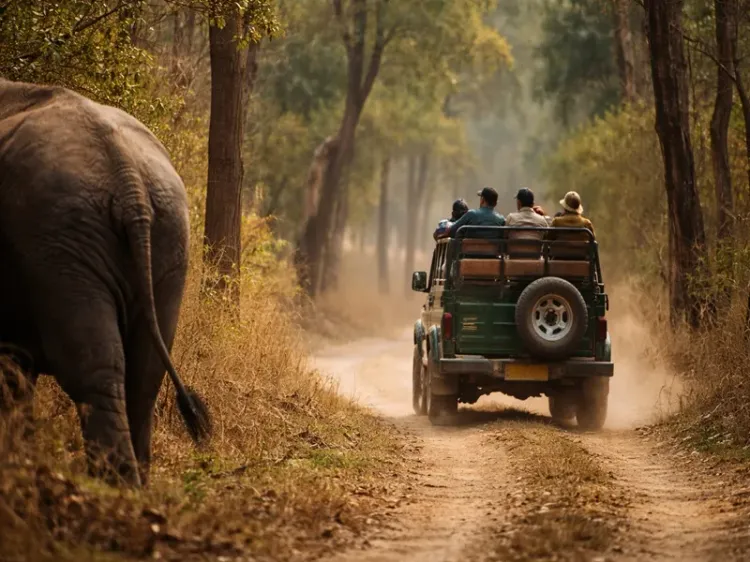
Bengaluru, March 12 (NationPress) A discussion regarding safari operations and trekking protocols in forest regions unfolded in the Karnataka Legislative Assembly on Thursday. R. Ashoka, the Leader of the Opposition, criticized the state government for initially prohibiting safari operations and subsequently reinstating them, while Forest and Ecology Minister Eshwar Khandre defended the actions by pointing out the escalating man-wildlife conflict.
During the Assembly session, Ashoka highlighted that safari activities are prevalent not just in Karnataka but throughout India and internationally. He emphasized that wildlife safaris represent a significant source of income for countries like Kenya, supporting countless livelihoods.
“In Karnataka, approximately 10,000 to 12,000 individuals rely on safari activities for their income. The abrupt cessation of these operations caused considerable disruption. While I understand the government’s authority to make decisions, a thorough survey should precede such actions,” he stated.
Ashoka accused the government of hastily enforcing the ban on safari operations without conducting comprehensive research, which led to thousands losing their means of livelihood. He noted revenue losses for both workers and the government as a consequence of this decision.
“The government should have evaluated whether safari activities were genuinely affecting wildlife. Instead, they imposed a ban and later reversed it. These safaris have been a longstanding practice,” he remarked.
He urged the government to implement measures to protect farmers while also considering the welfare of those reliant on safari operations.
In response to the critique, Minister Eshwar Khandre clarified that the decision to halt safari operations was not arbitrary but was motivated by an uptick in man-wildlife conflict in forested areas, particularly around Bandipur.
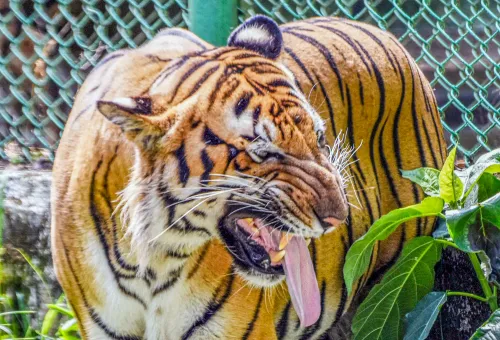
Khandre reported that there were multiple incidents of tiger attacks in the region during November and December.
“In Bandipur and adjacent areas, three individuals lost their lives within a span of 15 days due to tiger attacks. Additionally, one person suffered permanent disability,” the minister explained.
He mentioned that during his visit to Chamarajanagar district, farmer organization representatives raised concerns about safari vehicles operating beyond permitted hours and violating various regulations.
“They cautioned that if safaris were not curtailed, more human lives could be at risk. I instructed officials to look into these claims. Shortly thereafter, another tiger attack occurred while I was in Bidar. This prompted me to halt safari operations,” he stated.
Khandre acknowledged the region's appeal to international tourists but emphasized the necessity of prioritizing human safety. He pointed out that nearly 314 kilometers of forest boundaries exist in the area, with about 100 kilometers designated as major conflict zones between humans and wildlife.
The minister noted that the department has set up 25 anti-poaching camps and has mandated continuous patrolling along forest perimeters. Drones and other technological resources have also been deployed to avert potential tragedies.
He revealed that farmer organizations had called for a complete prohibition of safari operations, while some legislators and institutions highlighted the adverse effects on the livelihoods of many individuals. The government suffered an estimated revenue loss between Rs 6 crore and Rs 8 crore due to the temporary suspension of safari activities.
Khandre elaborated that after 31 months, the State Wildlife Board convened and requested an interim report from a representative of the Central government. Following the report and the introduction of regulations, safari operations were resumed.
“Currently, there are no complaints,” he stated.
Ashoka, however, criticized the government’s methodology, suggesting that such decisions should not be made and then reversed in a “Tughlaq-style” manner.
“If safaris are to be discontinued, they should be permanently abolished. After the ban, did the man-wildlife conflict decrease? What is the current status of the tiger and elephant populations? The forest area remains unchanged, yet the number of wild animals is increasing. The minister must balance human safety with wildlife conservation,” he asserted.
Khandre countered by stating that the tiger population has significantly increased over the years.
“In 1972, there were merely 12 tigers in the vicinity. During the census period, their numbers rose to around 150 and now they have increased to 172,” he noted, adding that experts are assessing the carrying capacity of forests as wildlife populations rise while the forest area stays constant.
He also mentioned that around 70 to 72 villages are situated along the forest edges and that the department has been conducting outreach initiatives in these regions. With the temporary suspension of safari operations, personnel could be allocated for village patrols, and additional vehicles were provided.
In a different discussion, Khandre addressed a query from BJP MLA Bhagirathi Murulya concerning trekking regulations on the Subramanya–Kumaraparvatha route.
The minister explained that the trekking distance from Subramanya to Kumaraparvatha is roughly 12 kilometers one way and 24 kilometers for a round trip. Previously, trekkers required two days to complete the trek and had to camp overnight midway, where safety measures were minimal and wild animals frequently wandered.
“Elephants and other wildlife traverse the area. Given the safety concerns, the trekking schedule was revised as of June 5, 2024,” he noted.
Khandre detailed that the trek from Bidalli to Kumaraparvatha now takes about seven hours, while the Bidalli–Kumaraparvatha–Subramanya route takes around 10 to 12 hours. The overall trekking distance has also been reduced by about two kilometers from the former 22 kilometers.
He emphasized the aim is to ensure that trekkers starting their journey at 6 a.m. return by 6 p.m. to mitigate risks from wildlife. The department has also set up an anti-poaching camp in the vicinity.
“I have observed between 2,000 and 3,000 tourists gathering at once. Such high numbers can disrupt the ecosystem. Thus, trekking has been regulated to allow only 150 individuals per day,” he said, noting that trekking is restricted during heavy rainfall and extreme heat.
During the discussion, MLA Bhagirathi Murulya requested the minister to permit trekkers to commence their journey at 5:30 a.m. Khandre accepted the request and mentioned he would instruct officials to issue an order accordingly.
Point of View
The debate surrounding safari operations in Karnataka symbolizes the broader conflict between wildlife conservation and economic interests. While the government emphasizes safety due to rising man-wildlife encounters, the opposition highlights the economic impact on local communities. This multifaceted issue demands a balanced approach that respects both human safety and economic realities.
NationPress
30 Sept 2026
Frequently Asked Questions
What sparked the debate in the Karnataka Assembly?
The debate was initiated by the discussion on safari operations and trekking regulations, particularly focusing on the government's decision to ban and then reopen safari activities amid rising man-wildlife conflicts.
How many people in Karnataka rely on safari activities?
Approximately 10,000 to 12,000 individuals depend on safari activities for their livelihoods in Karnataka.
What was the government's justification for banning safari operations?
The government cited an increase in man-wildlife conflict, particularly incidents of tiger attacks, as the reason for halting safari operations.
What measures have been taken to address wildlife conflicts?
The government has established anti-poaching camps, conducted round-the-clock patrolling, and deployed drones to monitor wildlife activities and ensure safety.
What changes were made to trekking regulations?
Trekking schedules have been revised to ensure that trekkers complete their journeys within a day to minimize risks posed by wildlife.