Did Karnataka House Approve the Greater Bengaluru Governance Second Amendment Bill?
Synopsis
Karnataka's Assembly has approved the Greater Bengaluru Governance Bill (Second Amendment), with Deputy CM D.K. Shivakumar agreeing to eliminate nominated members from the Greater Bengaluru Authority. This decision follows opposition suggestions and aims to rectify previous omissions in representation.
Key Takeaways
The Karnataka Assembly approved the Greater Bengaluru Governance Bill (Second Amendment).
Shivakumar agreed to drop nominated members from the GBA .
The move responds to opposition requests for greater representation.
The amendment aims to rectify omissions in the GBA member list.
Future elections will be necessary when new areas are included.
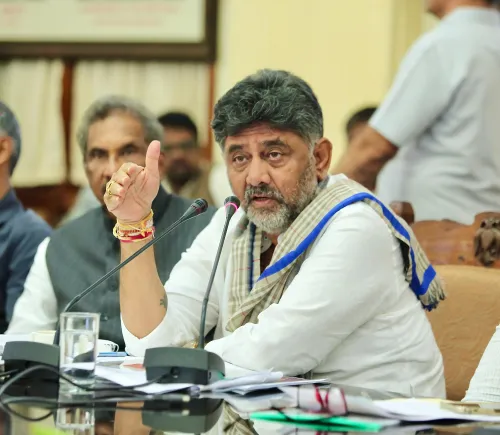
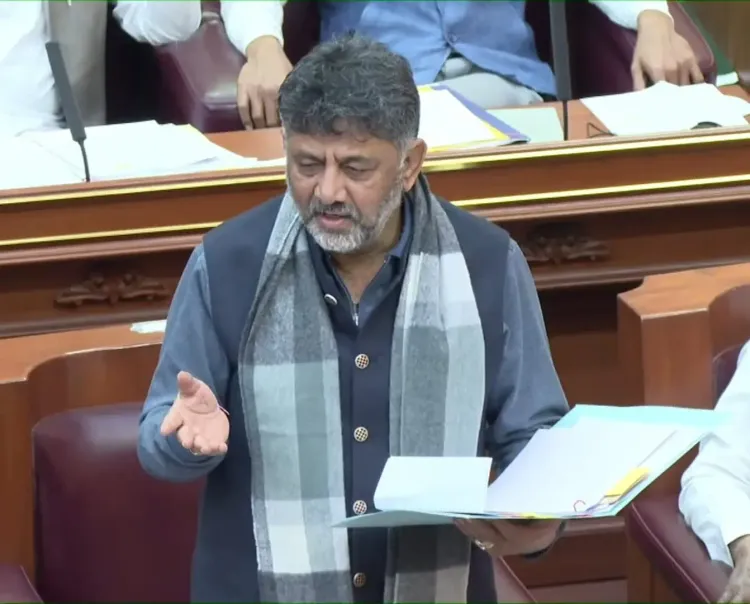
Belagavi (Karnataka), Dec 16 (NationPress) The Karnataka Assembly on Tuesday gave its nod to the Greater Bengaluru Governance Bill (Second Amendment) with Deputy CM D.K. Shivakumar acquiescing to the opposition's request to remove the clause that allowed for the inclusion of nominated members in the Greater Bengaluru Authority (GBA).
While presenting the Greater Bengaluru Governance Bill, 2024 (Second Amendment) in the Assembly, Shivakumar, who also serves as the Bengaluru Development Minister, emphasized the importance of addressing the omissions in the GBA member list.
He noted that certain regions under the constituencies of Rajya Sabha member Sudha Murty and Chikkaballapur MP K. Sudhakar were recently incorporated within the BBMP limits, yet names of elected officials residing within these limits—including local body representatives and Legislative Council members—were omitted from the GBA list. The amendment aims to rectify this.
Shivakumar stated that as the Chief Minister leads the GBA, the inclusion of the Chief Secretary, Additional Chief Secretary for Urban Development, and the Finance Secretary has also been agreed upon.
He mentioned that these oversights emerged during the inaugural meeting of the GBA, which opposition members boycotted for political reasons, prompting the government to propose this amendment.
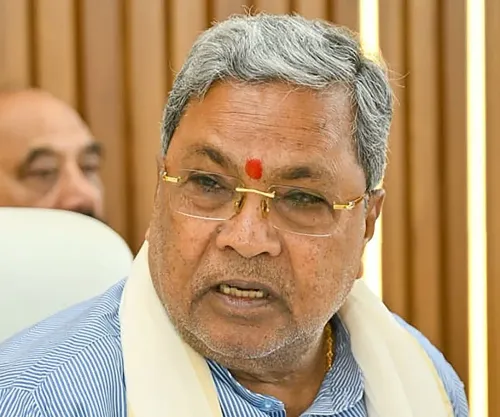
Senior BJP member Suresh Kumar voiced concerns, stating, "With 369 municipal councillors already in place, appointing one nominated member for every 20,000 residents could lead to an additional 369 members. This raises questions about its appropriateness among the public."
In response, Shivakumar clarified, "There will be no elections for the Greater Bengaluru Authority. It serves as a state-level body, and there won't be any immediate issues regarding this. However, future elections will be required when new areas fall under municipal jurisdiction, to be held within six months as mandated by law."
"If any individuals from those regions hold panchayat memberships, they will not have voting rights in this body. During this transitional phase, we are providing representation opportunities. Should this prove unnecessary and unwanted, I am open to withdrawing it. Following your recommendation, we will discard the inclusion of nominated members," he added.
He emphasized that during the transition period, nominated members were considered solely for representation purposes.
“If the Opposition deems this unnecessary, I am prepared to retract the provision. As per the Opposition's suggestion, we will eliminate the inclusion of nominated members,” Shivakumar stated.
Leader of the Opposition R. Ashoka raised alarms over elected representatives voting in multiple local body elections by shifting their voting locations. He argued that members of the Rajya Sabha and Legislative Council were voting in various municipal and local body elections statewide, effectively amounting to proxy voting, and proposed that elected representatives should hold voting rights in only one location for a five-year term.
Shivakumar expressed agreement with the notion that elected officials should only vote in one location but reiterated that the GBA is not an elected body.
Chief Minister’s Economic Advisor and MLA Basavaraj Rayareddy pointed out that the Representation of the People Act does not permit such measures, as a change of address renders a person eligible to vote in that area.
In response, Shivakumar argued that voting rights should not be perceived as a "touring ticket" and reasserted the necessity for clarity and regulation concerning this matter.
The Janata Dal-Secular on Monday demanded that the Congress-led state government promptly retract the Greater Bengaluru Governance (Amendment) Bill, labeling it an affront to democracy and contrary to constitutional principles.
JD-S Bengaluru City Unit President H.M. Ramesh Gowda alleged that the proposed ward delineation under the bill was politically motivated, intended to favor the Congress, and cautioned that such flawed restructuring would negatively impact Bengaluru’s development.
Point of View
The approval of the Greater Bengaluru Governance Bill (Second Amendment) is a pivotal moment for local governance in Karnataka. The decision to remove nominated members reflects the government's responsiveness to opposition concerns and the necessity for inclusivity in representation. As Bengaluru continues to evolve, such legislative measures will shape the city's future governance landscape.
NationPress
30 Sept 2026
Frequently Asked Questions
What is the Greater Bengaluru Governance Bill?
The Greater Bengaluru Governance Bill is a legislative framework aimed at enhancing the governance structure of Bengaluru, focusing on representation and operational effectiveness.
What changes were made in the Second Amendment?
The Second Amendment removed the provision for including nominated members in the Greater Bengaluru Authority at the request of the opposition.
Why was the inclusion of nominated members controversial?
The inclusion of nominated members raised concerns about adequate representation and the potential for political favoritism, leading to demands for its removal.
How does this amendment affect local governance?
This amendment aims to ensure that elected representatives are adequately included in the Greater Bengaluru Authority, fostering a more democratic governance structure.
What implications does this have for future elections?
The amendment sets a framework for future elections when new areas are added to municipal limits, reinforcing the need for timely electoral processes.