Karnataka Cabinet Key Decisions, Thursday Meeting
Synopsis
The Chief Minister's Office of Karnataka on 3 July 2026 shared a Kannada-language summary of key decisions passed at the Thursday cabinet meeting chaired by the Chief Minister, continuing the state government's practice of communicating executive outcomes via social media.
Key Takeaways
The Chief Minister's Office of Karnataka posted a summary of cabinet decisions on 3 July 2026 .
The cabinet meeting was held on Thursday and chaired by the Chief Minister.
The post was published in Kannada on the official CMO account on X.
Karnataka cabinets have held weekly meetings since the state's reorganisation in 1956 .
Formal government orders detailing approved decisions are expected to follow in the coming days.
The announcement is part of a broader trend of Indian state governments using social media to communicate cabinet outcomes directly to citizens.
The Chief Minister's Office of Karnataka shared a summary of key decisions taken at the state cabinet meeting held on Thursday, chaired by the Chief Minister. The official post, shared on Friday, 3 July 2026, outlined the major resolutions passed by the Karnataka Cabinet at its weekly sitting.
Context
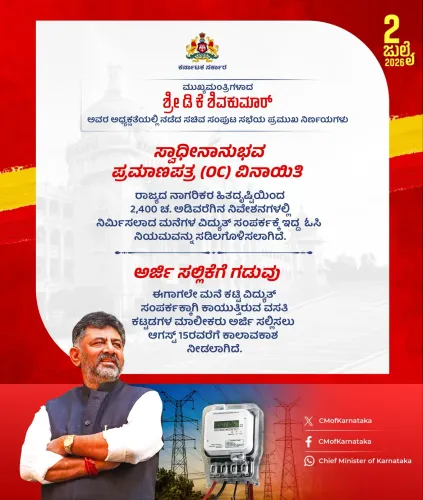
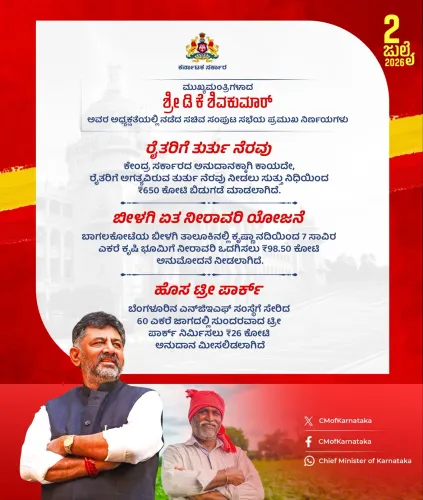
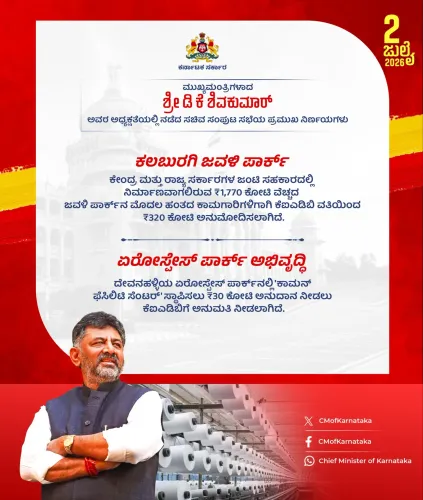
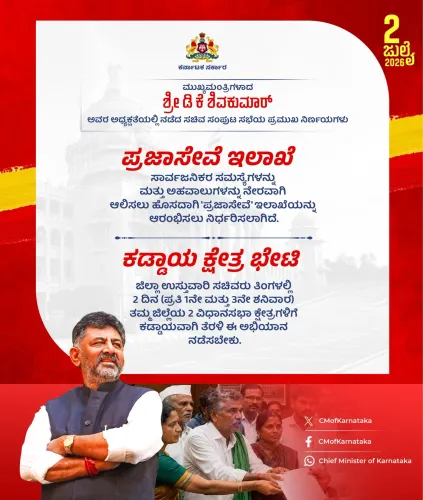
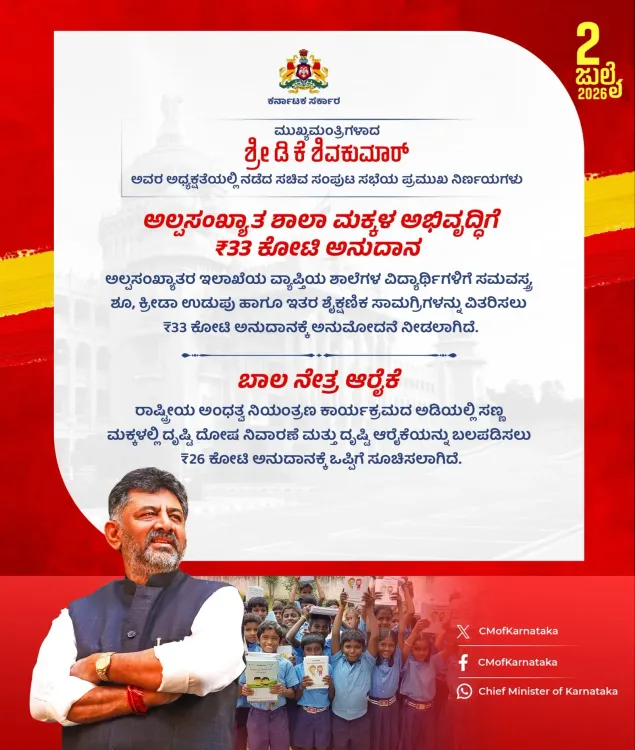
The post, written in Kannada, reads: 'ಸನ್ಮಾನ್ಯ ಮುಖ್ಯಮಂತ್ರಿಗಳಾದ ಶ್ರೀ @DKShivakumar ಅವರ ಅಧ್ಯಕ್ಷತೆಯಲ್ಲಿ ಗುರುವಾರ ನಡೆದ ಸಚಿವ ಸಂಪುಟ ಸಭೆಯ ಪ್ರಮುಖ ನಿರ್ಣಯಗಳು' — translated: 'Key decisions of the cabinet meeting held on Thursday under the chairmanship of the honourable Chief Minister Sri DK Shivakumar.' The CMO shared the post alongside an image summarising the outcomes of the meeting.
The Karnataka Cabinet meets regularly to deliberate on and approve administrative, fiscal, and developmental proposals. These weekly sittings are a cornerstone of executive governance in the state, with decisions binding on the state administration once formally notified through government orders.
Policy Backdrop
Karnataka has maintained a tradition of weekly cabinet meetings since the state's reorganisation in 1956, making the institution one of the most consistent features of the state's governance architecture. The Congress-led administration in Karnataka has continued this practice, using cabinet meetings as the primary forum for collective executive decision-making.
Since the mid-2010s, Chief Ministers' offices across Indian states have increasingly used social media platforms to communicate cabinet outcomes directly to citizens, bypassing traditional press briefings as the sole channel. The Karnataka CMO's post on X (formerly Twitter) fits squarely within this established pattern of proactive public communication.
Stakeholders and Impact
The primary stakeholders of any Karnataka cabinet decision are the citizens of Karnataka, whose daily lives — from public services and infrastructure to welfare schemes and employment — are directly shaped by executive resolutions. Decisions taken at cabinet level carry legal and administrative weight and are typically followed by formal government orders that set implementation timelines and budgetary allocations.
Civil servants, district administrations, and state-run agencies are also key stakeholders, as cabinet approvals trigger departmental action plans. Businesses operating in Karnataka — one of India's leading states for technology, manufacturing, and agriculture — closely monitor cabinet decisions for regulatory, fiscal, or land-use implications.
What's Next
Detailed government orders spelling out the specifics of each cabinet decision are expected to be issued by the relevant departments in the coming days. Citizens, legislators, and civil society organisations typically scrutinise these orders to assess the scope and funding of approved proposals.
The next scheduled cabinet meeting will be watched for follow-up decisions on any pending proposals. The CMO is expected to continue posting summaries of outcomes on official social media channels, maintaining the administration's practice of transparent public communication.
Point of View
Bypassing intermediaries. This fits a broader pattern of Congress-led state governments using digital platforms to reinforce administrative transparency as a political signal. Weekly cabinet summaries on social media have become a low-cost, high-visibility governance tool across Indian states. The regularity and format of these posts also serve to normalise executive accountability in the public discourse.
NationPress
3 Jul 2026
Frequently Asked Questions
What decisions were taken in the Karnataka cabinet meeting on Thursday?
The Chief Minister's Office of Karnataka posted a summary of key decisions from the Thursday cabinet meeting, but the specific resolutions are detailed in the image attached to the official post on X. Formal government orders with full details are expected to be issued by the relevant departments.
Who chaired the Karnataka cabinet meeting on Thursday?
The cabinet meeting was chaired by the Chief Minister, as stated in the official CMO post on X dated 3 July 2026.
How often does the Karnataka cabinet meet?
The Karnataka Cabinet meets on a weekly basis. This practice has been maintained since the state's reorganisation in 1956 and is a standard feature of the state's executive governance.
How does the Karnataka government share cabinet decisions with the public?
The Chief Minister's Office of Karnataka shares summaries of cabinet decisions on its official X (formerly Twitter) account, a practice that has become common among Indian state governments since the mid-2010s.
What happens after a Karnataka cabinet decision is taken?
After the cabinet approves a decision, the relevant state departments issue formal government orders that specify implementation timelines, budgetary allocations, and administrative responsibilities.