Karnataka cane farmers end protest; CM Shivakumar to raise sugar price fix with Modi on Nov 13
Synopsis
Karnataka's weeks-long sugarcane agitation has ended — but only at the state level. With farmers securing a ₹3,600-per-tonne deal and a profit-sharing clause, CM Shivakumar now heads into a 13 November meeting with PM Modi carrying unresolved demands: an MSP near double the current rate, FRP revision, and a national sugar policy that the Centre has yet to act on.
Key Takeaways
Shivakumar will raise the sugar price-fixing demand with PM Narendra Modi on 13 November in Bengaluru.
Sugarcane farmers called off their protest after sugar factories agreed to a profit-sharing formula linked to future sugar price increases.
Farmers accepted ₹3,600 per tonne for Belagavi district, with demands to extend the rate across all of Karnataka .
Farmers' broader demands include hiking the sugar MSP from ₹31 to ₹60 per kg , FRP revision , and payment within 14 days .
Farmers had blocked the Pune-Bengaluru National Highway for over 30 hours ; a 26 October Belagavi meeting had failed to resolve the dispute.
Some sugar factories have approached the court seeking permission to resume crushing operations and protection from agitators.
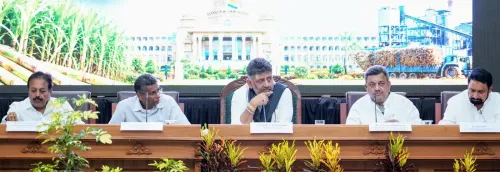
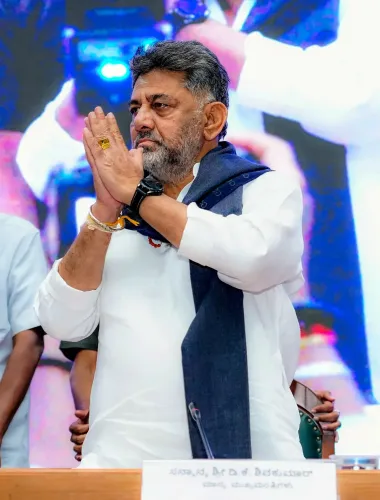
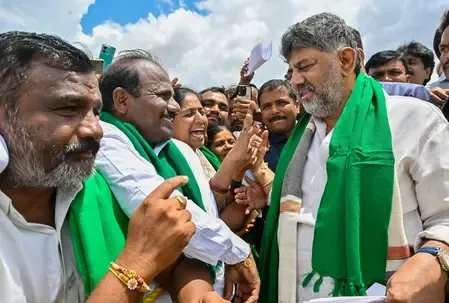
Karnataka Chief Minister D.K. Shivakumar on Friday, 6 November called on the Centre to take responsibility for fixing sugar prices, saying he would personally raise the matter with Prime Minister Narendra Modi during Modi's scheduled visit to Bengaluru on 13 November. The statement came hours after sugarcane farmers across Karnataka withdrew their weeks-long agitation following a breakthrough profit-sharing agreement with sugar factories.
Farmers Withdraw Protest After Factory Deal
Karnataka Rajya Raitha Sangha and Hasiru Sene state president Chunappa Pujeri announced on Thursday night that farmers had accepted a price of ₹3,600 per tonne for sugarcane in Belagavi district, as declared by Public Works Department Minister and district in-charge Satish Jarkiholi. Farmers agreed to withdraw their agitation after sugar factories accepted a profit-sharing formula tied to any future increase in sugar prices. Pujeri noted, however, that farmers want the ₹3,600 per tonne rate extended uniformly across Karnataka.
What CM Shivakumar Said
'The Central government should fix the price of sugar. We have written a letter to the Prime Minister and will raise this issue with him as well. Union Minister Pralhad Joshi has informed us that he is making efforts in this regard,' Shivakumar told reporters in Bengaluru. The state had already written to the Prime Minister on the issue in mid-October, urging urgent intervention on farmers' key demands.
On the farmers' earlier threat to disrupt the winter session of the Legislature scheduled in Belagavi, Shivakumar pushed back firmly. 'It is not right to threaten the government by saying that the winter session will not be allowed to take place in Belagavi if the issue is not resolved. There should be some courtesy,' he said. He also called out disrespectful conduct toward farmers, adding: 'Addressing farmers disrespectfully by saying ‘Hey, you, come here’ amounts to insulting them. Such behaviour should not happen.'
Background: A Weeks-Long Agitation
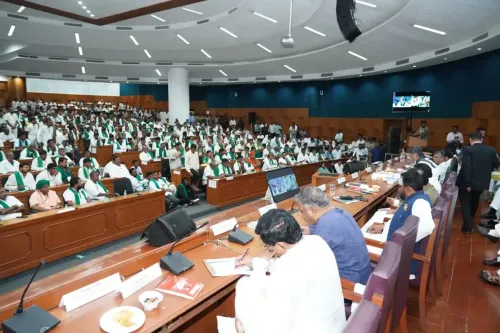
The sugarcane agitation had intensified over several weeks, with farmers organising padayatras, highway blockades, protest marches, and statewide demonstrations. In one of the most disruptive episodes, farmers blocked the Pune-Bengaluru National Highway for more than 30 hours. A subsequent round of talks on 26 October at the Suvarna Vidhana Soudha in Belagavi — involving the government, sugar factory owners, and farmer representatives — failed to produce a resolution. At that meeting, the government urged sugar factories to offer an additional ₹250 per tonne, but several factories reportedly did not implement the proposal.
Farmers had also staged a symbolic 'jail bharo' programme, marching in T-shirts bearing the slogan 'Prisoner Number 5,500' — a reference to their demand for ₹5,500 per tonne — toward Hindalga Central Prison in Belagavi. A major convention in Bengaluru on 6 November and further village-level mobilisation had also been planned before the protest was called off.
Key Farmer Demands Still Pending at the Centre
Beyond the immediate price dispute, farmer organisations had pressed a broader set of demands from the Centre: a hike in the Minimum Support Price (MSP) of sugar from ₹31 to ₹60 per kg, a revision of the Fair and Remunerative Price (FRP), mandatory payment within 14 days, separate pricing for domestic and commercial sugar, changes to cane-based ethanol procurement and pricing, and a comprehensive national sugar policy. These demands remain unresolved and are expected to be central to Shivakumar's discussion with Modi on 13 November.
Legal Dimension
Reacting to the protest withdrawal, CM Shivakumar noted that representatives of sugar factories and state ministers had held discussions on 6 November. He added that some parties had approached the court seeking permission to crush sugarcane and protection for factories, with an affidavit reportedly being filed on the same day. The legal proceedings signal that the industry is moving quickly to resume operations following the standoff.
With the state-level dispute tentatively resolved, all eyes now turn to Shivakumar's meeting with Prime Minister Modi on 13 November, which is expected to determine whether the Centre acts on the structural demands that Karnataka's cane farmers — and indeed, those in several other sugar-producing states — have long raised.
Point of View
Not a resolution. The profit-sharing deal merely defers the core argument: farmers want ₹5,500 per tonne while factories are locked in at prices constrained by what the Centre permits them to charge for sugar. Until the Centre revises the MSP — currently ₹31 per kg against farmers' demand of ₹60 — no state government can fully bridge the gap, whatever it writes to the Prime Minister. Shivakumar's framing of the 13 November meeting as an escalation point is politically astute, but the structural mismatch between cane input costs and controlled sugar output prices is a national-level problem that individual state deals cannot fix. Karnataka's experience is a preview of what several other sugar-producing states will face if the Centre delays a comprehensive sugar policy.
NationPress
6 Nov 2026
Frequently Asked Questions
Why did Karnataka sugarcane farmers call off their protest?
Farmers withdrew their agitation after sugar factories agreed to a profit-sharing arrangement tied to any future increase in sugar prices. The Karnataka Rajya Raitha Sangha and Hasiru Sene accepted a price of ₹3,600 per tonne for Belagavi district, with the expectation that this rate would be extended across Karnataka.
What will CM Shivakumar raise with PM Modi on 13 November?
CM D.K. Shivakumar plans to press PM Narendra Modi to have the Centre fix sugar prices and act on Karnataka farmers' demands, including an MSP hike from ₹31 to ₹60 per kg, FRP revision, and a national sugar policy. The state had already written to the Prime Minister on the issue in mid-October.
What are the main demands of Karnataka sugarcane farmers?
Farmers have demanded ₹5,500 per tonne for sugarcane, a sugar MSP increase from ₹31 to ₹60 per kg, revision of the Fair and Remunerative Price (FRP), payment within 14 days, separate pricing for domestic and commercial sugar, changes to ethanol procurement, and a comprehensive sugar policy from the Centre.
What happened at the 26 October Belagavi talks?
A meeting on 26 October at the Suvarna Vidhana Soudha in Belagavi, involving the state government, sugar factory owners, and farmer representatives, failed to resolve the dispute. The government urged factories to offer an additional ₹250 per tonne, but several factories reportedly did not implement the proposal.
What legal steps have sugar factories taken?
Following the protest withdrawal, some sugar factories have approached the court seeking permission to resume sugarcane crushing and protection for their premises. An affidavit was reportedly being filed on 6 November in connection with this legal action.