Karnataka CM offers state share if Centre waives farm loans
Synopsis
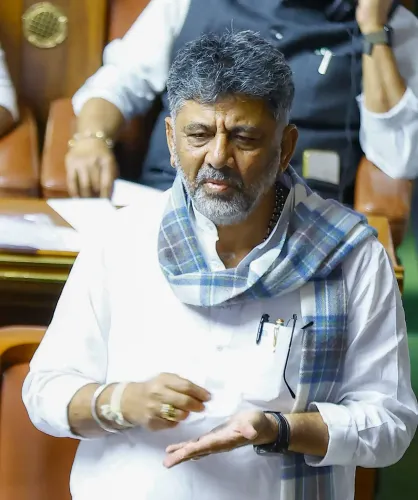
Karnataka CM D.K. Shivakumar, speaking at a special legislative session on 25 September 2026, said the state is ready to contribute its share of a farm loan waiver if the Central government initiates one, and called on all lawmakers to jointly appeal to Prime Minister Narendra Modi.
Key Takeaways
Shivakumar declared Karnataka ready to fund its share of a farm loan waiver, contingent on the Centre taking the lead.
The statement was made during a special session of the Karnataka legislature on 25 September 2026 .
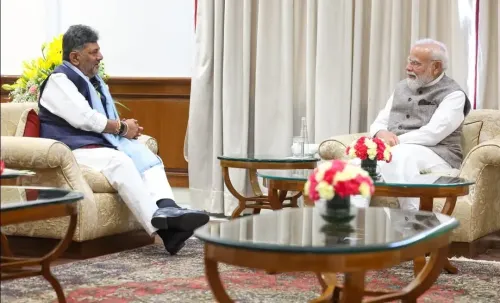
He invited all legislators — across party lines — to collectively petition Prime Minister Narendra Modi .
Karnataka's 2018 farm loan waiver cost over Rs 34,000 crore , illustrating the fiscal burden state governments face.
The Centre's last nationwide agricultural debt waiver was in 2008 , which Karnataka cited as a precedent for central action.
The appeal fits a recurring pattern of centre-state negotiations over sharing the cost of agricultural relief.
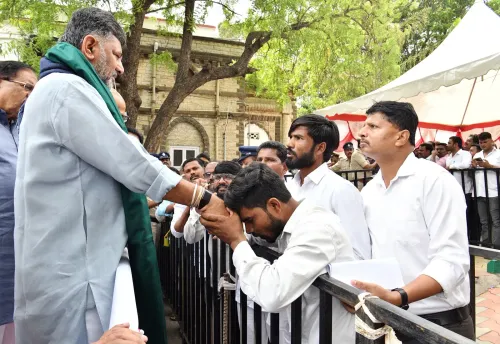
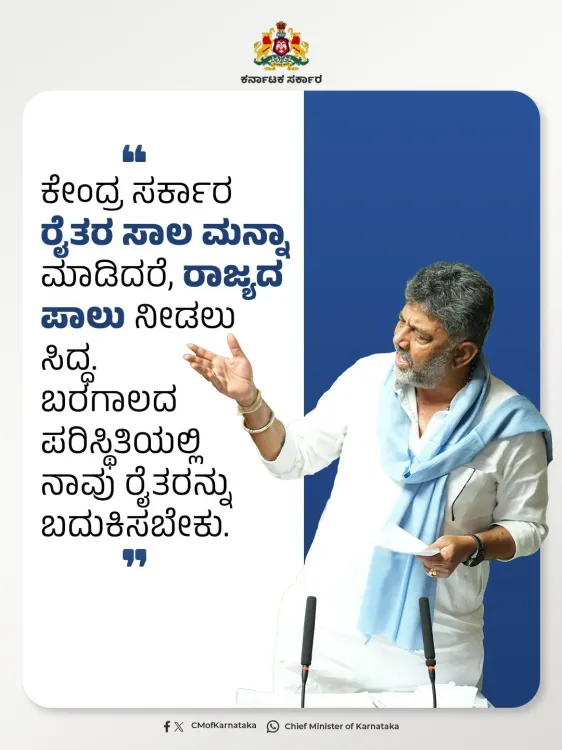
A direct challenge to New Delhi landed on the floor of the Karnataka legislature on Friday, 25 September 2026: the state's Chief Minister declared Karnataka ready to pay its share of a farm loan waiver — but only if the Central government moves first. The statement, delivered during a special session of the assembly, was sharp, conditional, and unmistakably political.
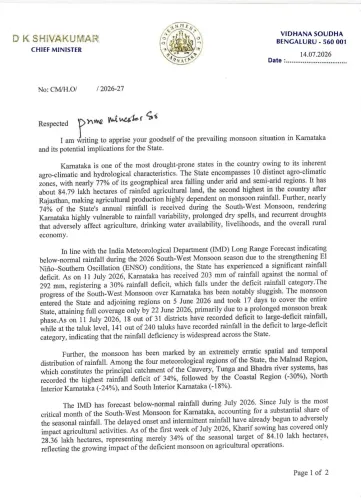
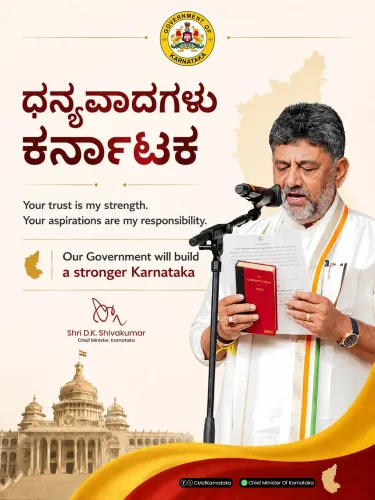
The Chief Minister's Office of Karnataka posted the key lines from the address on X, quoting Chief Minister Sri D.K. Shivakumar directly in Kannada: 'ಕೇಂದ್ರ ಸರ್ಕಾರ ರೈತರ ಸಾಲ ಮನ್ನಾ ಮಾಡಿದರೆ, ರಾಜ್ಯದ ಪಾಲು ನೀಡಲು ಸಿದ್ಧ' — 'If the Central government waives farmers' loans, we are ready to give the state's share.' He went further, proposing a united front: 'Let us all go together and appeal to Prime Minister Narendra Modi,' he said.The fiscal logic behind the appeal
Farm loan waivers carry a crushing price tag for state treasuries. Karnataka's own 2018 waiver — targeting small and marginal farmers — was estimated at over Rs 34,000 crore, a sum that strained the state budget for years. The political calculus of Shivakumar's statement is therefore precise: by signalling willingness to share the cost, Karnataka positions itself as a constructive partner rather than a supplicant, while the pressure to act shifts squarely onto the Centre. This is not new political terrain. State governments across India have repeatedly petitioned the Centre to co-fund agricultural debt relief, arguing that chronic farmer indebtedness is a national problem that demands national resources. The central government's 2008 nationwide agricultural debt waiver scheme remains the most cited precedent — proof that Delhi can act when it chooses to.A special session, a sharper audience
Delivering the appeal inside a special legislative session amplifies its weight. A special session is not routine business — it signals that the government considers the subject urgent enough to summon lawmakers outside the regular calendar. Farmer welfare has long been a high-voltage issue in Karnataka, a state whose agricultural sector spans rain-fed crops in the north and the coffee and silk belts of the south, each with its own debt dynamics. The invitation to lawmakers across parties to jointly petition Prime Minister Modi is also a political masterstroke: it either builds a rare cross-party consensus or exposes opposition members who decline to join, making them answerable to the same farming constituencies they represent. Whether the Centre responds — in a formal communication, in the next Union Budget, or in agricultural policy announcements — will now become the measuring stick. Karnataka has placed its offer on record. The next move belongs to New Delhi.Point of View
Keeping electoral pressure on the BJP-led government in New Delhi ahead of any budget cycle. The appeal to bipartisan legislative unity is equally calculated — a joint petition to the Prime Minister is far harder to dismiss than a partisan state demand. This episode underscores how farm debt has become a recurring flashpoint in centre-state relations, with states increasingly framing fiscal relief as a shared national obligation rather than a state-level welfare measure. The Centre's response — or silence — will shape how both governments are perceived by Karnataka's large farming electorate.
NationPress
25 Sept 2026
Frequently Asked Questions
What did Karnataka CM D.K. Shivakumar say about farm loan waivers?
He said Karnataka is ready to pay the state's share of a farm loan waiver, provided the Central government initiates and funds the waiver. He made the statement during a special session of the Karnataka assembly on 25 September 2026.
Has Karnataka done a farm loan waiver before?
Yes. In 2018, Karnataka announced a farm loan waiver estimated at over Rs 34,000 crore targeting small and marginal farmers, which placed a significant burden on the state budget.
Why is Karnataka asking the Centre to lead on farm loan waivers?
Farm loan waivers are extremely costly for state budgets. Karnataka argues the Centre should initiate relief so the financial burden is shared, a position consistent with how states have historically approached agricultural debt schemes.
Has the Central government ever done a nationwide farm loan waiver?
Yes. In 2008, the Central government implemented a nationwide agricultural debt waiver and relief scheme covering farmers across multiple states, which remains the most cited precedent for central-level action.
What is the significance of the Karnataka special legislative session on farmers?
A special session signals the government considers farmer distress an urgent priority. Shivakumar also used the platform to propose a cross-party delegation to petition Prime Minister Narendra Modi, raising the political stakes for all legislators present.