Karnataka farm loan waiver under review, says CM Shivakumar; 72,000 vacancies to be filled in 6 months
Synopsis
Karnataka CM D.K. Shivakumar kept farmers guessing on a loan waiver — acknowledging the demand while flagging its difficulty — even as he rolled out a sweeping package in Kalaburagi: 72,000 government jobs in six months, a ₹320 crore textile park, CSR-funded rural schools, and a new skill-employment exchange. The gap between ambition and fiscal reality will define whether these announcements translate into ground-level change.
Key Takeaways
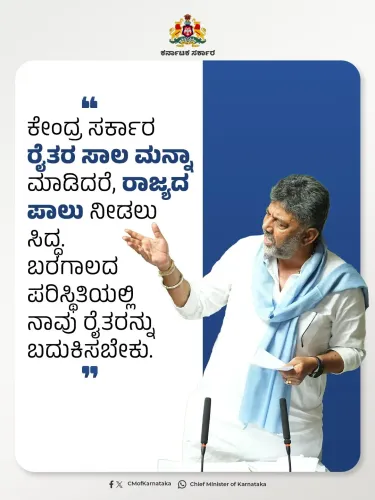
Shivakumar said the Karnataka government will examine the farm loan waiver demand but acknowledged it is 'not easy' to implement.
A six-month deadline has been set to fill 72,000 vacancies across Home, Agriculture, Revenue, Education, and Rural Development departments.
Industries in Tier-2 and Tier-3 cities will receive an additional 0.6 premium FAR (up to 2x FAR ) to incentivise local investment and curb migration.
Around 2,000 CSR-funded schools are planned at the gram panchayat level, with companies investing ₹10–15 crore each directly in construction.
Crop insurance claims of ₹580 crore have been estimated; ₹243 crore settled and ₹225 crore more ordered for release.
A ₹320 crore textile park will be established in Kalaburagi .
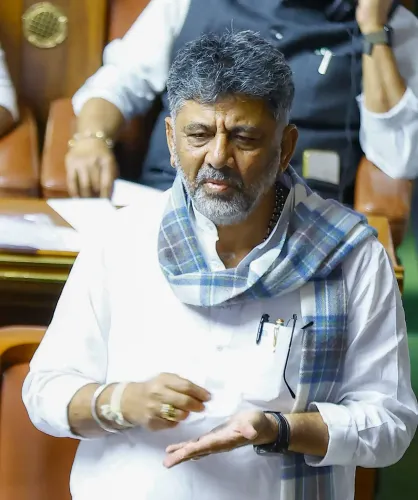
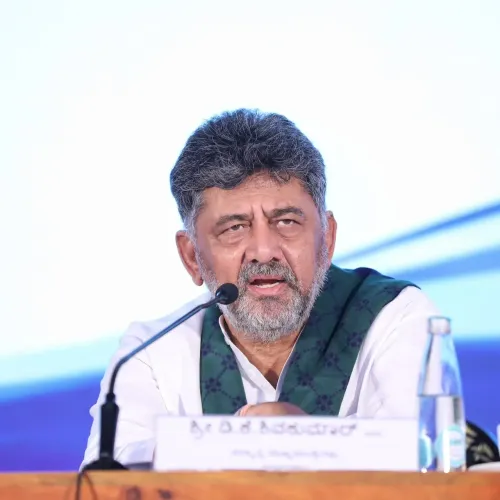
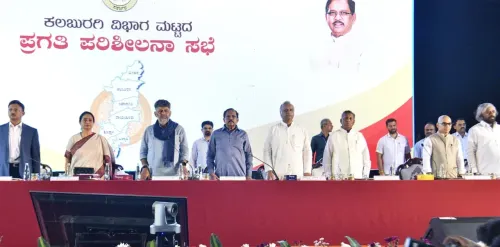
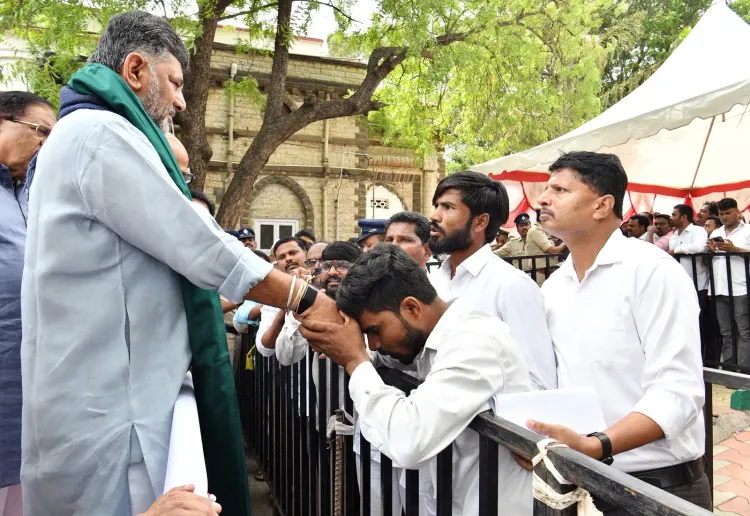
Karnataka Chief Minister D.K. Shivakumar on Tuesday, 7 July said the state government will examine the demand for a farm loan waiver, while candidly acknowledging that implementing such a measure is 'not easy.' The remarks came during a press conference in Kalaburagi following the Kalaburagi Divisional Progress Review Meeting.
Farm Loan Waiver: What the CM Said
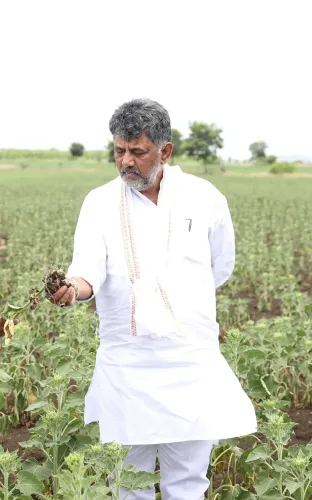
Responding to farmers' demands, Shivakumar said the government has taken note of the request but stopped short of making a commitment. He recalled that loan waivers have been implemented in the past — including during the tenure of the Manmohan Singh-led government at the Centre — and said the current administration will examine the matter carefully. The guarded tone signals that while the demand is on the table, fiscal constraints remain a significant hurdle.
72,000 Vacancies: Six-Month Deadline Set
On the acute shortage of staff in key departments, the Chief Minister announced that the government has initiated recruitment to fill 72,000 vacant posts across departments including Home, Agriculture, Revenue, Education, and Rural Development. A firm six-month deadline has been set to complete the recruitment process across all these departments.
Industrial Push for Tier-2 and Tier-3 Cities
To curb urban migration, the government has decided to incentivise industrial growth in cities such as Kalaburagi and other Tier-2 and Tier-3 centres. Industries setting up in these cities will be offered an additional 0.6 premium Floor Area Ratio (FAR), with a ceiling of up to 2x FAR, making land acquisition more cost-effective. The necessary amendments are to be introduced through the Urban Development Department.
The Chief Minister also launched the 'Yuva Setu' programme — a skill-based employment exchange designed to connect trained youth with private sector employers. While industries will be advised to prefer local candidates, Shivakumar clarified that the government will not mandate or interfere in private recruitment decisions; the extent of local preference will be finalised after consultations with industry representatives.
CSR-Funded Schools and Rural Education
To improve education quality in rural areas and reduce student migration to cities, the government plans to establish around 2,000 schools at the gram panchayat level, funded through Corporate Social Responsibility (CSR) contributions. Companies are expected to invest ₹10–15 crore each to directly construct school buildings and infrastructure — funds will not be routed through the government. Separate guidelines for teacher recruitment will be issued in due course.
Revenue Reforms, Crop Insurance, and Kalaburagi Textile Park
Shivakumar announced a sweeping reform of the Revenue Department, covering e-Khata issuance, resolution of land record disputes, survey and subdivision (podi) works, and the e-Swathu programme — all to be provided free of cost. Deputy Commissioners have been directed to identify Revenue Department land in every Assembly constituency and distribute approximately 10,000 residential sites to economically weaker families. The Chief Minister said he will personally visit every district to distribute khata certificates.
On crop insurance, the government has estimated claims worth ₹580 crore owing to deficient monsoon rainfall. Of this, ₹243 crore has already been settled and orders have been issued to release a further ₹225 crore. The remaining compensation will be disbursed as soon as possible, according to Shivakumar.
The Chief Minister also announced that a textile park will be established in Kalaburagi at an estimated cost of ₹320 crore, adding to the region's industrial prospects.
With elections on the horizon and farmer distress a live political issue, the government's next steps on the loan waiver question — and its ability to deliver on the recruitment deadline — will be closely watched.
Point of View
Designed to keep farmer sentiment from souring without triggering a fiscal commitment the state may struggle to honour. Karnataka's finances have been under pressure since the rollout of five guarantee schemes, and adding a large-scale farm loan waiver could strain the state's debt headroom further. The 72,000-vacancy pledge is politically potent but administratively ambitious; Karnataka has a history of recruitment drives that stretch well past announced deadlines. The more durable announcement may be the FAR incentive for Tier-2 cities — a structural tool that, if implemented, could genuinely redirect industrial capital away from Bengaluru. The question is whether the Urban Development Department moves fast enough to make it real before the political cycle moves on.
NationPress
6 Oct 2026
Frequently Asked Questions
What did Karnataka CM Shivakumar say about the farm loan waiver?
CM D.K. Shivakumar said the Karnataka government will examine the demand for a farm loan waiver but acknowledged that implementing such a measure is 'not easy.' He noted that loan waivers have been carried out in the past, including during the Manmohan Singh government, and said the matter will be reviewed.
How many government vacancies will Karnataka fill, and by when?
The Karnataka government has set a six-month deadline to fill 72,000 vacant posts across key departments including Home, Agriculture, Revenue, Education, and Rural Development. The recruitment process has already been initiated.
What is the Yuva Setu programme announced by CM Shivakumar?
Yuva Setu is a skill-based employment exchange launched by the Karnataka government to connect trained youth with private sector employers. The Skill Development Department will provide training, and companies can recruit through the platform; industries will be advised to prefer local candidates, though the government will not mandate it.
What is the status of crop insurance payouts for Karnataka farmers?
The Karnataka government has estimated crop insurance claims worth ₹580 crore due to deficient monsoon rainfall. Of this, ₹243 crore has been settled, orders have been issued to release a further ₹225 crore, and the remaining amount will be disbursed as soon as possible, according to Shivakumar.
What industrial incentives were announced for Kalaburagi and Tier-2 cities?
The Karnataka government will offer an additional 0.6 premium Floor Area Ratio (FAR), allowing up to 2x FAR, to industries setting up in Tier-2 and Tier-3 cities such as Kalaburagi. Amendments will be introduced through the Urban Development Department. A ₹320 crore textile park will also be established in Kalaburagi.