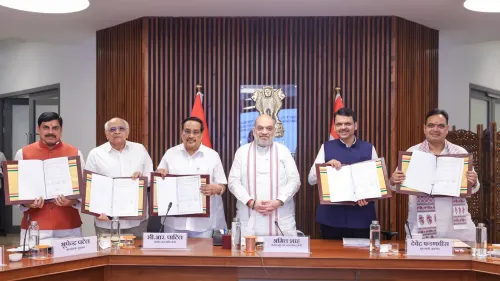
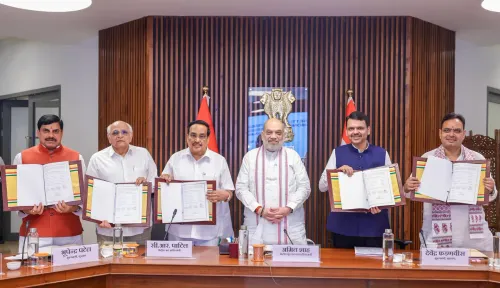
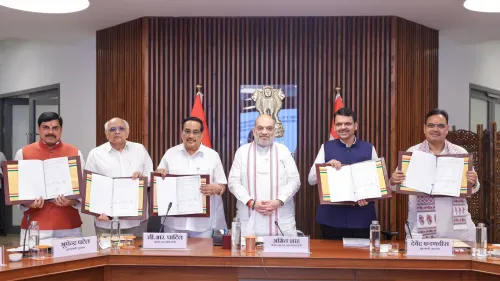
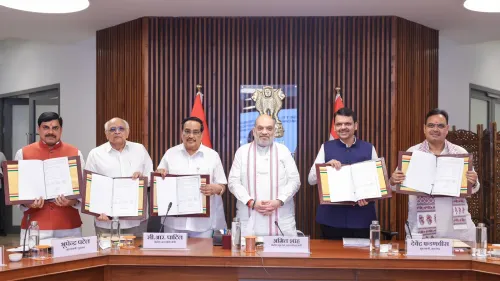
CM Bhajan Lal hails historic Narmada Award pact among 4 states
Synopsis
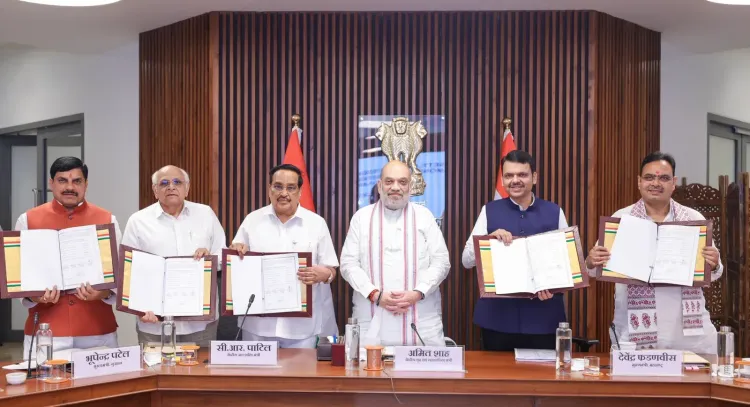
Rajasthan CM Bhajan Lal Sharma hailed a historic inter-state agreement reached in New Delhi on 7 July 2026 to resolve decades-old Narmada Award payment disputes among Gujarat, Madhya Pradesh, Maharashtra and Rajasthan, with long-term irrigation benefits expected for Jalore and Barmer farmers.
Key Takeaways
A landmark agreement was reached in New Delhi on 7 July 2026 to settle long-pending payment disputes tied to the Narmada Water Disputes Tribunal Award of 1979 .
The meeting was chaired by Union Home Minister Amit Shah and attended by Union Jal Shakti Minister C.
The accord involves four states: Gujarat, Madhya Pradesh, Maharashtra and Rajasthan .
Farmers in Rajasthan's border districts of Jalore and Barmer are expected to receive long-term irrigation benefits via the Sardar Sarovar Project canal network.
CM Bhajan Lal Sharma credited PM Narendra Modi's cooperative federalism approach for enabling the breakthrough after decades of unresolved issues.
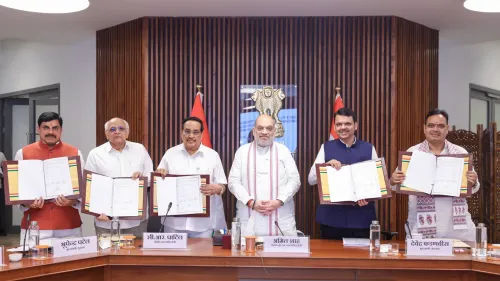
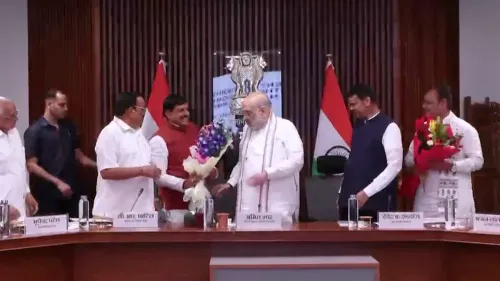
Rajasthan Chief Minister Bhajan Lal Sharma on Tuesday, 7 July 2026, welcomed a landmark inter-state agreement reached in New Delhi to resolve decades-old pending payment disputes linked to the Narmada Water Disputes Tribunal Award, involving Gujarat, Madhya Pradesh, Maharashtra and Rajasthan. The meeting was chaired by Union Home and Cooperation Minister Amit Shah and attended by Union Jal Shakti Minister C. R. Patil.
Context
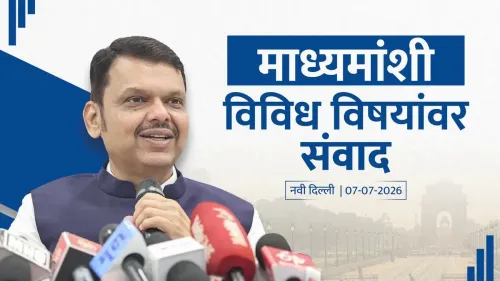
Posting in Hindi on X, CM Sharma described the development as 'ऐतिहासिक एवं सौहार्दपूर्ण समझौता' (a historic and harmonious agreement), saying it proved that 'through dialogue, coordination and strong political will, even long-standing complex issues can be resolved amicably.' He credited Prime Minister Narendra Modi's vision of cooperative federalism for making the breakthrough possible.
Sharma specifically highlighted that the agreement relates to the Sardar Sarovar Project and will deliver long-term benefits to farmers in Jalore and Barmer — Rajasthan's border districts that depend on Narmada waters channelled through the project's canal network. He stated that Rajasthan is 'proud to be a partner in this historic initiative.'
Policy Backdrop
The Narmada Water Disputes Tribunal delivered its final award in 1979, allocating river water shares among the four riparian states — Gujarat, Madhya Pradesh, Maharashtra and Rajasthan. While the award settled water entitlements, certain cost-sharing and inter-state payment obligations remained unresolved for decades, creating persistent coordination challenges among the basin states.
The Sardar Sarovar Project, the flagship infrastructure of the Narmada basin, is central to delivering irrigation water to arid western regions. Rajasthan, as a downstream beneficiary, has historically relied on high-level central intervention to secure its share of project benefits and resolve financial disputes with upstream states.
Stakeholders and Impact
Farmers in Jalore and Barmer — districts in Rajasthan's water-scarce western frontier — stand to gain the most directly. Both districts depend heavily on canal irrigation fed by Narmada waters, and the settlement of pending payment issues is expected to facilitate more predictable water releases and infrastructure upkeep.
The agreement also carries significance for Gujarat, Madhya Pradesh and Maharashtra, whose governments participated in the New Delhi meeting. A harmonious resolution removes a long-standing source of inter-state friction and aligns with the central government's broader push to close out unfinished business from 20th-century river-water tribunal awards.
What's Next
Attention will now turn to the rollout of the settled payments and any subsequent revision to canal operation or water-release schedules that benefit Rajasthan's border districts. CM Sharma expressed gratitude to PM Modi, Home Minister Shah, Jal Shakti Minister Patil and the chief ministers of Gujarat, Madhya Pradesh and Maharashtra for their role in reaching the accord.
If the financial settlement translates into improved and timely water supply through the Sardar Sarovar canal network, it could meaningfully strengthen water security for one of India's most drought-prone regions — and serve as a template for resolving similar tribunal-era inter-state disputes elsewhere in the country.
Point of View
Publicly embracing the accord serves a dual purpose: signalling Rajasthan's cooperative posture within the BJP's federal architecture and delivering a tangible water-security narrative for the electorally sensitive western districts of Jalore and Barmer. The framing of the deal as an expression of 'cooperative federalism' also reinforces a recurring BJP governance motif — that complex legacy disputes are best resolved through dialogue led from the Centre. Whether the agreement translates into measurable improvements in canal water supply will be the real test of its historic billing.
NationPress
8 Jul 2026
Frequently Asked Questions
What is the Narmada Award inter-state agreement announced on 7 July 2026?
It is a landmark agreement reached in New Delhi among Gujarat, Madhya Pradesh, Maharashtra and Rajasthan to resolve decades-old pending payment disputes stemming from the Narmada Water Disputes Tribunal Award of 1979. The meeting was chaired by Union Home Minister Amit Shah.
How will the Narmada agreement benefit Rajasthan farmers?
Farmers in Rajasthan's border districts of Jalore and Barmer are expected to receive long-term irrigation benefits through improved water availability via the Sardar Sarovar Project canal network, strengthening the state's overall water security.
What is the Sardar Sarovar Project and why does it matter for Rajasthan?
The Sardar Sarovar Project is a major multipurpose dam on the Narmada river. It channels water to downstream states including Rajasthan, particularly to arid western districts like Jalore and Barmer, making it critical for irrigation in drought-prone areas.
Why had Narmada Award payment disputes remained unresolved for so long?
The Narmada Water Disputes Tribunal delivered its final award in 1979 and while water shares were allocated, certain cost-sharing and inter-state payment obligations were left unresolved, creating coordination challenges among the four basin states for nearly five decades.
Who chaired the New Delhi meeting that produced the Narmada agreement?
Union Home and Cooperation Minister Amit Shah chaired the meeting. Union Jal Shakti Minister C. R. Patil was also present, along with representatives of the four states — Gujarat, Madhya Pradesh, Maharashtra and Rajasthan.