Karnataka CMO honours Major Sandeep Unnikrishnan
Synopsis
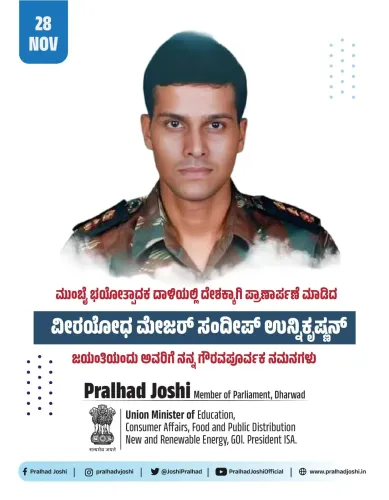
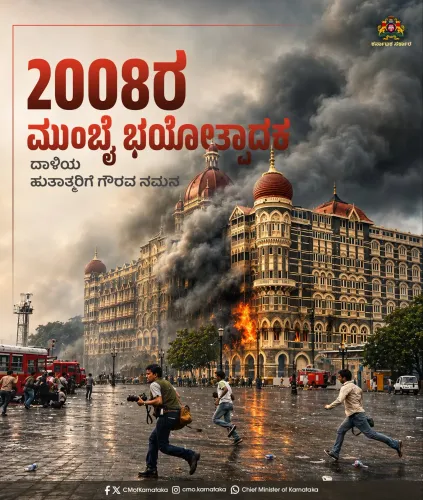
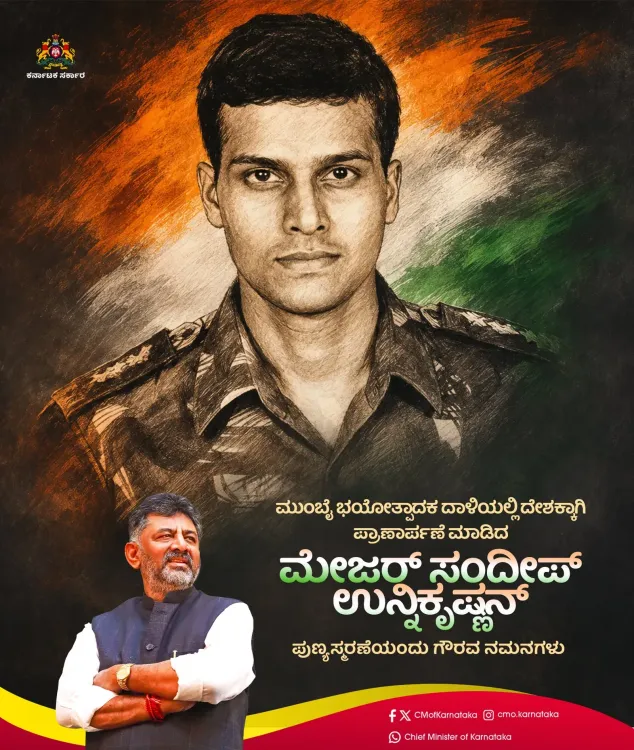
The Chief Minister's Office of Karnataka on 28 November 2026 paid tribute to Major Sandeep Unnikrishnan, the Bengaluru-born NSG officer killed leading Operation Black Tornado at the Taj during the 2008 Mumbai attacks, calling his sacrifice a lasting symbol of courage and nation-first duty.
Key Takeaways
The Chief Minister's Office of Karnataka on 28 November 2026 paid tribute to Major Sandeep Unnikrishnan.
The Kannada post said his sacrifice would remain forever memorable in India's history and invoked a 'nation first' resolve.
Unnikrishnan, an Army officer from Bengaluru deputed to the NSG, was killed leading Operation Black Tornado at the Taj Mahal Palace Hotel.
The 2008 Mumbai attacks ran from 26 to 29 November and killed 166 people.
The siege led to additional NSG hubs and a strengthened coastal security architecture.
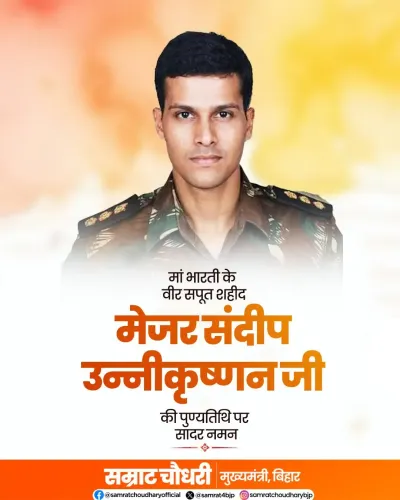
Gunfire had already torn through the Taj Mahal Palace Hotel when a Bengaluru-born Army officer led his men into the siege. On 28 November 2026, the Chief Minister's Office of Karnataka recalled that officer, Major Sandeep Unnikrishnan, and said his sacrifice for the nation's defence would remain forever memorable in India's history.
Writing in Kannada, the office described him as a valiant warrior who stood as a symbol of unmatched courage, devotion to duty and sacrifice. It said that during the 2008 Mumbai terrorist attack he fought in the front line of the operation against the terrorists and offered his own life to protect the country's civilians. His life, the tribute said, was lived with the unwavering resolve of ದೇಶ ಮೊದಲು ('nation first'), and it hoped that example would awaken patriotism and a spirit of service in every Indian.
The officer from Bengaluru at the Taj
Major Sandeep Unnikrishnan was an Indian Army officer from Bengaluru, deputed to the National Security Guard, the elite central counter-terrorism force. He was killed while leading Operation Black Tornado, the NSG hostage-rescue mission at the Taj Mahal Palace Hotel as the 26/11 attacks unfolded.
The coordinated Lashkar-e-Taiba strikes across Mumbai ran from 26 to 29 November 2008 and killed 166 people. Among the dead were civilians, police personnel and commandos. His name became one of the most widely remembered of that siege because he died clearing rooms so hostages might live.
How 26/11 recast India's security map
The attacks forced a rewrite of India's counter-terrorism architecture. Additional NSG hubs were created so commandos would not have to fly from a single base, and coastal security was tightened after the attackers arrived by sea. Those reforms remain the operational shadow of those nights in November.
State governments across India still issue public tributes to 26/11 martyrs around the anniversary. The Karnataka message sits in that annual rhythm of remembrance, tying a son of Bengaluru to a national security lesson that has not faded.
A name that returns every November
Each year, 26/11 commemorations at state and national level bring Unnikrishnan's story back into public view — not as folklore, but as a reminder of what the NSG was asked to do when the city was under fire. Armed forces families and serving personnel remain the first audience for that memory.
The Karnataka office's closing wish was simple: that a life spent putting the country first should still stir patriotism and a will to serve. Eighteen Novembers later, the siege is history. The standard he set is not.
Point of View
Coastal watch and rapid deployment. The 'nation first' framing is the standard language of martyr remembrance, and it doubles as a quiet reminder that counter-terrorism capacity remains a live policy file, not a closed chapter of 2008.
NationPress
28 Nov 2026
Frequently Asked Questions
Who was Major Sandeep Unnikrishnan?
He was an Indian Army officer from Bengaluru, deputed to the National Security Guard, who was killed in November 2008 while leading Operation Black Tornado at the Taj Mahal Palace Hotel during the Mumbai attacks.
What did the Karnataka CMO say about Major Sandeep Unnikrishnan?
On 28 November 2026 it said his sacrifice would always remain memorable in India's history, recalling that he fought on the front line in 2008 and gave his life to protect civilians, and it hoped his 'nation first' example would awaken patriotism and service.
What was Operation Black Tornado?
It was the NSG hostage-rescue operation at the Taj Mahal Palace Hotel during the 26/11 Mumbai attacks, in which Major Sandeep Unnikrishnan was martyred while leading his team.
How many people were killed in the 2008 Mumbai attacks?
The coordinated Lashkar-e-Taiba strikes from 26 to 29 November 2008 killed 166 people across Mumbai.
Why is Major Sandeep Unnikrishnan remembered in Karnataka?
He was from Bengaluru, and state offices in Karnataka, like others across India, issue public tributes around the 26/11 anniversary to honour his sacrifice and keep national security memory alive.