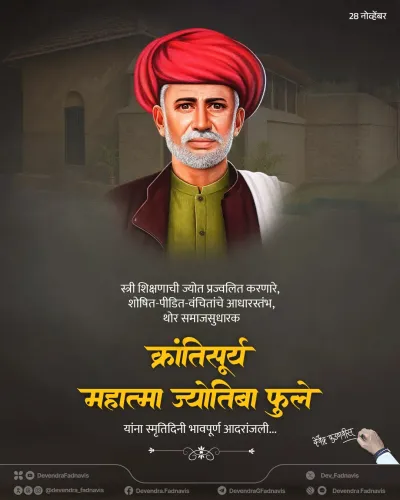
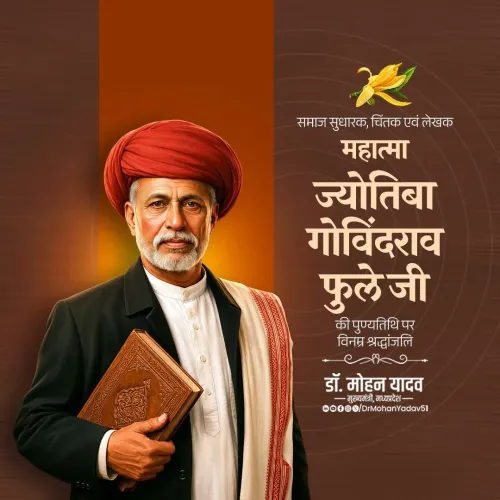
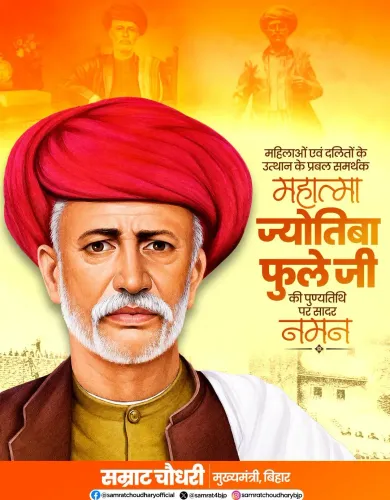
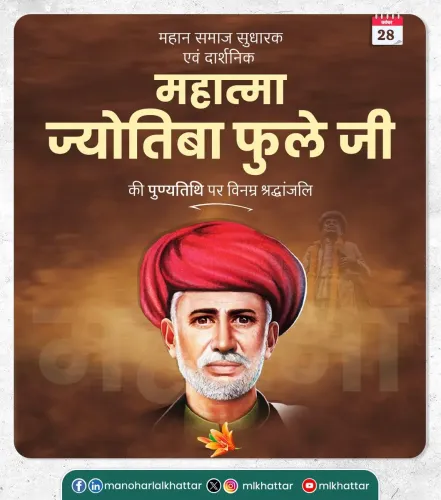
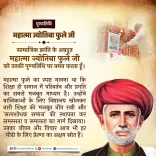
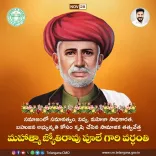
Amit Shah pays homage to Jyotiba Phule on death anniversary
Synopsis
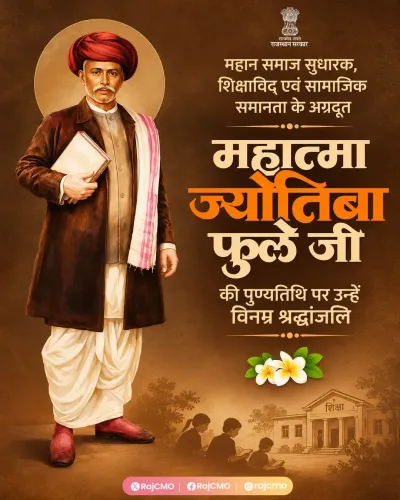
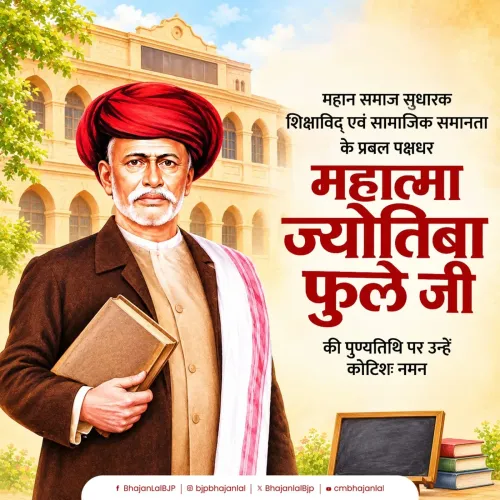
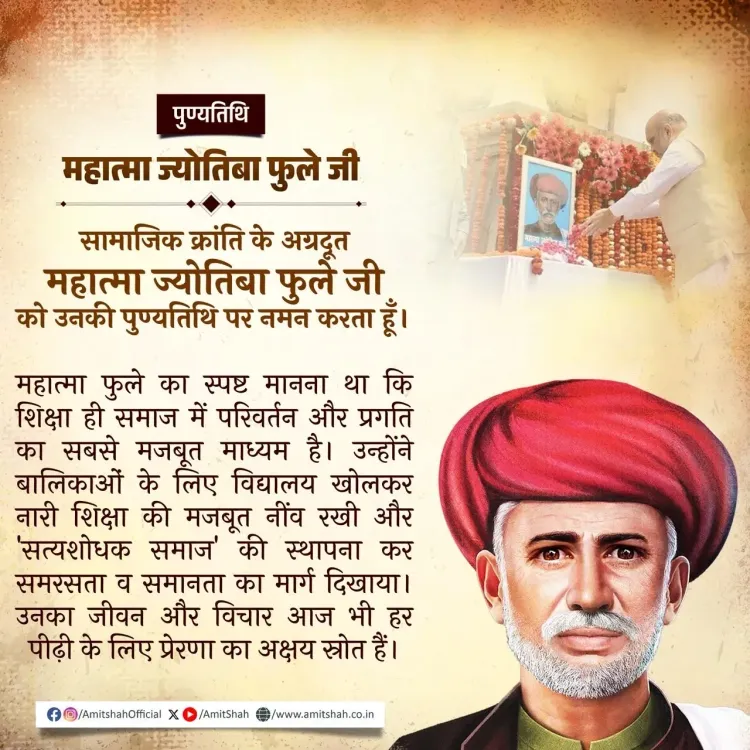
Union Home Minister Amit Shah paid homage to Mahatma Jyotiba Phule on his death anniversary, recalling the reformer's push for girls' education and the founding of Satyashodhak Samaj.
Key Takeaways
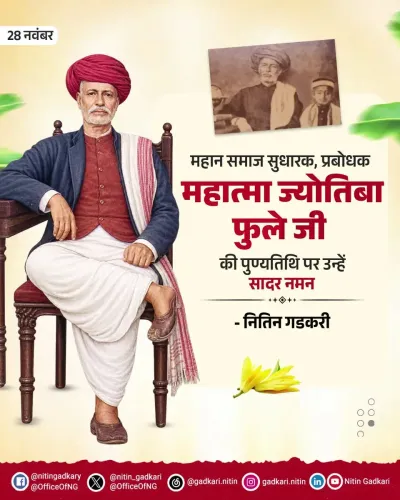
Union Home Minister Amit Shah paid homage to Mahatma Jyotiba Phule on his 28 November death anniversary.
Shah said Phule held that education is the strongest medium of social change and progress.
He credited Phule with opening schools for girls and laying a foundation for women's education.
Shah recalled the founding of Satyashodhak Samaj as a path of harmony and equality.
Satyashodhak Samaj was founded by Phule in 1873 to organise marginalised groups around social equality.
Shah called Phule's life and thoughts an inexhaustible source of inspiration for every generation.
Union Home Minister Amit Shah on 28 November paid homage to Mahatma Jyotiba Phule on the social reformer's death anniversary, putting a 19th-century wager back at the centre of India's equality argument: education is the strongest engine of social change. Shah called Phule a pioneer of social revolution who opened schools for girls and founded the Satyashodhak Samaj to show a path of harmony and equality.
On X, Shah wrote: 'I pay homage to Mahatma Jyotiba Phule, pioneer of social revolution, on his death anniversary.' Phule, he said, clearly believed that education is the strongest medium of change and progress in society. By opening schools for girls, the reformer laid a strong foundation for women's education; by establishing Satyashodhak Samaj, he showed the path of samarasata (harmony) and equality. His life and thoughts, Shah added, remain an inexhaustible source of inspiration for every generation.
Girls' classrooms as the first reform
Phule, a Maharashtra-born reformer of the 1800s, treated literacy as a direct challenge to caste exclusion and to the shutting out of women. Opening schools for girls was the core of that programme, not an afterthought. If society was to change, girls had to be taught first.
Shah's tribute returned to that single lever rather than a long list of later schemes. The claim is simple and still tested on the ground: classrooms that reach first-generation learners remain the hardest measure of the equality Phule preached.
Satyashodhak Samaj and the 1873 turn
In 1873, Phule founded the Satyashodhak Samaj, or Truth-Seekers' Society, to organise marginalised groups around social equality and a rejection of ritual hierarchy. The body became a reference point for later anti-caste politics in western India.
Political leaders across parties mark 28 November each year as Phule's death anniversary. The calendar ritual is familiar. What Shah chose to underline were two concrete acts, schools for girls and an organisation built to preach equality, and a reminder that Phule's ideas still speak to every generation.
More than a century after his death, the question Phule posed is the one governments still have to answer in who actually sits in those classrooms.
Point of View
But Amit Shah's note was tightly framed around two acts: girls' schooling and Satyashodhak Samaj. That pairing fits a longer effort by national parties to claim 19th-century social reformers as part of a shared equality story rather than a single political inheritance. The sharper test is whether education-first language is matched by outcomes for the same communities Phule organised. Commemoration is easy; classrooms that actually hold first-generation girls are the harder ledger.
NationPress
28 Nov 2026
Frequently Asked Questions
When is Mahatma Jyotiba Phule's death anniversary?
Mahatma Jyotiba Phule's death anniversary is observed on 28 November each year. Union Home Minister Amit Shah issued a tribute on that date, recalling Phule's work on education and social equality.
What did Amit Shah say about Jyotiba Phule?
Shah paid homage to Phule as a pioneer of social revolution and said education is the strongest medium of change and progress. He credited Phule with opening schools for girls and founding Satyashodhak Samaj.
What is Satyashodhak Samaj?
Satyashodhak Samaj, or Truth-Seekers' Society, was founded by Jyotiba Phule in 1873. It sought to promote social equality and organise marginalised groups against ritual hierarchy.
Why is Jyotiba Phule remembered for girls' education?
Phule opened schools for girls in 19th-century Maharashtra and treated women's literacy as central to social change. Amit Shah's tribute highlighted that work as the foundation of women's education in India.
Who was Mahatma Jyotiba Phule?
Mahatma Jyotiba Phule was a 19th-century social reformer from Maharashtra who opposed caste discrimination and campaigned for education for women and lower castes. He founded Satyashodhak Samaj in 1873.