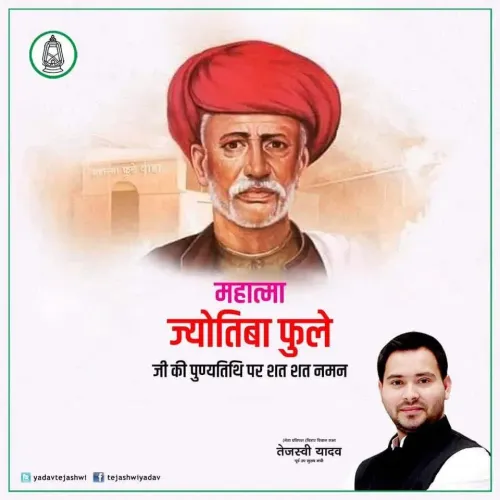
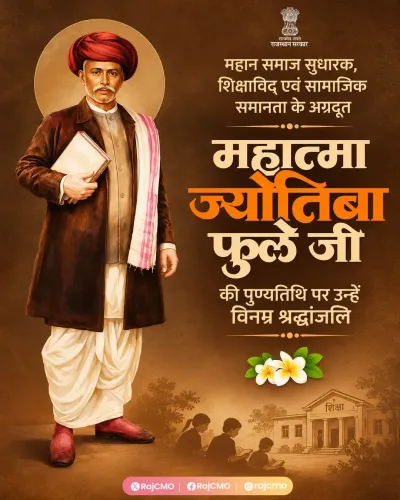
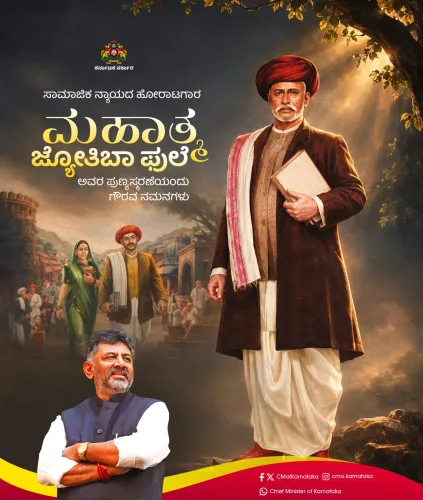
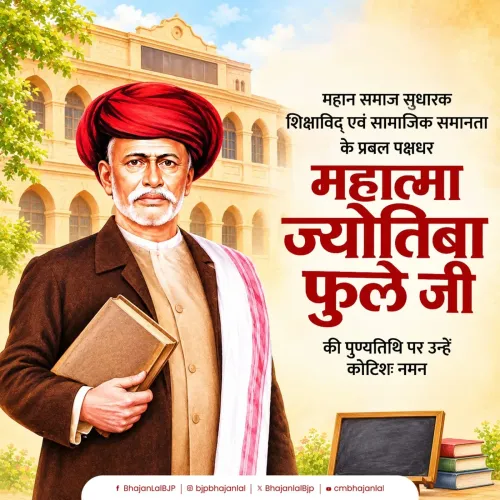
Power Minister Khattar pays tribute to Jyotiba Phule
Synopsis
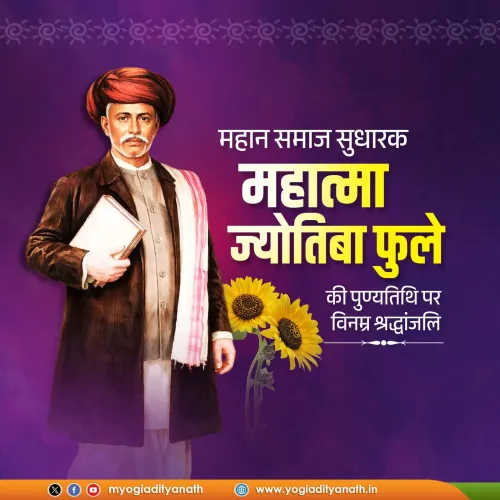
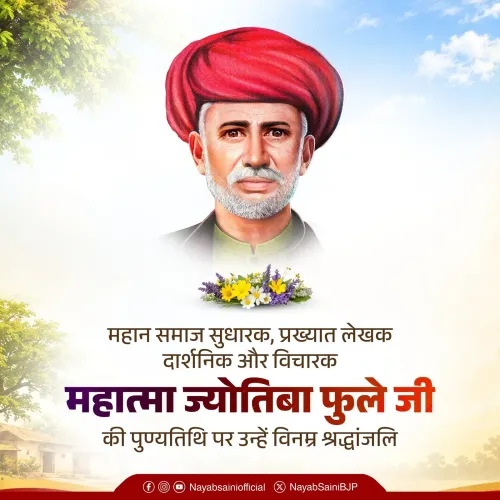
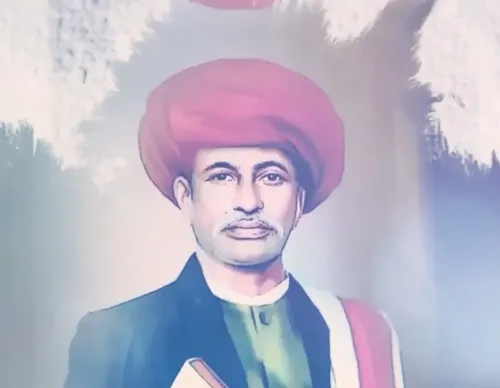
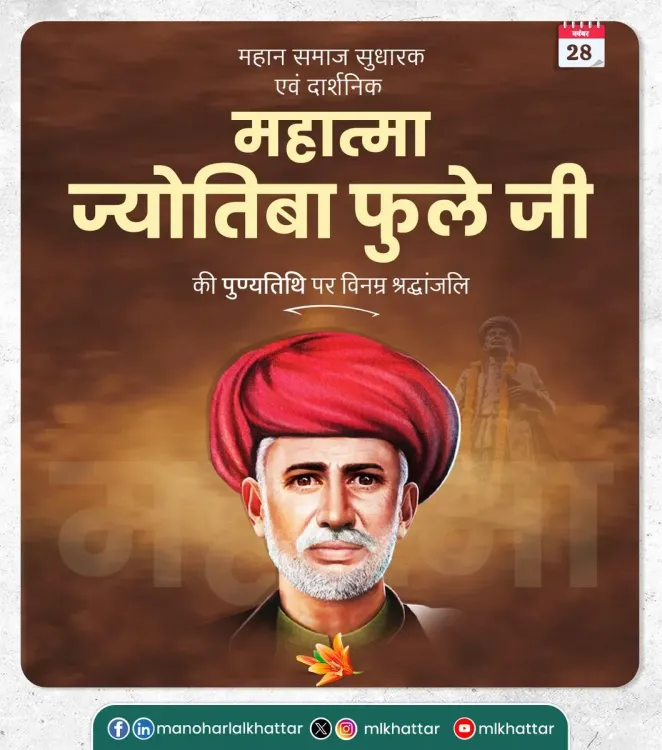
Union Power Minister Manohar Lal Khattar on 28 November 2026 paid homage to Mahatma Jyotiba Phule on the social reformer's death anniversary. He called Phule Krantisurya, praised his lifelong fight for women's education and equality, and said the thinker's ideas still guide nation-building. The message was a ceremonial tribute with no new policy attached.
Key Takeaways
Union Power Minister Manohar Lal Khattar paid tribute to Mahatma Jyotiba Phule on the reformer's death anniversary on 28 November 2026 .
Khattar called Phule Krantisurya (sun of revolution) and a pioneer of social revolution who struggled for women's education and equality.
He said Phule's vision showed a new path for social reform and laid a foundation for nation-building.
Phule was a 19th-century social reformer who opposed caste discrimination and worked for the rights of lower castes.
The message was a ceremonial homage with no linked policy announcement or parliamentary action.
On 28 November 2026, the death anniversary of one of modern India's earliest champions of women's schooling and caste equality, Union Power Minister Manohar Lal Khattar paid homage to Mahatma Jyotiba Phule. The Union Minister of Power and Housing and Urban Affairs, a former Chief Minister of Haryana, called the 19th-century thinker a pioneer of social revolution whose lifelong struggle still frames how the republic talks about education and equal rights.
In a Hindi message posted on Saturday morning, Khattar offered a 'humble tribute' to the social reformer and thinker he named Krantisurya (sun of revolution). He said Phule had spent a lifetime struggling for women's education and the right to equality, and that the reformer's vision and work had not only shown a new path for social reform but had also laid the foundation of nation-building.
The minister added that Phule's sacred thoughts would continue to pave the way for the reconstruction of the nation and society.
The Pune reformer who opened school doors
Mahatma Jyotiba Phule was a 19th-century social reformer and thinker who advocated women's education, opposed caste discrimination, and worked for the rights of lower castes. His name is invoked each year on this date by political leaders across parties, a ritual that acknowledges how 19th-century reform movements shaped later ideas of social equality and access to learning.
Khattar's post did not announce any scheme, bill, or official event. It sits in a familiar pattern of public statements on the punyatithi of historical social reformers, without an immediate policy follow-through.
A calendar of memory, not a policy cue
No parliamentary action or new programme is linked to the tribute. What remains is the claim Khattar placed on the record — that Phule's ideas still light the work of nation-building, and that a reformer's classroom politics from the 1800s still belongs in the language of a Union minister in 2026.
The measure of that claim will not be another anniversary message. It will be whether the doors Phule forced open — to girls' education and to those shut out by caste — keep widening in the India that now commemorates him.
Point of View
A way of claiming the 19th-century social-reform canon without necessarily tying it to a live bill or scheme. Khattar's message stays inside that ceremonial lane: praise for women's education and equality, and no operational announcement. The political signal is still real. In a crowded calendar of historical commemorations, the choice of which ancestors a ruling party names tells you whose vocabulary of social justice it wants to inherit, even when the post itself points to no immediate policy turn.
NationPress
28 Nov 2026
Frequently Asked Questions
When is Mahatma Jyotiba Phule's death anniversary?
Mahatma Jyotiba Phule's death anniversary, or punyatithi, is observed on 28 November each year. Union Power Minister Manohar Lal Khattar issued a tribute on that date in 2026.
Who was Mahatma Jyotiba Phule?
Mahatma Jyotiba Phule was a 19th-century Indian social reformer and thinker. He advocated women's education, opposed caste discrimination, and worked for the rights of lower castes.
What did Manohar Lal Khattar say about Jyotiba Phule?
Khattar called Phule a pioneer of social revolution and Krantisurya, and said his vision laid a foundation for nation-building. He offered tributes on the reformer's punyatithi and said Phule's thoughts would continue to guide the reconstruction of the nation and society.
Why is Jyotiba Phule called Krantisurya?
Krantisurya, meaning sun of revolution, is an honorific used for Phule to mark his role as a pioneer of social revolution. Khattar used the title in his tribute, linking it to Phule's lifelong work for women's education and equality.
Did the tribute announce any new government scheme?
No. The post was a ceremonial homage with no linked policy announcement, parliamentary action, or new programme mentioned.