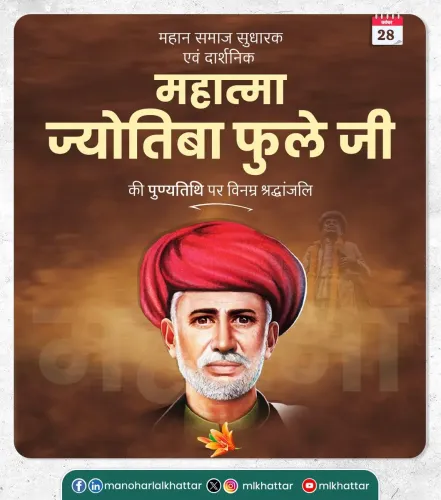
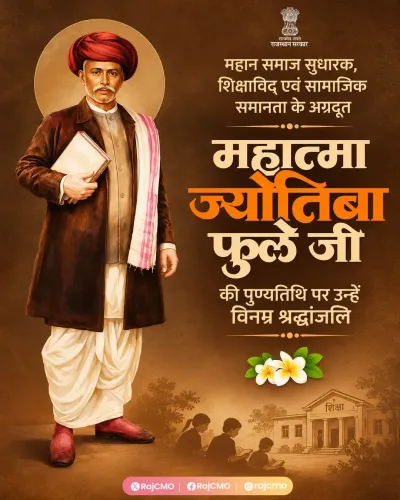
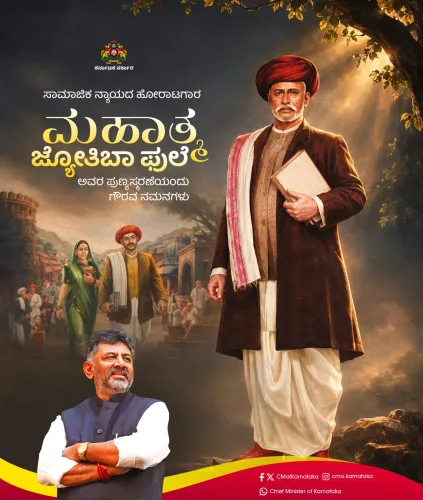
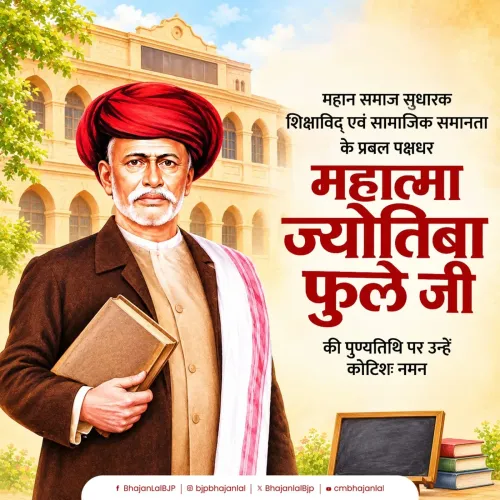
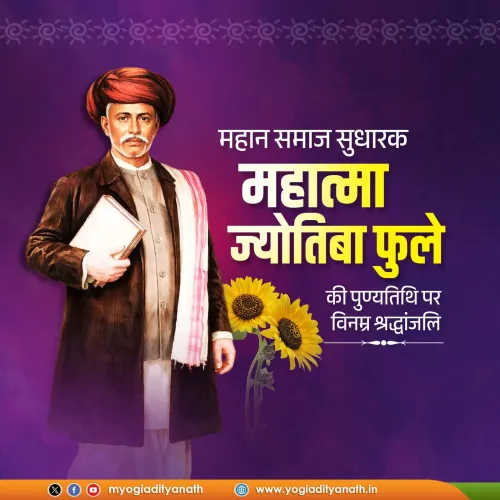
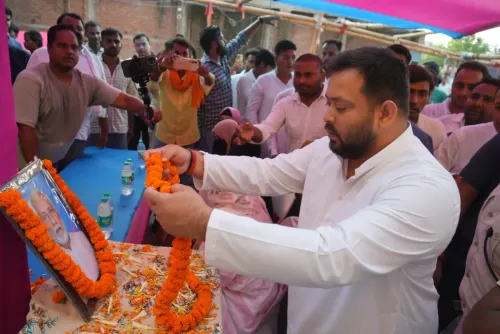
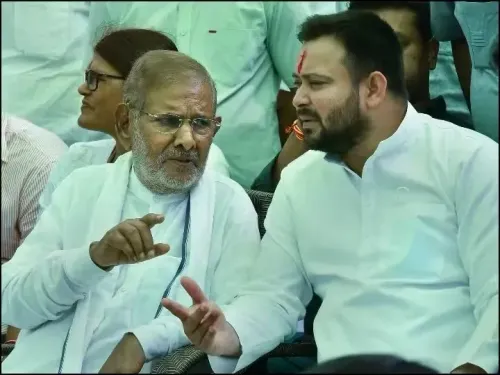
Tejashwi Yadav pays tribute to Mahatma Jyotiba Phule
Synopsis
RJD leader Tejashwi Yadav offered a heartfelt tribute to Mahatma Jyotiba Phule on his death anniversary, recalling the Satyashodhak Samaj founder's lifelong opposition to untouchability, caste hierarchy and patriarchy.
Key Takeaways
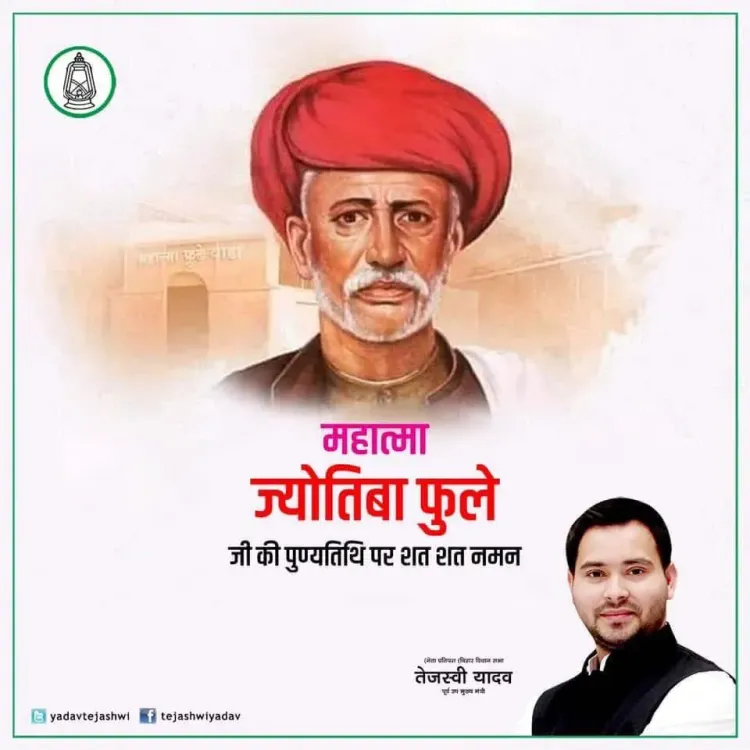
RJD leader Tejashwi Yadav , Leader of the Opposition in the Bihar Assembly, paid tribute to Mahatma Jyotiba Phule on his punyatithi.
Yadav hailed Phule as a lifelong opponent of untouchability, caste ranking, the varna system and patriarchal social order.
Phule founded the Satyashodhak Samaj in 1873 to promote education and equality for lower castes and women.
Phule died on 28 November 1890 ; the date is marked annually by social-justice parties in Bihar and Maharashtra.
The tribute restates a political lineage around caste equity and adds no new policy announcement.
On the death anniversary of Maharashtra's pioneering anti-caste reformer, RJD leader Tejashwi Yadav, Leader of the Opposition in the Bihar Legislative Assembly, offered a solemn tribute to Mahatma Jyotiba Phule. The former Deputy Chief Minister of Bihar remembered the 19th-century thinker as a man who spent his life opposing untouchability, caste hierarchy, the varna order and patriarchal social arrangements.
Writing in Hindi, Yadav said he was paying bhavbheeni shraddhanjali (a heartfelt tribute) to the great social reformer and founder of the Satyashodhak Samaj. He named the battles Phule fought: asprishyata (untouchability), high-and-low ranking, the varna system, and a patriarchal social order.
The founder of Satyashodhak Samaj
Mahatma Jyotiba Phule was a 19th-century social reformer from Maharashtra. In 1873 he established the Satyashodhak Samaj, an organisation built to spread education and social equality among lower castes and women.
He campaigned against untouchability, the caste ladder and gender inequality when those hierarchies were treated as natural law. Phule died on 28 November 1890. That date is now observed across India as his punyatithi, drawing statements from leaders who claim the social-justice tradition.
Why Phule still speaks in Bihar
Opposition leaders from social-justice parties have long used Phule's anniversary to restate a political identity. In Bihar, where caste equity remains a central language of mobilisation, tributes of this kind are less a policy announcement than a reminder of lineage.
Yadav's Rashtriya Janata Dal has historically organised around backward-caste assertion. Invoking Phule places that claim beside a documented 19th-century struggle, not beside a new scheme or a fresh legislative demand.
As parties mark 28 November each year, the test is whether Phule's name still sharpens the fight against untouchability and patriarchy, or whether it becomes only a seasonal ritual.
Point of View
Where 19th-century reformers are invoked to keep caste equity at the centre of public language. Phule's Satyashodhak Samaj remains a usable symbol for parties that organise among backward and Dalit constituencies in Bihar. The post adds no new policy, but it restates a claim to Phule's anti-untouchability and anti-patriarchy legacy. Watch whether rival parties in Bihar and Maharashtra match the commemoration with events on the ground.
NationPress
28 Nov 2026
Frequently Asked Questions
Who was Mahatma Jyotiba Phule?
Mahatma Jyotiba Phule was a 19th-century social reformer from Maharashtra who campaigned against untouchability, caste hierarchy and gender inequality. He founded the Satyashodhak Samaj in 1873 to promote education and social equality for lower castes and women.
When is Jyotiba Phule's death anniversary?
Jyotiba Phule's death anniversary, or punyatithi, falls on 28 November. He died on 28 November 1890, and the date is marked each year by political leaders and social organisations.
What is the Satyashodhak Samaj?
The Satyashodhak Samaj is an organisation Phule established in 1873 to spread education and social equality among lower castes and women. Tejashwi Yadav's tribute specifically named Phule as its founder.
What did Tejashwi Yadav say on Phule's punyatithi?
Yadav offered a heartfelt tribute to Phule, describing him as a great social reformer who lifelong opposed untouchability, caste ranking, the varna system and patriarchal social order. He posted the homage on X as Leader of the Opposition in the Bihar Assembly.
Why do Indian politicians pay tribute to Jyotiba Phule?
Leaders from social-justice parties routinely mark Phule's anniversary to signal commitment to caste equity and women's equality. In Bihar, such statements form part of a longer contest over who inherits the reformer's anti-caste legacy.