Karnataka CM's Office Hosts Live Institutional CSR Event

Synopsis
The Chief Minister's Office of Karnataka livestreamed a programme on Institutional CSR on 4 November 2026, bringing together corporate representatives to align mandatory CSR spending under the Companies Act 2013 with the state's development priorities in education, health, and infrastructure.
Key Takeaways
The Chief Minister's Office of Karnataka hosted a live Institutional CSR event on 4 November 2026 .
The programme was broadcast publicly on YouTube , signalling an open, accountable approach to CSR coordination.
Under Section 135 of the Companies Act, 2013 , qualifying companies must spend at least 2% of average net profits on CSR activities.
Karnataka, anchored by Bengaluru's tech and manufacturing corridor, commands a significant share of India's corporate CSR pool.
State governments use such convenings to channel CSR funds into vetted priorities — education, health, skilling, and infrastructure — without additional fiscal burden.
Specific project allocations and partnership outcomes from this event are yet to be officially detailed.
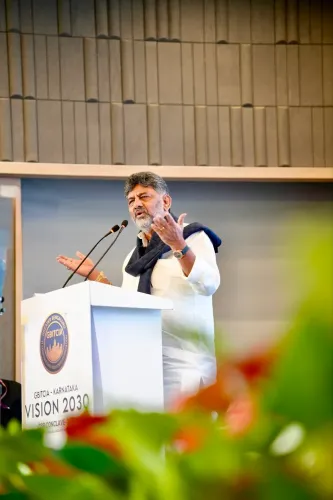
The Chief Minister's Office of Karnataka opened its doors — and its livestream — on Wednesday, 4 November 2026, convening corporate representatives for a live programme on Institutional Corporate Social Responsibility (CSR), signalling the state government's intent to actively channel private-sector social spending toward Karnataka's development priorities.
The event, broadcast live on YouTube, brought together institutional CSR representatives under the banner of what the CMO called ಸಾಂಸ್ಥಿಕ ಸಾಮಾಜಿಕ ಹೊಣೆಗಾರಿಕೆ ('Institutional Social Responsibility'). The choice of a live, public-facing format underscores how state governments are increasingly treating CSR alignment not as a quiet back-channel exercise but as an open governance conversation.
Why CSR alignment matters for Karnataka
Under Section 135 of the Companies Act, 2013, every qualifying Indian company — those with a net worth of ₹500 crore or more, a turnover of ₹1,000 crore or more, or a net profit of ₹5 crore or more — must spend at least 2% of its average net profits over the preceding three years on CSR activities. That statutory floor translates into billions of rupees flowing annually through India's corporate sector into social programmes.
Karnataka, home to Bengaluru's sprawling technology and manufacturing corridor, sits at the heart of this landscape. The state hosts some of India's highest-value corporate headquarters and listed entities, meaning its share of mandatory CSR pools is substantial. When the CMO convenes institutional representatives, the implicit ask is clear: direct that spending where the state's developmental gaps are sharpest — education, healthcare, skilling, and infrastructure.
State governments as CSR architects
Indian state governments have progressively moved from passive beneficiaries of CSR to active architects of it. Periodic convenings like this one serve a dual purpose: they give companies a mapped menu of vetted projects that satisfy regulatory requirements, and they give the state a pipeline of funded interventions without touching the fiscal budget. It is, in effect, a co-funding model dressed in governance language.
The live-stream format also adds a layer of public accountability — civil society groups, district officials, and citizens can watch commitments form in real time, raising the reputational stakes for corporate participants who pledge support.
With specific project allocations and partnership announcements from this event yet to be detailed, the sharper story will emerge in the follow-up notifications. But Karnataka has just made its intentions unmistakably public: CSR rupees are welcome, and the state has a plan for every one of them.
Point of View
Not merely a passive recipient. This fits a broader pattern across Indian states of converting mandatory CSR into a quasi-public-funding instrument aligned with ruling-party development narratives. For Karnataka, with an election cycle always on the horizon, visibly corralling corporate money toward welfare priorities carries both administrative and political logic. The follow-through — actual project commitments and disbursements — will be the real test of whether this convening moves the needle or remains a performative livestream.
NationPress
4 Nov 2026
Frequently Asked Questions
What is Institutional CSR in India?
Institutional CSR refers to the structured, organisation-level approach to fulfilling Corporate Social Responsibility obligations under the Companies Act 2013, where qualifying companies must spend at least 2% of average net profits on social welfare activities such as education, health, and environmental sustainability.
Why did the Karnataka CMO hold a CSR programme?
The Chief Minister's Office of Karnataka convened corporate representatives to align mandatory CSR spending with the state's development priorities, effectively directing private-sector social funds toward vetted projects in areas such as education, healthcare, and infrastructure.
Which companies are required to spend on CSR in India?
Under Section 135 of the Companies Act 2013, companies with a net worth of ₹500 crore or more, a turnover of ₹1,000 crore or more, or a net profit of ₹5 crore or more in the preceding financial year are required to constitute a CSR committee and spend at least 2% of their average net profits on CSR activities.
How does Karnataka benefit from corporate CSR funds?
As home to Bengaluru's large technology and manufacturing sector, Karnataka hosts many high-value companies with significant CSR obligations. By coordinating with these firms, the state can supplement government welfare spending in education, skilling, health, and infrastructure without additional budget outlay.
Where can I watch the Karnataka CMO Institutional CSR event?
The Karnataka CMO shared a live YouTube link for the Institutional CSR programme held on 4 November 2026, making it accessible to the public in real time.