Karnataka CM's Office Launches Rural Dev Dept's Ambitious Schemes

Synopsis
The Chief Minister's Office of Karnataka on 20 November 2026 live-streamed the inauguration of ambitious new schemes under the Rural Development and Panchayat Raj Department, targeting rural infrastructure and grassroots governance across the state.
Key Takeaways
The Chief Minister's Office of Karnataka announced and live-streamed a scheme inauguration on 20 November 2026 .
The schemes belong to the Rural Development and Panchayat Raj Department , Karnataka's primary body for village-level governance and infrastructure.
The department's mandate is grounded in the Karnataka Panchayat Raj Act, 1993 and the 73rd Constitutional Amendment .
Karnataka's rural development programmes have historically aligned with national schemes including MGNREGA and the Swachh Bharat Mission .
Specific scheme names, budgets, and district-level rollout details are yet to be formally released by the government.
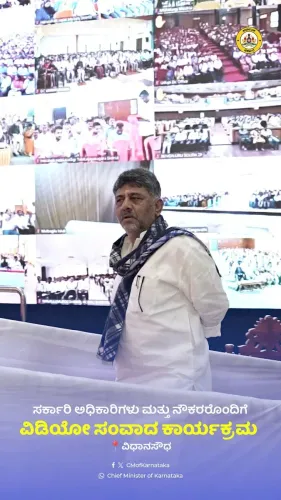
Karnataka's villages are at the centre of government attention today, as the Chief Minister's Office of Karnataka announced a live inauguration event on Friday, 20 November 2026 for a set of ambitious new schemes under the state's Rural Development and Panchayat Raj Department — the principal body responsible for grassroots infrastructure, local governance, and empowering panchayat institutions across the state.
The post, shared in Kannada, reads: 'ಗ್ರಾಮೀಣಾಭಿವೃದ್ಧಿ ಮತ್ತು ಪಂಚಾಯತ್ ರಾಜ್ ಇಲಾಖೆಯ ಮಹತ್ವಾಕಾಂಕ್ಷಿ ಯೋಜನೆಗಳ ಪ್ರಾರಂಭೋತ್ಸವ' — translating to 'Launch of ambitious schemes of the Rural Development and Panchayat Raj Department.' The event was streamed live, signalling the government's intent to bring transparency and wide reach to the rollout.
Rural Development and Panchayat Raj: Karnataka's Grassroots Engine
The Rural Development and Panchayat Raj Department is the backbone of Karnataka's decentralised governance architecture. Its mandate runs from village-level infrastructure — roads, sanitation, drinking water — to strengthening elected panchayat bodies and ensuring the last-mile delivery of welfare programmes. The department's authority draws directly from the Karnataka Panchayat Raj Act, 1993, enacted in the wake of the 73rd Constitutional Amendment that institutionalised local self-governance across India.
Karnataka has historically been among the more proactive states in aligning its rural spending with central schemes — from the Mahatma Gandhi National Rural Employment Guarantee Act (MGNREGA) to the Swachh Bharat Mission. New state-level packages launched under this umbrella typically add targeted layers: district-specific infrastructure drives, panchayat capacity-building programmes, or digital governance initiatives at the village level.
What a Scheme Launch of This Scale Usually Signals
When a state government stages a live-streamed, high-profile inauguration for a cluster of rural development schemes, it generally signals one of two things — or both. First, a fresh budget allocation with concrete timelines and district-level targets. Second, a political statement: that the ruling dispensation is investing visibly in rural Karnataka ahead of a governance cycle.
The specific names, budgets, and implementation timelines for the schemes launched today are yet to be detailed in official government releases. Those granular specifics — which districts receive priority, which panchayats are covered, and what the outlay per scheme looks like — will determine how consequential this inauguration ultimately proves to be for the state's approximately 6,000-plus gram panchayats.
For now, the signal from Bengaluru is unmistakable: Karnataka's rural governance machinery is being reset, publicly and in real time. Whether the ambition matches the delivery is the question panchayats across the state will be watching closely.
Point of View
A constituency that matters enormously in Karnataka's electoral arithmetic. By anchoring new schemes under the Rural Development and Panchayat Raj Department, the government is working within a well-established constitutional framework, lending institutional credibility to what could otherwise look like a political announcement. The real test, as with every rural scheme cluster in India, will be in the district-level implementation data that follows. Until scheme-specific budgets and targets are published, today's launch remains a headline with the substance still to be written.
NationPress
20 Nov 2026
Frequently Asked Questions
What schemes were launched by Karnataka's Rural Development and Panchayat Raj Department on 20 November 2026?
The Chief Minister's Office of Karnataka announced the inauguration of ambitious schemes under the Rural Development and Panchayat Raj Department on 20 November 2026, but the specific names and details of the schemes are yet to be officially detailed in subsequent government releases.
What does Karnataka's Rural Development and Panchayat Raj Department do?
The Rural Development and Panchayat Raj Department is Karnataka's primary body for overseeing rural infrastructure, sanitation, drinking water, and strengthening elected panchayat institutions. It operates under the framework of the Karnataka Panchayat Raj Act, 1993.
What is the Karnataka Panchayat Raj Act 1993?
The Karnataka Panchayat Raj Act, 1993 is a state law enacted following the 73rd Constitutional Amendment to institutionalise decentralised, local self-governance through elected gram panchayats across Karnataka.
How does Karnataka's rural development connect to central government schemes?
Karnataka has aligned its rural development spending with major national programmes such as MGNREGA (Mahatma Gandhi National Rural Employment Guarantee Act) and the Swachh Bharat Mission, often supplementing them with state-specific schemes and budgets.
Where can I watch the Karnataka Rural Development scheme inauguration live stream?
The Chief Minister's Office of Karnataka shared a YouTube live stream link in their official post on X on 20 November 2026 for the inauguration event.