Karnataka CM's Office: State Leads Namma Metro Funding
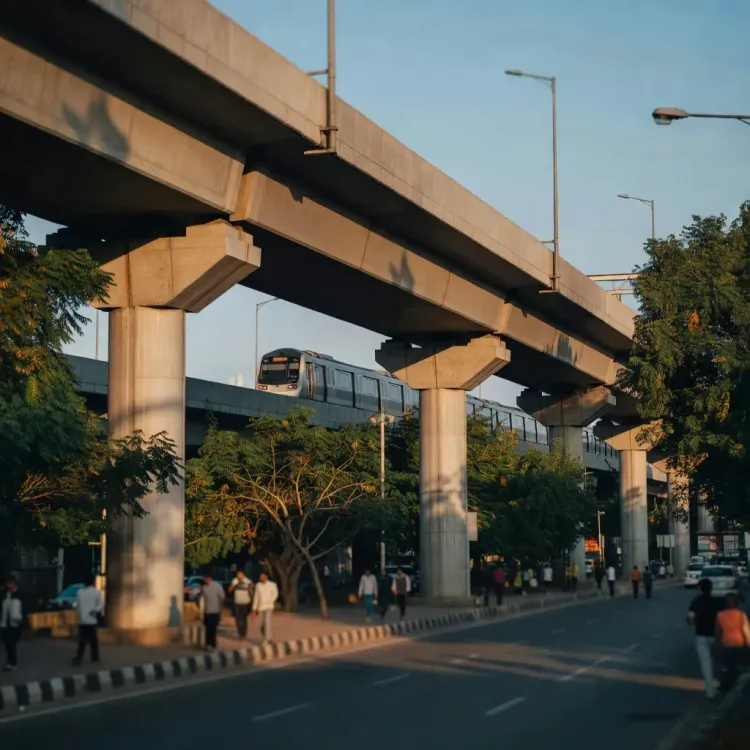
Synopsis
The Chief Minister's Office of Karnataka declared on 11 November 2026 that the state contributes more to Namma Metro than the Union Government, bearing costs of land acquisition, rehabilitation, taxes, operations, loan repayment and project-delay overruns across all phases.
Key Takeaways
The Government of Karnataka claims its total contribution to Namma Metro exceeds that of the Union Government across all project phases.
State responsibilities include land acquisition, rehabilitation, state taxes, interest during construction, loan repayment and ongoing operation and maintenance .
Karnataka is also absorbing a 'significant share' of additional costs arising from project delays .
Namma Metro Phase 1 launched in 2011 ; Phase 2 was approved in 2017 targeting 114 km of network.
The post signals Karnataka's intent to continue supporting new metro lines and network expansion in Bengaluru .
The hashtag #IdhuNammaMetro (Kannada: 'This is Our Metro') frames metro ownership as a local, state-led achievement.
When a state government steps forward to outspend the Centre on a flagship urban infrastructure project — and then publicly says so — it is a political statement as much as a fiscal one. On Wednesday, 11 November 2026, the Chief Minister's Office of Karnataka posted a pointed declaration on X, asserting that the Government of Karnataka is contributing more to Namma Metro than the Union Government across the project's various phases, and carrying costs that extend well beyond basic construction funding.
The post, tagged #IdhuNammaMetro ('This is Our Metro'), lays out a sweeping list of financial responsibilities the state has shouldered: land acquisition, rehabilitation of displaced residents, state taxes, interest charges during construction, loan repayment, and the ongoing operation and maintenance of metro services. The state also says it is absorbing a 'significant share' of additional costs triggered by project delays — a pointed acknowledgement that Bengaluru's metro expansion has not moved without friction.
What Karnataka is actually paying for
The cost-sharing architecture of Indian metro projects has always been lopsided in a particular direction: states write the cheques that the central funding formula does not cover. Under the Metro Rail Policy 2017, issued by the Ministry of Housing and Urban Affairs, states are expected to handle land acquisition, rehabilitation, and operations — but the Karnataka government's statement goes further, suggesting its total contribution across these heads now surpasses what the Centre has committed on the construction side.
Namma Metro Phase 1 opened in 2011 on a joint central-state funding model. The Union Cabinet approved Phase 2 in 2017, extending the network to 114 km. Since then, Bengaluru — a city whose explosive tech-sector growth has made urban congestion a daily crisis — has remained at the centre of debates about who pays, who delays, and who benefits from a modern metro spine.
The politics of metro money
Karnataka is not alone in this frustration. Across India, state governments managing large metro projects have increasingly pushed back against what they see as an asymmetric deal: they carry the land, the taxes, the operations risk, and the community disruption, while central funding covers only a portion of construction. By going public with this accounting, Karnataka's CMO is both defending its urban infrastructure record and subtly pressing for a recalibration of the national metro-financing model.
The hashtag choice is telling. IdhuNammaMetro — Kannada for 'This is Our Metro' — frames ownership as local, not federal. It is a message aimed at Bengaluru's commuters as much as at New Delhi.
Bengaluru's metro ambitions on the line
The statement closes with a commitment to 'new metro lines and network expansion,' signalling that the state intends to keep pushing forward despite the financial weight it describes. For a city whose roads have become synonymous with gridlock, every additional kilometre of metro track carries real economic and quality-of-life stakes. Whether future corridors receive stronger central support — or whether Karnataka continues to anchor the finances itself — will likely be decided in upcoming state and central budget cycles.
The CMO has drawn a clear line in the sand: Bengaluru's metro runs, in large part, on Karnataka's money. Now the question is whether the Centre responds with a revised funding share, or whether the state's assertive posture becomes the template for urban mobility politics across India.
Point of View
Taxes, operations, delay overruns — the state is building a political and fiscal case for a more equitable central funding formula, a conversation that resonates in metros from Pune to Hyderabad. The timing matters: with new corridors being planned, Karnataka is effectively negotiating in public, using commuter sentiment as leverage. If the Centre does not respond with higher construction grants, this post may mark the moment Karnataka decided to own the metro narrative — literally and politically.
NationPress
11 Nov 2026
Frequently Asked Questions
Does Karnataka contribute more to Namma Metro than the Central Government?
According to the Chief Minister's Office of Karnataka , yes — the state government contributes more than the Union Government across various phases of Namma Metro when land acquisition, rehabilitation, taxes, operations, and loan repayment are factored in.
What costs does Karnataka bear for Namma Metro?
Karnataka bears the costs of land acquisition, rehabilitation of displaced residents, state taxes, interest during construction, loan repayment, operation and maintenance of metro services, and a significant share of additional costs from project delays.
What are the phases of Namma Metro in Bengaluru?
Namma Metro Phase 1 was inaugurated in 2011 on a joint central-state funding model. Phase 2 , extending the network to 114 km , was approved by the Union Cabinet in 2017 and has been under implementation since.
What does IdhuNammaMetro mean?
IdhuNammaMetro is a Kannada phrase meaning 'This is Our Metro.' It is the official hashtag used by the Karnataka government to associate metro development with state-led ownership and local pride.
How is metro funding shared between states and the Centre in India?
Under the Metro Rail Policy 2017 , states are responsible for land acquisition, rehabilitation, and operations, while central grants cover a portion of construction costs. Karnataka argues its total outgo across all these heads now exceeds the Centre's contribution to Namma Metro .