Karnataka Govt Claims Bigger Metro Share Than Centre
Synopsis
The Chief Minister's Office of Karnataka declared on 11 November 2026 that the state government is the single largest financial contributor to Namma Metro, covering construction, land acquisition, rehabilitation, taxes, interest, and operations — investing more than the central government across all phases.
Key Takeaways
The Chief Minister's Office of Karnataka posted on 11 November 2026 asserting the state is the dominant funder of Namma Metro across all phases.
Karnataka's financial responsibilities include land acquisition, rehabilitation, state taxes, construction-period interest, loan repayment, and metro train maintenance — beyond its construction contribution.
The state claims it has invested more than the central government across various phases of the metro project.
Cost escalation from construction delays adds further financial burden, with the state absorbing a 'significant share.' BMRCL , the joint-venture SPV, operates under a shared funding model where states typically bear land and operational costs alongside equity contributions.
The post signals Karnataka's continued commitment to Bengaluru metro expansion and positions sustainable urban transport as a state government priority.
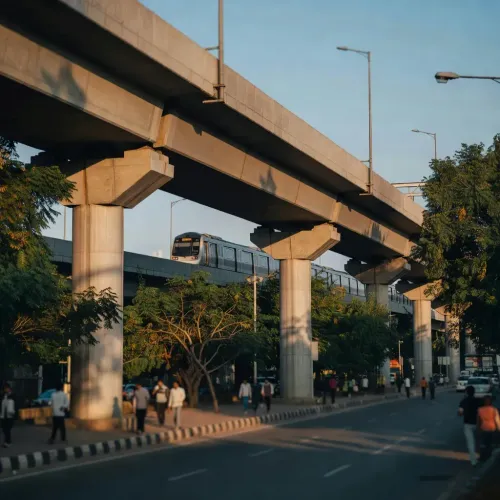
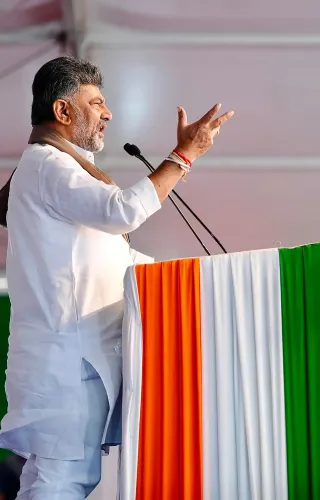
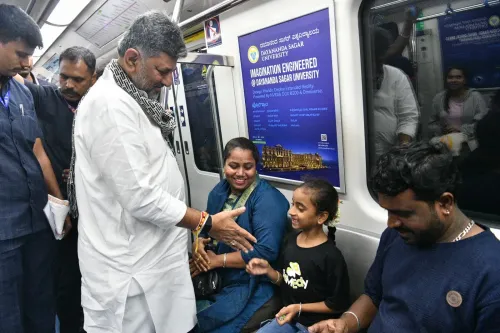
When it comes to building Bengaluru's metro network, the state is not just a partner — it is, by its own account, the dominant financier. The Chief Minister's Office of Karnataka posted on Wednesday, 11 November 2026, laying out in detail why the Karnataka government considers itself the principal driver of Namma Metro's growth — from land acquisition to loan repayments, from construction-period interest to daily operations.
The post, written in Kannada and tagged #ಇದುನಮ್ಮಮೆಟ್ರೋ ('This is Our Metro'), asserts that across all phases of the metro project, Karnataka has invested more than the central government. The state's responsibilities, it says, span not just capital construction costs but also land acquisition, rehabilitation of displaced residents, state taxes, interest during the construction period, debt repayment, and ongoing maintenance of metro trains. Cost overruns caused by construction delays, the post adds, also fall disproportionately on the state's books.
What BMRCL's funding model actually looks like
Bengaluru Metro Rail Corporation Limited (BMRCL) is a joint-venture special purpose vehicle set up between the Government of India and the Government of Karnataka to plan, build, and operate the network. Metro projects across India typically follow a shared-funding architecture: the Centre provides equity and viability-gap grants through the Ministry of Housing and Urban Affairs, while states absorb land costs, rehabilitation expenses, and operational deficits.
What Karnataka is now emphasising is that the state's total outgo — once you add land, taxes, interest, and operations to the construction contribution — consistently outpaces the Centre's direct infusion. This is a fiscal argument with political weight: if the state pays more, it has the stronger claim over credit for the network's expansion.
From Phase 1 corridors to a network still growing
Phase 1 of Bengaluru Metro was sanctioned in 2006, with the central-state equity-sharing model baked in from the start. Phase 2, approved in 2017, added new corridors and stretched the network considerably. Construction timelines on both phases stretched well beyond original projections — a reality that generates additional interest and cost escalation that the state says it has absorbed.
The CMO post signals that this financial commitment will continue: Karnataka says it is 'continuously providing grants and necessary assistance' for new lines and network expansion. Comprehensive, sustainable, and seamless public transport for Bengaluru's growth, the post states, is 'the state government's priority.'
The politics of credit in India's urban infrastructure
This kind of public accounting is not accidental. State governments across India have increasingly moved to document their proportionate spending in joint central-state projects — particularly metros and highways — precisely because electoral credit tends to flow to whichever tier of government a voter most associates with the infrastructure. By spelling out land acquisition costs, rehabilitation, taxes, and loan repayments alongside construction investment, Karnataka is building a detailed public record.
With possible deliberations on a Phase 3 on the horizon and central budget cycles under perennial discussion, the state's move to loudly establish its financial primacy in Namma Metro may also be a preemptive argument for greater central support going forward — or at least for not being asked to absorb any more of the burden alone.
Bengaluru's metro is still being built. The fight over who deserves credit for it has already begun.
Point of View
Taxes, interest, operations, delay overruns — Karnataka is making a fiscal argument that doubles as a political one: the state, not the Centre, is the true architect of Bengaluru's metro. This fits a broader pattern of Congress-led state governments pushing back on what they see as under-recognition of state spending in joint infrastructure projects. The timing matters too: with Phase 2 still unfinished and Phase 3 presumably in early deliberation, establishing a detailed financial record now strengthens Karnataka's hand in future funding negotiations with New Delhi. The hashtag 'This is Our Metro' is not incidental — it is the thesis.
NationPress
11 Nov 2026
Frequently Asked Questions
Who funds Bengaluru's Namma Metro — state or central government?
Both share costs, but the Karnataka government states it contributes more overall. While the Centre provides equity and viability-gap funding, Karnataka also bears land acquisition, rehabilitation, state taxes, construction-period interest, debt repayment, and operational costs — which collectively exceed the central share, according to the CMO.
What is BMRCL and how does it operate?
BMRCL — Bengaluru Metro Rail Corporation Limited — is a joint-venture special purpose vehicle set up by the Government of India and the Government of Karnataka to plan, construct, and operate the Namma Metro network in Bengaluru.
What are the different phases of Bengaluru Metro?
Phase 1 was sanctioned in 2006 and built the original corridors. Phase 2, approved in 2017, added new lines and extended the network. Further expansion phases are under consideration for the future.
Why is the Karnataka government highlighting its metro spending publicly?
By detailing its financial contributions — including costs beyond direct construction — Karnataka is establishing a public record of its dominant role in the project, which carries both electoral and fiscal-negotiation value ahead of potential Phase 3 planning and central budget discussions.
What costs do state governments typically bear in Indian metro projects?
In India's metro funding model, state governments generally absorb land acquisition, rehabilitation of displaced residents, state-level taxes, interest during construction, loan repayments, and operational deficits, while the Centre contributes equity and viability-gap grants.