Karnataka Crosses World Bank Upper Middle-Income Threshold
Synopsis
Karnataka has crossed the World Bank's Upper Middle-Income threshold, the state's Chief Minister's Office announced on 7 July 2026. The government credited its Five Guarantee Schemes alongside decades of IT and services-led growth, and pledged to make Karnataka India's top-ranked state.
Key Takeaways
Karnataka has crossed the World Bank's Upper Middle-Income threshold , as announced by the Chief Minister's Office on 7 July 2026 .
The Five Guarantee Schemes — launched after the 2023 assembly elections — were credited as investments in people that strengthened household incomes and livelihoods.
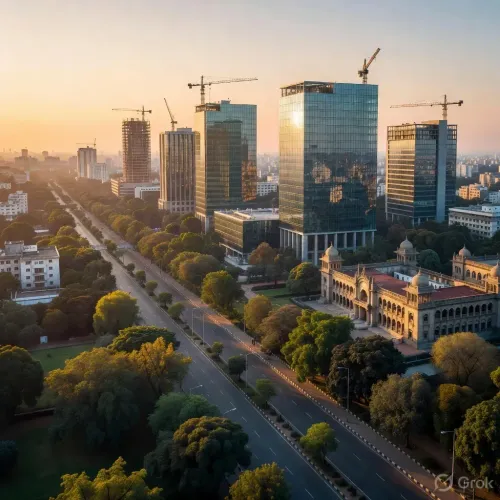
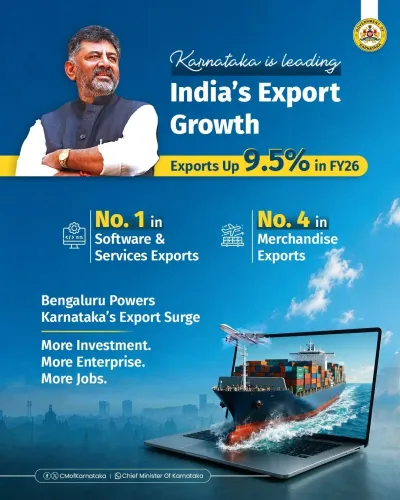
The milestone reflects Karnataka's long-run services-led growth anchored by Bengaluru 's status as India's primary technology hub.
Southern Indian states have consistently outperformed the national average on per-capita income, and this threshold crossing deepens that divergence.
The CMO stated the government's goal is to make Karnataka India's number one state , setting a clear political and policy benchmark ahead of the next electoral cycle.
The Chief Minister's Office of Karnataka announced on Tuesday, 7 July 2026 that Karnataka has crossed the World Bank's Upper Middle-Income threshold, marking what the office called a proud moment for every Kannadiga and a testament to the state's economic progress.
Context
The World Bank classifies economies into income groups based on Gross National Income (GNI) per capita, with the Upper Middle-Income category representing a significant benchmark of sustained economic development. Karnataka's crossing of this threshold places it alongside a select group of Indian states that have surpassed this internationally recognised standard.
The CMO's post credited the achievement to 'the hard work, innovation and resilience of our entrepreneurs, farmers, workers, women and youth,' framing the milestone as a collective outcome rather than a policy-driven result alone.
Policy Backdrop
The Five Guarantee Schemes — rolled out by the Congress government after its 2023 assembly election victory — have been central to the state's social spending strategy. The guarantees include financial support for women, free bus travel for women, subsidised foodgrain, and youth assistance programmes.
The CMO explicitly linked these schemes to the income milestone, stating: 'Our Five Guarantee Schemes were never just welfare programmes; they are investments in people.' This framing positions household-level welfare transfers as contributors to macroeconomic growth — a narrative that aligns with a broader shift among state governments in southern India toward treating social spending as productivity investment rather than fiscal burden.
Karnataka has pursued successive industrial and IT policies since the 1990s, positioning Bengaluru as India's primary technology hub. This long-run services-led growth trajectory has kept the state's per-capita income consistently above the national average.
Stakeholders and Impact
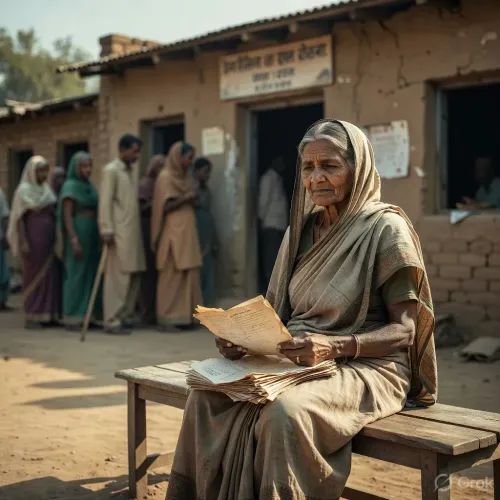
The primary beneficiaries cited by the CMO include women, youth, entrepreneurs, farmers, and workers — the same constituencies targeted by the Five Guarantee Schemes. Rural households, which form a significant share of Karnataka's population, stand to benefit from the government's stated focus on ensuring 'the benefits of growth reach every home.'
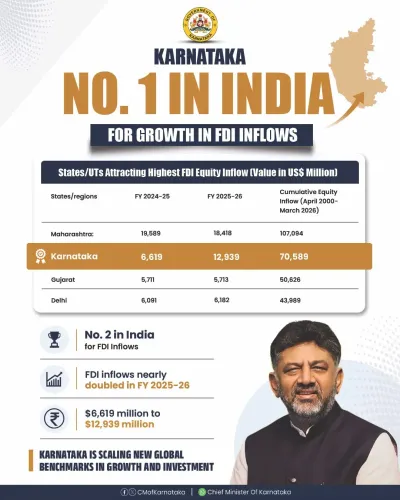
Southern Indian states have consistently recorded higher per-capita incomes than the national average, and Karnataka's crossing of the World Bank threshold reinforces the growing divergence in economic outcomes between states measured by international income benchmarks. This divergence has implications for centre-state resource allocation debates and fiscal federalism discussions.
What's Next
The CMO signalled that the government's ambition extends beyond this milestone, stating its focus is 'to make Karnataka India's number one state by creating more opportunities, empowering every family.' This sets up a political and policy benchmark against which the current administration will be measured ahead of the next state electoral cycle.
Key indicators to watch include updated state GSDP figures, any revision of World Bank income thresholds in subsequent years, and state budget announcements on the continuation or expansion of the Five Guarantee Schemes. The sustainability of welfare-linked growth will be tested as fiscal pressures from large-scale transfer programmes continue to draw scrutiny from economists and opposition parties alike.
Point of View
Allowing it to recast welfare spending as growth infrastructure rather than fiscal populism. The explicit linkage of the Five Guarantee Schemes to a macroeconomic milestone is a deliberate political signal — one that could reshape how social transfers are debated in state elections across India. However, the durability of this narrative depends on whether updated GSDP data and independent assessments corroborate the causal connection the government is drawing. For now, the announcement reinforces southern India's widening economic lead over the national average and adds pressure on other states to benchmark their own welfare architectures against measurable income outcomes.
NationPress
6 Oct 2026
Frequently Asked Questions
What is the World Bank Upper Middle-Income threshold and why does it matter for Karnataka?
The World Bank classifies economies by GNI per capita into income groups; the Upper Middle-Income category is a globally recognised benchmark of sustained development. Karnataka crossing this threshold means the state's per-capita income has reached a level comparable to upper-middle-income economies worldwide, signalling significant economic progress.
What are Karnataka's Five Guarantee Schemes?
The Five Guarantee Schemes are welfare programmes launched by the Karnataka Congress government after its 2023 assembly election win. They include financial support for women (Gruha Lakshmi), free bus travel for women (Shakti), subsidised foodgrain (Anna Bhagya), youth assistance (Yuva Nidhi), and free electricity up to 200 units (Gruha Jyoti).
When did Karnataka cross the World Bank Upper Middle-Income threshold?
The Chief Minister's Office of Karnataka announced the milestone on 7 July 2026. The exact year in which the threshold was formally crossed has not been specified in the official announcement.
How does Karnataka's economy compare to other Indian states?
Karnataka, anchored by Bengaluru's technology and services sector, has consistently recorded per-capita income above the national average. Southern Indian states broadly outperform the national average, and Karnataka's crossing of the World Bank threshold reinforces this regional economic divergence.
What is Karnataka's economic goal going forward?
The Chief Minister's Office stated that Karnataka's goal is to become India's number one state by creating more opportunities, empowering every family, and ensuring growth benefits reach every household.