Karnataka govt postpones agriculture officer exam after GKVK students meet DK Shivakumar

Synopsis
The Karnataka government has temporarily postponed the agricultural officer recruitment examination after GKVK students met Deputy CM D.K. Shivakumar on August 4 to voice their concerns, pledging a fair process for all agriculture graduates.
Key Takeaways
The Karnataka government has temporarily postponed the agricultural officer recruitment examination following student representations.
Students from the University of Agricultural Sciences, GKVK, Bengaluru met Deputy CM D.K.
Shivakumar on August 4, 2026 to raise their concerns.
The government has pledged to conduct the exam ensuring 'not even a trace of injustice' to agriculture graduates.
An official notification on the rescheduled exam date and any revised criteria is pending.
The University of Agricultural Sciences, GKVK was established in 1964 and is Karnataka's premier agricultural education institution.
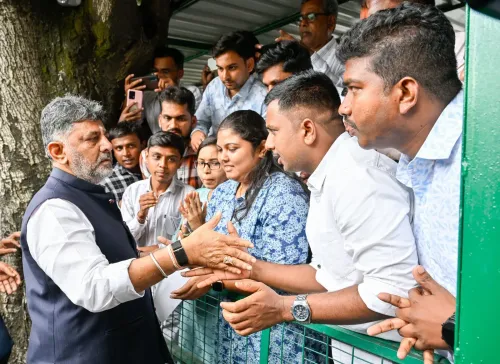
When students from the University of Agricultural Sciences, GKVK, Bengaluru walked into a meeting with Deputy Chief Minister D.K. Shivakumar on August 4 to voice their grievances, the Karnataka government did not make them wait. Within days, it acted — announcing a temporary postponement of the agricultural officer recruitment examination to ensure no graduate is shortchanged in the process.
What the GKVK students told Shivakumar on August 4
The students approached D.K. Shivakumar directly, laying out their anxieties over the agricultural officer recruitment examination. The Chief Minister's Office confirmed that the students shared their concerns — ತಮ್ಮ ನೋವನ್ನು ತೋಡಿಕೊಂಡಾಗ ('when they poured out their pain') — and the government's response was immediate. The post, signed in Shivakumar's name, declared: 'Our government, which always lends an ear to students' distress, has decided to temporarily postpone the agricultural officer recruitment examination.'
The postponement and what it means for agriculture graduates
The Karnataka government has resolved to hold the examination only after ensuring complete fairness for agriculture graduates — the post's language is unambiguous: 'not even a trace of injustice' to those who have studied the discipline. The University of Agricultural Sciences, GKVK, established in 1964, is Karnataka's premier institution for agricultural education and research, making its graduates a significant constituency in the state's public employment pipeline. A rescheduled date and any revisions to selection criteria are now awaited through official notification.
Karnataka's track record on youth employment concerns
This is not an isolated gesture. Karnataka governments have periodically stepped in when student communities have raised alarms over recruitment timelines and examination fairness — a pattern rooted in the state's large agrarian economy and the critical role public-sector agricultural jobs play in rural livelihoods. The decision to pause and review, rather than push ahead, signals a deliberate choice to prioritise procedural integrity over speed.
Shivakumar's message to students closed on a direct note: 'Making your dreams come true and protecting your future is our responsibility.' The exam will come — but on terms the students can trust.
Point of View
Reactive governance — acting publicly on citizen complaints to reinforce the 'listening government' brand. With public-sector jobs in agriculture carrying outsized weight in a state where rural employment remains politically sensitive, postponing an exam over fairness concerns is low-risk and high-signal. The real test will be whether the rescheduled examination resolves the underlying concerns or simply defers them — and how quickly an official notification follows the political announcement.
NationPress
6 Aug 2026
Frequently Asked Questions
Why has Karnataka postponed the agricultural officer recruitment exam?
The Karnataka government temporarily postponed the agricultural officer recruitment examination after students from the University of Agricultural Sciences, GKVK, Bengaluru, met Deputy CM D.K. Shivakumar on August 4, 2026, and raised concerns about the process. The government said it wants to ensure complete fairness for agriculture graduates before conducting the exam.
Which students met DK Shivakumar about the agriculture exam?
Students from the University of Agricultural Sciences, GKVK (Gandhi Krishi Vignana Kendra), Bengaluru, met Deputy Chief Minister D.K. Shivakumar on August 4, 2026, to share their grievances regarding the agricultural officer recruitment examination.
When will the Karnataka agricultural officer exam be rescheduled?
The Karnataka government has not yet announced a new date. An official notification with the rescheduled exam date and any revisions to selection criteria or syllabus is awaited.
What is GKVK and why is it significant?
GKVK stands for Gandhi Krishi Vignana Kendra, the main campus of the University of Agricultural Sciences, Bengaluru, established in 1964. It is Karnataka's premier institution for agricultural education and research, and its graduates are a key constituency in state public-sector agricultural hiring.
What did DK Shivakumar say to agriculture students about the exam?
Shivakumar, through the Chief Minister's Office, assured students that 'making your dreams come true and protecting your future is our responsibility,' and that the government is resolved to conduct the exam without any injustice to agriculture graduates.