Karnataka orders 'Clean & Green Hampi' action plan for UNESCO heritage site

Synopsis
Karnataka has put Hampi's cleanliness crisis on a formal footing — ordering a plastic ban, a new sanitation agency, and fresh toilet infrastructure at the UNESCO World Heritage Site. The 'Clean & Green Hampi' campaign is framed as a public movement, not just a government directive, but the real test will be whether accountability mechanisms follow the action plan.
Key Takeaways
The Karnataka Tourism Department on 13 August directed officials to prepare a comprehensive action plan for the 'Clean & Green Hampi' campaign.
Tourism Minister K.J.
George and Tourism Secretary Ram Prasath Manohar led the directive, emphasising public and tourist participation.
A plastic ban has been ordered within the Hampi World Heritage Area Management Authority (HWHAMA) limits.
The Hampi Development Authority is to initiate a tender to appoint a comprehensive cleaning and maintenance agency for the site.
A new toilet complex is proposed under the Hampi Nook Project to address growing visitor numbers near the Virupaksha Temple .
Hampi was inscribed as a UNESCO World Heritage Site in 1986 and is one of Karnataka's most significant heritage destinations.
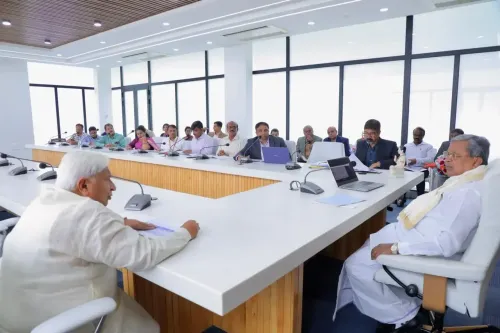
The Karnataka Tourism Department on Thursday, 13 August directed officials to prepare a comprehensive action plan for the 'Clean & Green Hampi' campaign, targeting improved cleanliness, environmental conservation, and visitor infrastructure at the UNESCO World Heritage Site of Hampi. The directive follows a high-level video conference convened by Tourism Secretary Ram Prasath Manohar to review the site's current facilities and conservation measures.
What the Campaign Covers
Tourism Minister K.J. George framed the initiative as a shift in how the state views the ancient site. "Rather than viewing Hampi merely as a tourist destination, our objective is to preserve its heritage significance while developing it as a clean, green and visitor-friendly destination," he said. The campaign envisions active participation from both tourists and the general public, with the government positioning it as a people's movement rather than a top-down administrative exercise.
Manohar directed the Hampi Development Authority and the Vijayanagara Deputy Commissioner to draft a detailed action plan. He stressed that maintaining cleanliness at a heritage site cannot rest solely with government agencies, and that awareness programmes must be designed to draw visitors into active upkeep efforts.
Key Directives Issued
The Hampi Development Authority has been asked to initiate a tender process to appoint a comprehensive agency responsible for systematic cleaning and maintenance across the heritage site's various zones. Officials were also directed to enforce a plastic ban within the limits of the Hampi World Heritage Area Management Authority (HWHAMA), aimed at creating a plastic-free environment and protecting both heritage structures and natural surroundings.
Separately, the Vijayanagara Deputy Commissioner and HWHAMA Chairman were instructed to ensure regular cleaning and upkeep of the toilet complex near the Virupaksha Temple, one of Hampi's most visited landmarks. The Deputy Commissioner has also been asked to submit a proposal for a new toilet complex under the Hampi Nook Project, given the growing volume of visitors and the need to strengthen tourist infrastructure.
Who Was in the Room
The video conference brought together Tourism Department Commissioner Shivaprasad P.R., Vijayanagara Deputy Commissioner Kavitha S. Manikere, officials of HWHAMA, and representatives of the Archaeological Survey of India. The breadth of participation signals an inter-agency approach to what has historically been a fragmented conservation effort at the site.
Why Hampi Needs This Push
Hampi, the 15th-century capital of the Vijayanagara Empire, was inscribed as a UNESCO World Heritage Site in 1986 and draws hundreds of thousands of domestic and international tourists annually. Critics and heritage conservationists have long flagged inadequate sanitation, unregulated plastic use, and insufficient visitor management as threats to the site's integrity. This initiative is the latest in a series of state-level efforts to address those concerns, though implementation timelines and accountability mechanisms are yet to be publicly detailed. A comprehensive action plan covering cleanliness, plastic control, and infrastructure maintenance is expected to be prepared and implemented in the coming weeks.
Point of View
Yet sanitation gaps and plastic litter remain persistent complaints from visitors and conservationists alike — a gap that reflects the chronic mismatch between heritage prestige and on-ground management capacity. The 'Clean & Green Hampi' campaign is well-intentioned, but Karnataka has issued similar directives before without durable outcomes. The decision to tender a dedicated maintenance agency is the most structurally sound element here; everything else — awareness drives, public participation appeals — depends on follow-through that past campaigns have struggled to sustain. The real accountability test will be whether the action plan includes measurable targets and an independent review mechanism, or whether it remains a headline exercise ahead of the tourist season.
NationPress
27 Sept 2026
Frequently Asked Questions
What is the 'Clean & Green Hampi' campaign?
It is a Karnataka government initiative directed on 13 August to improve cleanliness, enforce a plastic ban, and upgrade visitor infrastructure at Hampi, a UNESCO World Heritage Site. The campaign aims to involve tourists and the public as active participants rather than treating conservation as a purely government responsibility.
What specific measures have been ordered for Hampi?
Officials have been directed to draft a comprehensive action plan covering a plastic ban within HWHAMA limits, appointment of a dedicated cleaning and maintenance agency through a tender process, regular upkeep of the toilet complex near the Virupaksha Temple, and a proposal for a new toilet complex under the Hampi Nook Project.
Who is responsible for implementing the Hampi action plan?
The Hampi Development Authority and the Vijayanagara Deputy Commissioner are the primary implementing bodies. HWHAMA, the Archaeological Survey of India, and the Tourism Department Commissioner are also involved, as confirmed at the video conference on 13 August.
Why is Hampi's conservation significant?
Hampi, the former capital of the Vijayanagara Empire, has held UNESCO World Heritage Site status since 1986 and attracts hundreds of thousands of visitors each year. Inadequate sanitation, plastic pollution, and poor visitor management have long been cited as threats to the site's structural and environmental integrity.
When will the action plan be ready?
No specific deadline has been publicly announced, but officials have been asked to prepare and submit the comprehensive action plan covering cleanliness, plastic control, and infrastructure maintenance for implementation in the near term following the 13 August directives.