Is Karnataka's media movement restriction a threat to press freedom?
Synopsis
As Karnataka's Congress-led government restricts media access within Vidhana Soudha, opposition parties express outrage, raising pressing concerns about press freedom. This controversial directive follows alarming theft reports, prompting a debate over transparency and accountability in governance.
Key Takeaways
Karnataka's government restricts media access within Vidhana Soudha.
Opposition parties criticize the move as an infringement on press freedom.
Restrictions aim to enhance safety and security , according to the government.
Recent theft incident raises concerns about motives behind restrictions.
Political debate intensifies around transparency and accountability .
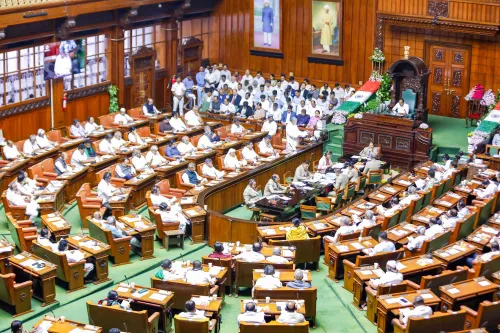
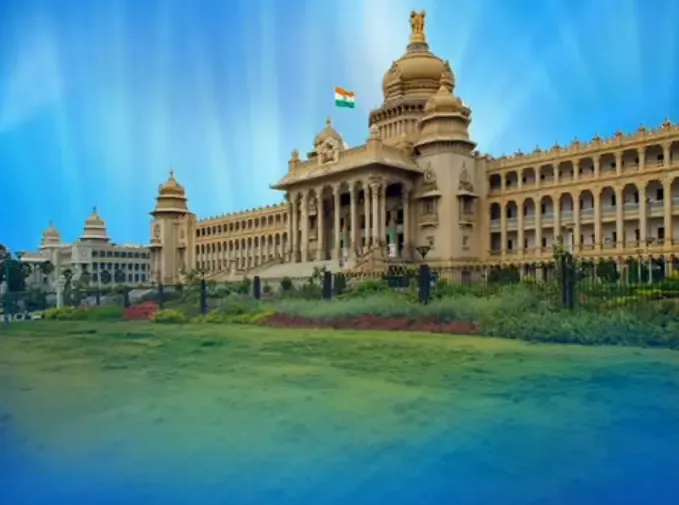
Bengaluru, Feb 18 (NationPress) The government led by the Congress in Karnataka announced an order on Wednesday that limits the movement of media personnel within the State Legislature complex (Vidhan Soudha), prompting intense backlash from opposition parties and raising serious questions about press freedom.
The Department of Personnel and Administrative Reforms (DPAR) instructed that journalists should conduct interviews with lawmakers and gather their responses only at a specified location, specifically the portico located near the West Gate of Vidhana Soudha.
Furthermore, the directive prohibits following the Chief Minister, Deputy Chief Minister, ministers, and other prominent figures for comments within the premises.
A correspondence sent by the DPAR Secretary to the Director of the Information and Public Relations Department requested that necessary instructions be issued to ensure adherence by all media representatives.
This communication was also sent to the Deputy Commissioner of Police responsible for security at Vidhana Soudha, with the subject line addressing directions regarding media interactions.
The government has justified this action as essential for maintaining safety and security.
However, critics assert that it undermines freedom of expression and restricts access to elected officials within the legislative complex. Some opposition figures contend that these limitations could obstruct their ability to engage with journalists openly on site.
This issue arises shortly after reports surfaced about the alleged theft of 300 grams of gold within Vidhana Soudha, reportedly involving a DPAR staff member. Detractors argue that the department is trying to divert attention from this incident by enforcing stricter media access.
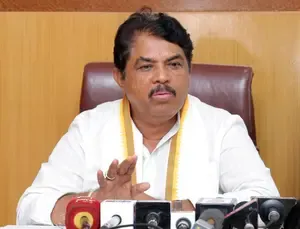
Congress legislator H. Ranganath expressed concerns over the order, stating that imposing restrictions on the media is inappropriate. He emphasized that the press is vital for conveying public opinions and issues, asserting that protecting press freedom is vital to the party's principles.
Ranganath noted he would investigate the matter, suggesting it might be an oversight, and maintained that there should be no constraints on the media.
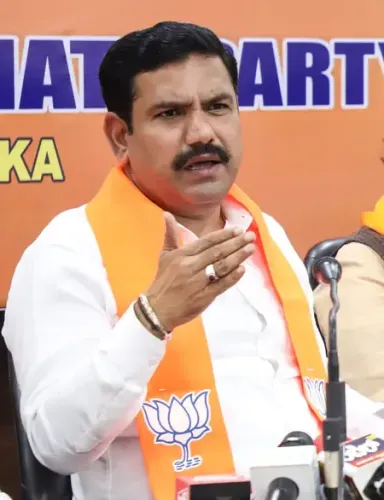
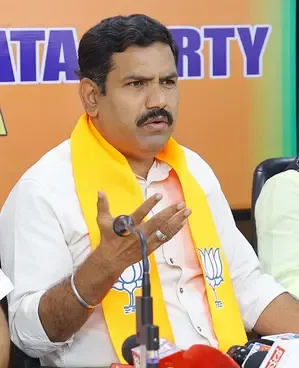
BJP MLA S.R. Vishwanath condemned the order as an assault on democracy and freedom of expression. He highlighted that during the previous BJP administration, journalists had access to all levels of the building and could obtain comments from ministers in their offices, and interactions were also conducted during committee meetings.
Vishwanath accused the recent security lapse of being a failure in policing and stated that rather than addressing these gaps, the government was targeting the media.
He criticized the limitation of journalists to a single point near the West Gate as a regressive move. The BJP MLA remarked that although leaders often refer to the press as the fourth estate of democracy, such actions evoke memories of the Emergency.
“The government should retract the order and enhance security instead of limiting access,” Vishwanath stated.
The Janata Dal (Secular) also criticized the move on social media, accusing the ruling Congress of being unsettled by journalists' inquiries. The party claimed that restricting media movement within Vidhana Soudha indicates insecurity within the government and questioned why ministers and MLAs would fear scrutiny over corruption.
JD (S) characterized the action as an assault on democratic values and press freedom, urging the Chief Minister to foster transparency rather than suppress the media.
This directive has intensified the political discourse regarding transparency, accountability, and the media's role within Karnataka's legislature.
Point of View
The restrictions imposed by the Karnataka government on media movement within the Vidhana Soudha highlight a troubling trend towards limiting press freedom. While the government cites safety concerns, the opposition's fierce criticism underscores the fundamental role of the media in holding elected officials accountable. It is essential for democracy that access to public representatives remains unhindered, fostering transparency and trust between the government and its citizens.
NationPress
30 Sept 2026
Frequently Asked Questions
What is the recent media restriction in Karnataka?
The Karnataka government has restricted media movement within the Vidhana Soudha, allowing journalists to conduct interviews only at a designated area.
Why is this restriction controversial?
Opposition parties argue that it undermines press freedom and limits access to elected representatives, crucial for democratic accountability.
What justification has the government provided?
The government claims that the restrictions are necessary for safety and security within the legislative complex.
How have opposition leaders reacted?
Opposition leaders have condemned the move as an attack on democracy and a means to suppress scrutiny over government actions.
What incident preceded this order?
The order comes in the wake of reports of a gold theft within Vidhana Soudha, raising questions about motives behind the new restrictions.