CM DK Shivakumar releases ₹600 cr revolving fund for Karnataka farmers
Synopsis
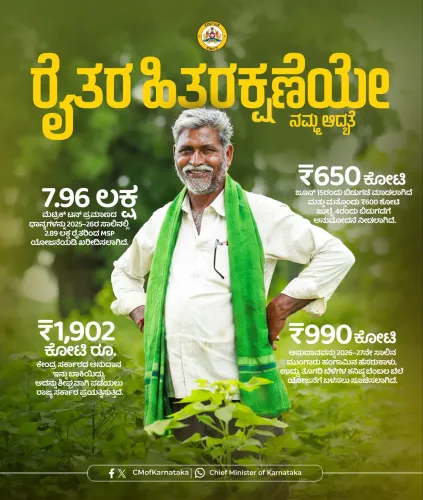
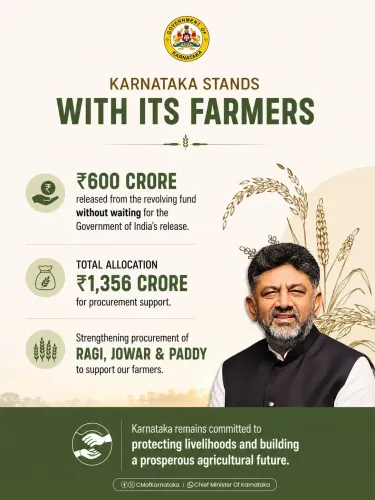
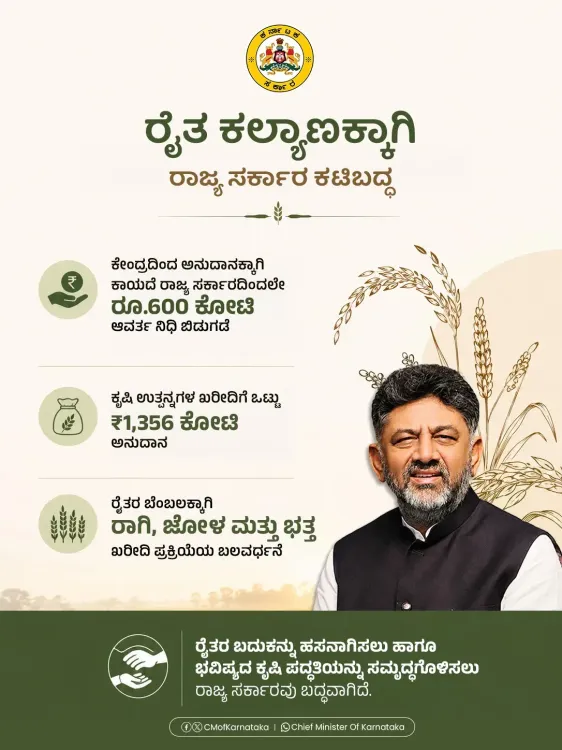
The Karnataka government, under CM DK Shivakumar, has released a ₹600 crore revolving fund for farmer welfare without waiting for central grants, bringing total agricultural procurement support to ₹1,356 crore. The funds will facilitate MSP-based procurement of ragi, jowar, and paddy across the state.
Key Takeaways
The Karnataka government released a ₹600 crore revolving fund on 16 June 2026 for agricultural produce procurement.
The release was made without waiting for central government grants, prioritising immediate farmer welfare.
Combined with prior provisions, total grant support for procurement now stands at ₹1,356 crore .
The fund will support MSP-based procurement of ragi, jowar, and paddy — key rainfed crops in Karnataka.
Shivakumar led the decision, as announced by the official CMO Karnataka account.
Agricultural Produce Market Committees (APMCs) are expected to operationalise the procurement on the ground.
The Chief Minister's Office of Karnataka announced on Tuesday, 16 June 2026 that the state government has released a ₹600 crore revolving fund under the leadership of Chief Minister D.K. Shivakumar to support farmer welfare and procurement of agricultural produce — without waiting for central government grants.
The official post, written in Kannada, states: 'ಕೇಂದ್ರ ಸರ್ಕಾರದ ಅನುದಾನಕ್ಕಾಗಿ ಕಾಯದೆ' ('without waiting for central government grants'), the state has acted immediately in the interest of farmers. Combined with existing provisions, this release brings the total grant support for agricultural produce procurement to ₹1,356 crore.
Context
The timely release, according to the announcement, will facilitate procurement of ragi (finger millet), jowar (sorghum), and paddy — three staple coarse cereals grown widely across Karnataka's rainfed districts. The state government described the move as giving farmers 'a sigh of relief' (ನೆಮ್ಮದಿಯ ನಿಟ್ಟುಸಿರು). The revolving fund mechanism allows procurement agencies to purchase crops from farmers at Minimum Support Price (MSP) and subsequently seek reimbursement from the central government, ensuring that farmers are not left waiting during bureaucratic delays between state and central fund flows.Policy Backdrop
Indian states have long grappled with the lag between central MSP procurement grants and actual harvest seasons. Karnataka has historically maintained revolving fund arrangements to bridge this gap, particularly for coarse cereals grown in its northern and southern rainfed belts. Agricultural Produce Market Committees (APMCs) are typically the operational arms that execute such procurement at the mandis. The announcement positions the Karnataka government as proactively using its own fiscal resources rather than leaving farmers exposed to market price volatility during the harvest period. The combined figure of ₹1,356 crore reflects both the fresh ₹600 crore release and previously committed state funds for the procurement cycle.Stakeholders and Impact
The primary beneficiaries are small and marginal farmers in Karnataka's rainfed regions who grow ragi, jowar, and paddy — crops that are especially vulnerable to price crashes during peak harvest when market arrivals surge. Timely procurement at MSP protects their income floor. APMCs and state-run procurement agencies will operationalise the fund, while the state's agriculture department is expected to coordinate with the central government for eventual reimbursement. The move also carries political significance, signalling the Siddaramaiah-Shivakumar led administration's intent to project farmer welfare as a central governance priority ahead of future electoral cycles.What's Next
Watchers of Karnataka's agricultural policy will track utilisation reports from APMCs to assess how effectively the ₹600 crore is deployed across districts and crop varieties. Any supplementary budgetary provisions in the next session of the Karnataka Legislative Assembly could indicate whether the state plans to scale up this revolving fund mechanism further. If procurement targets are met and central reimbursements follow smoothly, the model could be cited as a template for other states managing MSP operations independently of central grant timelines.Point of View
356 crore, the CMO is clearly signalling scale and intent ahead of future electoral cycles. The focus on ragi and jowar also speaks to a deliberate outreach to rainfed, dryland farming communities who have historically felt underserved by procurement systems skewed toward wheat and rice. How effectively the revolving fund is deployed at the APMC level will determine whether this announcement translates into tangible income support or remains a headline figure.
NationPress
15 Sept 2026
Frequently Asked Questions
What is the ₹600 crore revolving fund released by Karnataka for farmers?
The Karnataka government released a ₹600 crore revolving fund on 16 June 2026 to finance MSP-based procurement of agricultural produce — including ragi, jowar, and paddy — without waiting for central government grants to arrive.
What is the total agricultural procurement support announced by Karnataka in 2026?
With the fresh ₹600 crore revolving fund, the total grant support for agricultural produce procurement in Karnataka now stands at ₹1,356 crore, combining state funds already committed with this new release.
Which crops will benefit from Karnataka's farmer procurement fund?
The fund is specifically intended to facilitate procurement of ragi (finger millet), jowar (sorghum), and paddy — three major crops grown in Karnataka's rainfed districts — at Minimum Support Price.
Who announced the ₹600 crore farmer fund in Karnataka?
The announcement was made by the Chief Minister's Office of Karnataka, crediting Chief Minister D.K. Shivakumar with leading the decision to release the revolving fund immediately in the interest of farmers.
Why did Karnataka release its own funds instead of waiting for central government grants?
The state government stated it acted without waiting for central grants to ensure timely procurement support for farmers during the harvest season, preventing income losses caused by delays in central fund disbursals.