Kishan Reddy: Kazipet RMU to build 200 intercity trains
Synopsis
Railway Minister Ashwini Vaishnaw has assigned the Kazipet Railway Manufacturing Unit in Telangana a mandate to produce 200 intercity trains over five years. The trains will feature automatic doors, 20-coach configurations, and speeds up to 130 km/hr, serving commuters on routes of around 300 km. Minister Kishan Reddy welcomed the move as a boost for the state.
Key Takeaways
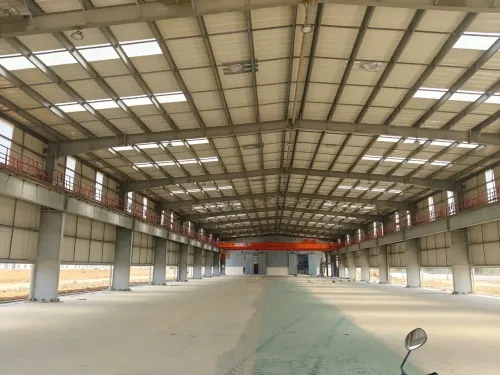
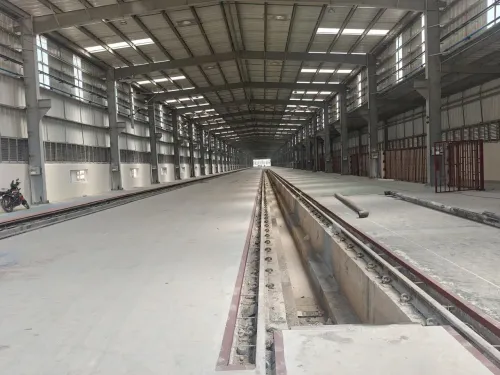
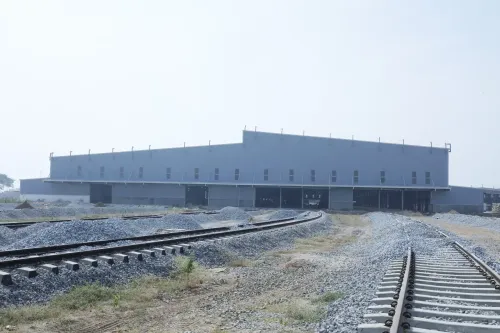
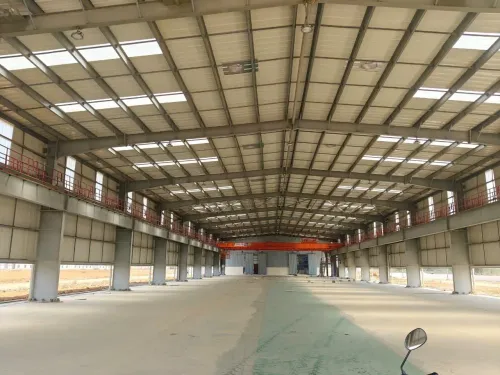
Railway Minister Ashwini Vaishnaw reviewed the Railway Manufacturing Unit (RMU) at Kazipet, Telangana and assigned it a mandate to build 200 intercity trains in five years .
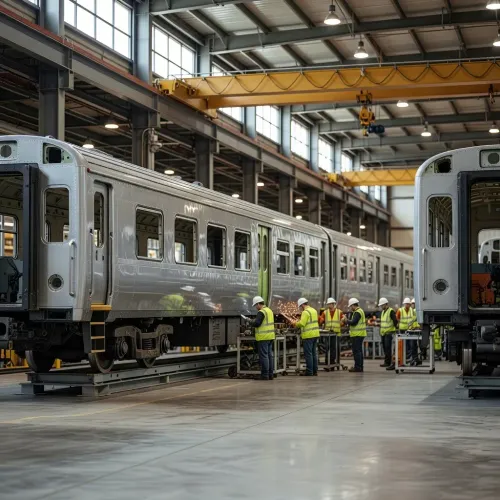
The trains will have a 20-coach configuration , automatic door closing, superior ventilation, and a top speed of 130 km/hr .
Each train is designed for routes of approximately 300 kilometres with multiple stops to connect towns and cities within the region.
The project is expected to benefit students, daily commuters, and workers travelling between towns for education, health, and employment.
The commitment aligns with Indian Railways' broader Make in India decentralised manufacturing push, which has driven workshop upgrades across multiple states since 2014 .
BJP Telangana president and Union Minister G.
Kishan Reddy credited PM Modi and Railway Minister Vaishnaw for the state's rail infrastructure support.
Union Coal and Mines Minister and BJP Telangana state president G. Kishan Reddy on Thursday, 28 May 2026 welcomed a major rail manufacturing commitment for the state, citing Railway Minister Ashwini Vaishnaw's visit to the Railway Manufacturing Unit (RMU) in Kazipet, Telangana, where the facility was entrusted with producing 200 intercity trains over the next five years.
Context
In his post, Kishan Reddy expressed gratitude to Prime Minister Narendra Modi and Railway Minister Ashwini Vaishnaw for what he described as 'continuous support for Telangana.' The announcement followed Vaishnaw's on-site review of the Kazipet RMU, during which the production mandate was formally assigned to the facility. Kazipet, located in Warangal district, has historically served as a significant railway junction and workshop town handling coach maintenance and periodic overhaul work.
Policy Backdrop
The order is consistent with Indian Railways' broader push to decentralise rolling-stock production under the Make in India programme, a policy direction that has shaped successive railway budgets since 2014. New and upgraded coach manufacturing facilities have been sanctioned across multiple states to reduce dependence on a handful of legacy production centres. The Kazipet assignment fits into that pattern of locating manufacturing units in states that already possess established workshop infrastructure.
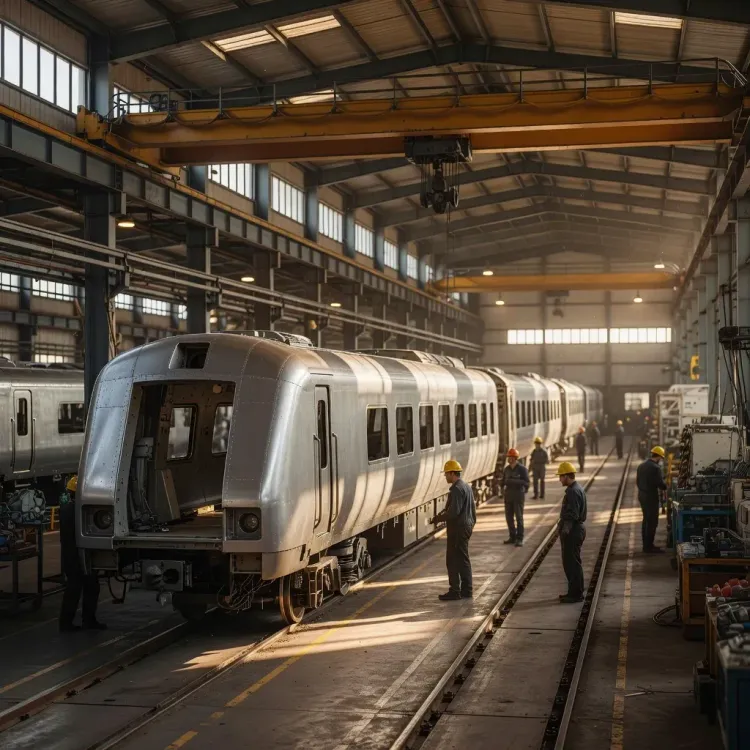
The intercity trains to be produced at Kazipet will feature automatic door closing, superior ventilation systems, and a safe coach design in a 20-coach configuration. They are designed to operate on routes of approximately 300 kilometres, with multiple stops to facilitate movement between towns and cities, and will reach speeds of up to 130 km/hr.
Stakeholders and Impact
Kishan Reddy specifically highlighted the social dimension of the project, noting that the trains would serve 'students going for higher education in their adjacent towns, or common people commuting for their health and work needs.' Daily commuters, students, and workers who currently rely on overloaded long-distance services or road transport for inter-city travel within Telangana stand to benefit most directly. The multi-stop design and mid-range speed profile position these trains as a regional connectivity solution rather than a premium express service.
Indian Railways has been expanding semi-high-speed regional services to ease pressure on long-distance trunk routes, and the Kazipet order adds manufacturing capacity to support that expansion. Telangana has received incremental rail infrastructure allocations in recent budgets, and the RMU mandate represents one of the more substantive commitments to the state's rail ecosystem in recent memory.
What's Next
Observers will watch for Parliamentary disclosures, budget documents, or official Railway Board notifications that detail production milestones, funding tranches, and land or equipment requirements for the Kazipet RMU. The five-year production window means the first deliveries could be expected within the current infrastructure cycle, though formal commissioning timelines have not yet been publicly announced. Progress on this commitment will likely feature in future railway budget presentations as a benchmark for the government's regional manufacturing agenda.
Point of View
A state where it has been working to consolidate its political footprint against regional parties. By framing the announcement through the lens of student commuters and daily workers, Kishan Reddy is translating an industrial order into a welfare narrative — a standard but effective political communication strategy. The five-year production window also gives the party a recurring set of milestone moments to publicise ahead of future state elections. More broadly, the order reflects Indian Railways' sustained effort to build a distributed manufacturing base, reducing dependence on legacy production hubs and deepening the industrial case for the Make in India programme.
NationPress
11 Oct 2026
Frequently Asked Questions
What is the Kazipet Railway Manufacturing Unit and what will it produce?
The Kazipet Railway Manufacturing Unit (RMU) is a rail facility in Warangal district, Telangana, that has been assigned a mandate to manufacture 200 intercity trains over the next five years following Railway Minister Ashwini Vaishnaw's review visit in May 2026.
What are the features of the new intercity trains to be built at Kazipet?
The intercity trains will have a 20-coach configuration, automatic door closing, superior ventilation, and a maximum speed of up to 130 km/hr. They are designed for routes of approximately 300 kilometres with multiple stops between towns and cities.
Who announced the 200 intercity trains for Telangana?
Union Coal and Mines Minister G. Kishan Reddy announced the development on X on 28 May 2026, crediting Railway Minister Ashwini Vaishnaw's on-site review of the Kazipet RMU for the formal assignment of the production mandate.
How will the new intercity trains benefit Telangana commuters?
The trains are intended to serve students travelling to towns for higher education, and common people commuting for health and work needs, providing a faster and more comfortable alternative for inter-city travel within Telangana.
What is India's Make in India railway manufacturing policy?
Under the Make in India programme, Indian Railways has since 2014 sanctioned new and upgraded coach manufacturing facilities across multiple states to decentralise rolling-stock production and reduce dependence on a few legacy production centres.