How Is KCR Being Honored at 72 with a Green Initiative?
Synopsis
This article explores how KCR's commitment to environmental governance is shaping India's ecological future, with a focus on the Sundarbans. As a tribute to his legacy, 10,000 mangrove saplings will be planted, showcasing the power of community involvement in ecological restoration.
Key Takeaways
KCR’s Haritha Haram program transformed afforestation into a civic mission.
10,000 mangrove saplings will be planted in the Sundarbans as a tribute to KCR.
Community involvement and technology are key to successful ecological restoration.
The Sundarbans are critical for biodiversity and coastal protection.
Local leadership is vital in addressing global climate challenges.
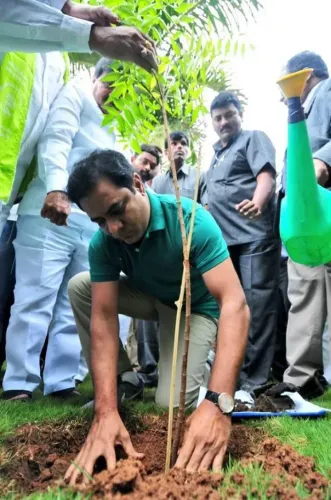
Sundarbans (West Bengal), Feb 17 (NationPress) At a moment when environmental conservation was frequently regarded as a lesser priority compared to economic advancement, Kalvakuntla Chandrashekar Rao (KCR), the architect of Telangana and its inaugural Chief Minister, revolutionized the development dialogue by prioritizing ecology in governance. Through the flagship afforestation initiative Telanganaku Haritha Haram, KCR accomplished more than just launching tree planting campaigns.
The former Chief Minister initiated a widespread environmental movement that integrated climate accountability into state policies.
Haritha Haram redefined afforestation from a sporadic administrative task into a collective civic endeavor. Citizens, farmers, students, institutions, and government bodies were galvanized in a unified mission to restore forest cover, replenish groundwater, safeguard biodiversity, and cultivate enduring climate resilience. Environmental preservation transitioned from being merely symbolic to becoming structural.
Under KCR’s guidance, ecological rejuvenation was regarded with the same importance as irrigation, infrastructure, and welfare—establishing the principle that development devoid of environmental safety is ultimately untenable.
The impact of this vision reached beyond Telangana. Motivated by the ethos of Haritha Haram, former Rajya Sabha MP Joginapally Santosh Kumar initiated the Green India Challenge, transforming a state-sponsored program into a nationwide, citizen-driven environmental initiative.
Engaging youth, public representatives, civil society, and corporate players, the program amplified afforestation and ecological restoration efforts throughout India. Presently, it ranks among the largest voluntary green campaigns in the country, boasting millions of trees planted and thousands of water bodies revitalized—showcasing how public engagement can enhance visionary governance.
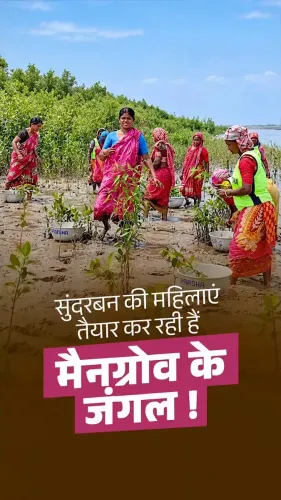
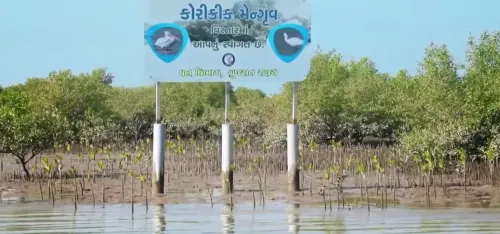
On the occasion of KCR’s 72nd birthday, this movement extends to one of the globe’s most climate-vulnerable ecosystems—the Sundarbans, covering nearly 10,000 square kilometers within the Ganges–Brahmaputra–Meghna delta. The Sundarbans host the largest mangrove ecosystem on the planet, acting as a natural barrier against cyclones, tidal surges, and coastal erosion. Mangroves are not just trees; they are life-saving infrastructure for millions residing along the coast.
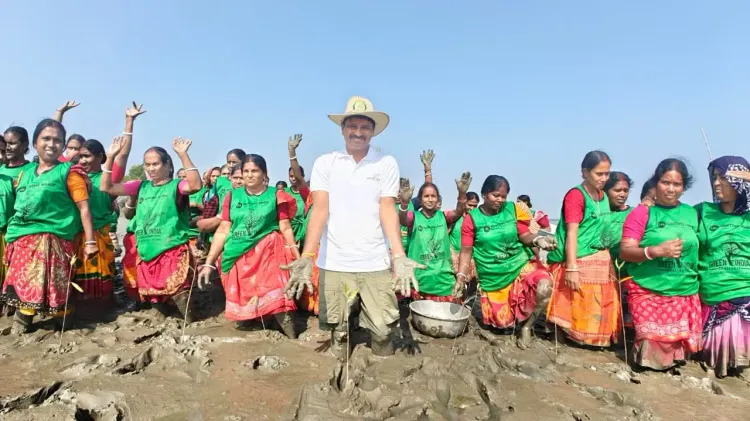
This region is increasingly threatened by rising sea levels, saline intrusion, and unpredictable rainfall. Frequent cyclones pose significant challenges. Thus, reinforcing mangrove cover is both an ecological necessity and a humanitarian obligation. In homage to KCR’s legacy, 10,000 mangrove saplings will be planted in the Sundarbans—symbolizing the extension of Telangana’s environmental vision to India’s climate frontlines.
Notably, this initiative transcends ceremonial planting. It employs technology-driven, science-based restoration strategies. Geo-tagged plantation clusters guarantee transparency and survival monitoring. Micro-climate sensors monitor salinity, temperature, humidity, and tidal patterns to facilitate adaptive management. Artificial intelligence tools aid in erosion modeling and ecosystem stress detection, transforming restoration into practical climate science rather than mere symbolism.
Community resilience is another crucial aspect of this project. Cyclone-resistant agriculture, rainwater harvesting, freshwater storage systems, and soil conservation practices are integrated to safeguard both ecosystems and livelihoods. Universities, research institutions, and youth volunteers are actively collaborating to determine species selection and restoration density, ensuring long-term ecological success.
In line with global sustainable development goals, this initiative exemplifies how local leadership can contribute to international climate action. From Haritha Haram in Telangana to mangrove restoration in the Sundarbans, this journey conveys a powerful message: when visionary leadership merges with public involvement and scientific innovation, nature’s primary line of defense can be rejuvenated.
Point of View
KCR's leadership exemplifies a progressive approach to governance, prioritizing ecological integrity alongside development. As India faces increasing climate challenges, initiatives like Haritha Haram and the restoration of the Sundarbans represent critical steps towards sustainable environmental stewardship. This narrative is essential for inspiring collective action in the face of global ecological crises.
NationPress
15 Oct 2026
Frequently Asked Questions
What is the significance of Haritha Haram?
Haritha Haram is a flagship afforestation program initiated by KCR that aims to restore forest cover and promote ecological sustainability in Telangana.
How many mangrove saplings will be planted in the Sundarbans?
In honor of KCR’s 72nd birthday, 10,000 mangrove saplings will be planted in the Sundarbans to enhance its natural defenses.
What are the benefits of mangrove ecosystems?
Mangrove ecosystems provide crucial protection against coastal erosion, support biodiversity, and serve as vital infrastructure for communities living near coastlines.
How does the Green India Challenge contribute to environmental efforts?
The Green India Challenge mobilizes citizens across India to participate in afforestation and ecological restoration, amplifying the collective impact of environmental initiatives.
What role does technology play in the mangrove restoration initiative?
Technology is employed in the restoration process through geo-tagging, micro-climate sensors, and AI tools for monitoring and adaptive management.