Kejriwal Accuses Centre of Pressuring Auto Firms on E20 Fuel
Synopsis
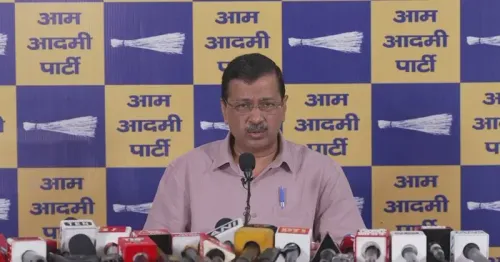
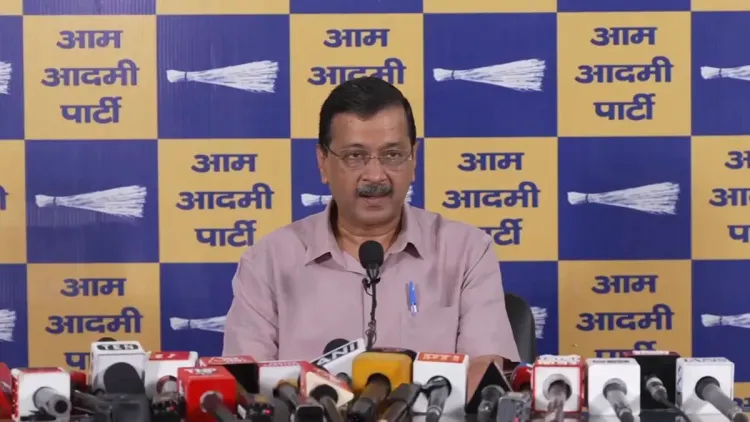
AAP convenor Arvind Kejriwal on 7 July 2026 alleged the Centre pressured six auto firms to publicly back E20 fuel safety. He named Maruti Suzuki, Toyota, and Hero MotoCorp as having 'lied to the country,' saying their own owner manuals contradict those claims.
Key Takeaways
Kejriwal alleged the Union government directed six automobile companies to endorse E20 fuel safety at a press conference.
He named Maruti Suzuki , Toyota , and Hero MotoCorp as having complied and publicly contradicted their own owner manuals.
Kejriwal stated he holds the owner manuals of all three companies as documentary evidence.
India's Ethanol Blended Petrol Programme targets 20 per cent blending by 2025 ; the country hit 10 per cent blending in 2022 .
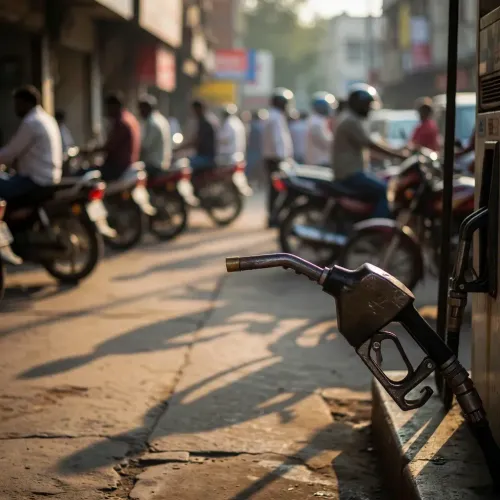
Engine compatibility, mileage loss, and material corrosion in non-E20-certified vehicles have been recurring concerns since the programme's escalation.
The Ministry of Petroleum and Natural Gas had not publicly responded to the allegations at the time of posting.
AAP convenor Arvind Kejriwal on Tuesday, 7 July 2026, accused the central government of directing six automobile companies to publicly claim that E20 petrol causes no engine damage and can be used safely in non-E20-certified vehicles — allegations he said are contradicted by the companies' own owner manuals.
Context
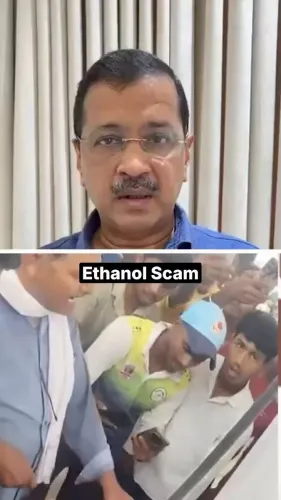
Posting in Hindi on X, Kejriwal alleged that the Union government summoned representatives of six auto companies and asked them to state at a press conference that E20 fuel poses no harm and is compatible with vehicles not originally rated for higher ethanol blends. He named three firms — Maruti Suzuki, Toyota, and Hero MotoCorp — as having complied with that request and, in his words, 'desh se jhooth bola' (lied to the country).
Kejriwal stated he is in possession of the owner manuals of these three companies, which he claims directly contradict the public statements made at that press conference. The post was accompanied by a video, which he indicated contains further evidence.
Policy Backdrop
The controversy centres on India's Ethanol Blended Petrol Programme, a long-running central government scheme aimed at reducing crude oil import dependence and creating a stable market for sugarcane farmers. In 2021, the government released a roadmap targeting 20 per cent ethanol blending — known as E20 — in petrol by 2025, an acceleration of earlier timelines. India had already achieved 10 per cent average blending nationwide by 2022, ahead of schedule.
The push to E20, however, has consistently raised technical concerns. Manufacturer owner manuals have historically specified fuel-grade restrictions, warning that engines not designed for higher ethanol concentrations may face material corrosion, seal degradation, or mileage loss. The gap between policy messaging on universal usability and manufacturer-specified limits has been a persistent tension in the programme's rollout.
Stakeholders and Impact
Maruti Suzuki is India's largest carmaker, with millions of petrol-powered vehicles on the road. Hero MotoCorp is the country's largest two-wheeler manufacturer, meaning the compatibility question directly affects a vast share of India's vehicle-owning population, particularly middle- and lower-income households. Toyota Kirloskar Motor serves both passenger and commercial segments.
If Kejriwal's claim holds — that owner manuals explicitly warn against using E20 in non-certified vehicles — then consumers who fill up at E20 pumps in good faith on the basis of those alleged press conference statements could face warranty voidance or engine damage. The Ministry of Petroleum and Natural Gas, which oversees fuel quality standards and the blending programme, has not publicly responded to the allegations as of the time of posting.
What's Next
The immediate question is whether the three named companies — Maruti Suzuki, Toyota, and Hero MotoCorp — will respond to Kejriwal's claim and clarify the technical position in their owner manuals relative to any statements made at the press conference in question. The Society of Indian Automobile Manufacturers and the petroleum ministry are also likely to face pressure for a formal technical clarification.
Should the owner manual evidence Kejriwal references enter the public domain, it could force a policy reckoning over how E20 compatibility is communicated to consumers, potentially slowing the retail rollout of E20-blended fuel at pumps nationwide and reopening the debate over the pace of the blending target.
Point of View
Timed as E20 retail rollout accelerates. By invoking owner manuals as documentary proof, he is shifting the debate from political claim to technical record — a harder argument for the companies to deflect. The allegation fits a broader AAP pattern of targeting central policy programmes on consumer-harm grounds, particularly in the run-up to any electoral cycle. If the manual evidence is as explicit as claimed, it could force a rare public conflict between auto industry interests and the petroleum ministry's blending timeline.
NationPress
7 Jul 2026
Frequently Asked Questions
What is E20 petrol and is it safe for all vehicles?
E20 petrol is a blend of 20 per cent ethanol and 80 per cent petrol. It is safe only for vehicles specifically certified by their manufacturer for E20 use. Many older vehicles carry owner manual warnings against using fuel with ethanol content above E5 or E10, and using E20 in such vehicles may risk engine damage or void the warranty.
What exactly did Kejriwal allege about Maruti Suzuki, Toyota, and Hero MotoCorp?
Kejriwal alleged that these three companies attended a government-organised press conference and publicly stated that E20 causes no harm and can be used in non-E20-certified vehicles. He claims their own owner manuals contradict those statements, amounting to misleading consumers.
What is India's ethanol blending target and where does the programme stand?
India's official target is 20 per cent ethanol blending in petrol by 2025 , as set out in a 2021 government roadmap. The country achieved 10 per cent average blending in 2022 , ahead of its earlier deadline, and has been progressively expanding E20 retail availability since.
Has the government or the auto companies responded to Kejriwal's allegations?
As of 7 July 2026 , neither the Ministry of Petroleum and Natural Gas nor Maruti Suzuki , Toyota , or Hero MotoCorp had issued a public response to Kejriwal's allegations.
What could happen if E20 is used in a non-compatible vehicle?
Using E20 in a vehicle not certified for high-ethanol blends can potentially cause engine seal degradation, fuel system corrosion, reduced mileage, and may void the manufacturer's warranty. These concerns have been documented in manufacturer owner manuals and have been a recurring point of debate as India scales up its blending programme.