Kejriwal Calls UP's Ram Mandir Theft SIT 'Fake', Demands CBI Probe
Synopsis
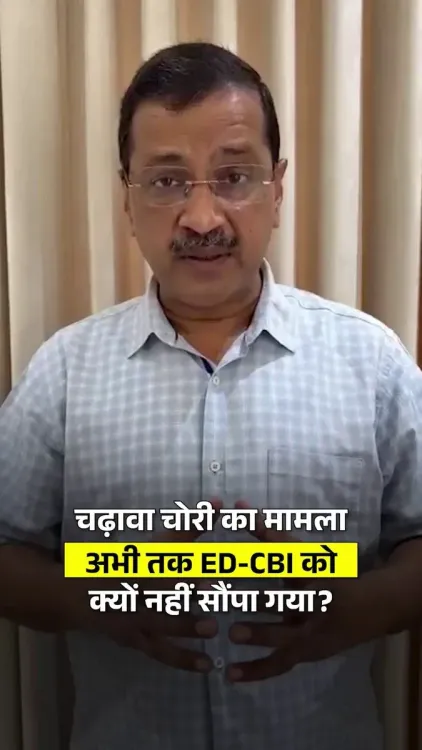
AAP convenor Arvind Kejriwal on 24 June 2026 declared the UP government's SIT probing alleged theft at Ayodhya's Ram Mandir legally invalid, arguing no SIT can exist without an FIR, and demanded the case be transferred to the CBI and ED.
Key Takeaways
AAP convenor Arvind Kejriwal on 24 June 2026 called the UP government's SIT on Ram Mandir offering theft 'fake' and legally baseless.
Kejriwal argued that under Indian law, an SIT cannot be constituted without a prior FIR , challenging the state to cite the specific legal provision used.
He alleged the SIT was formed to 'protect influential people' and demanded the case be handed to the CBI and Enforcement Directorate .
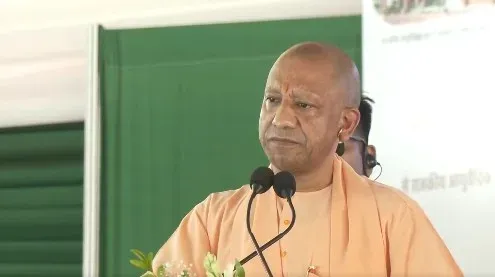
The Shri Ram Mandir in Ayodhya was consecrated on 22 January 2024 ; the BJP-led UP government under CM Yogi Adityanath oversees its security and offerings administration.
The UP government had not publicly responded to the legal challenge at the time of this report.
Court petitions seeking FIR registration or a CBI transfer of the case are a likely next step.
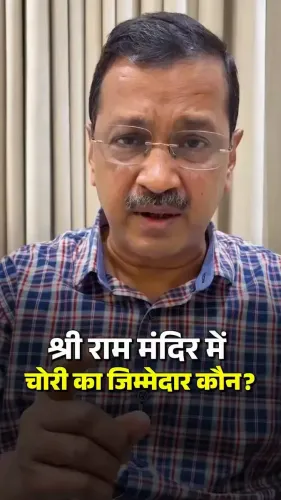
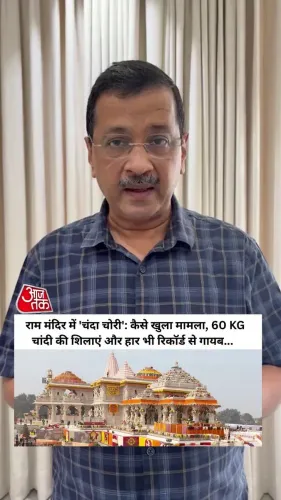
AAP convenor Arvind Kejriwal on Wednesday, 24 June 2026, declared the Special Investigation Team (SIT) formed by the Uttar Pradesh government to probe alleged theft of offerings at the Shri Ram Mandir in Ayodhya legally invalid, demanding the case be handed to the CBI and the Enforcement Directorate (ED) after a formal FIR is registered.
Context
Kejriwal posted in Hindi on X, stating: 'श्री राम मंदिर में चढ़ावे के चोरी की जांच करने के लिए यू पी सरकार द्वारा बनायी गई SIT फ़र्ज़ी है' — 'The SIT formed by the UP government to probe the theft of offerings at Shri Ram Mandir is fake.' He challenged the state to specify under which law and section the SIT was constituted, asserting that under Indian law, an SIT cannot be formed without a prior FIR.
He further alleged that the SIT was created solely 'to bury the matter, protect influential people, and throw dust in the eyes of ordinary people.' He framed the demand for a CBI and ED probe as a question being asked by 'every Hindu and every Sanatani.'
Policy Backdrop
The Shri Ram Mandir in Ayodhya, Uttar Pradesh, was consecrated on 22 January 2024 following a Supreme Court verdict, with the Shri Ram Janmabhoomi Teerth Kshetra Trust overseeing the temple and the BJP-led Uttar Pradesh government under Chief Minister Yogi Adityanath holding primary responsibility for security, crowd management, and administration of offerings.
Under the Code of Criminal Procedure (CrPC), an SIT is typically constituted after an FIR is lodged, giving the probe a statutory basis. Kejriwal's legal challenge zeroes in on this procedural requirement, questioning whether the UP government bypassed it. The UP government has not publicly responded to the specific legal objection as of the time of this report.
Stakeholders and Impact
The alleged theft of temple offerings directly concerns millions of Hindu devotees whose donations flow into the Ayodhya shrine, one of India's most prominent religious sites. Transparency over temple funds has been a recurring concern since the 2024 consecration, with the volume of offerings rising sharply after the high-profile inauguration.
Opposition figures, including Kejriwal, have consistently pressed for central-agency probes — CBI and ED — in cases involving religious institutions in BJP-governed states, arguing that state-formed SITs lack independence when powerful interests are involved. A CBI transfer would shift investigative control from the state to the Centre, a politically significant move given the BJP governs both Uttar Pradesh and the Union government.
What's Next
The legal validity of the SIT is now squarely in public debate. Any formal clarification from the Uttar Pradesh government or the Shri Ram Janmabhoomi Teerth Kshetra Trust on the SIT's statutory basis will be closely watched. Court petitions seeking FIR registration or a CBI transfer of the case remain a likely next step if the state does not respond to the procedural challenge.
The episode underscores a broader pattern: opposition demands for central-agency oversight in cases touching religious institutions and public donations are intensifying, and the UP government's response — or silence — will shape public perception of accountability at one of India's most sacred sites.
Point of View
' he attempts to peel away a constituency the BJP considers its own, while simultaneously pressing a procedural legal argument that is harder to dismiss on partisan grounds. The SIT-without-FIR challenge is not merely rhetorical — if the UP government cannot cite a statutory basis, it faces a credible legal vulnerability. This episode fits a longer arc in which opposition parties use transparency demands around temple finances to contest the BJP's monopoly on Hindu identity politics.
NationPress
24 Jun 2026
Frequently Asked Questions
Why did Kejriwal call the UP government's Ram Mandir SIT fake?
Kejriwal argued the SIT is legally invalid because, under Indian law, a Special Investigation Team cannot be formed without a prior FIR being registered. He challenged the UP government to name the specific law and section under which the SIT was constituted.
What is the alleged theft at Ram Mandir in Ayodhya?
Reports indicate an alleged theft of offerings — donations made by devotees — at the Shri Ram Mandir in Ayodhya. The Uttar Pradesh government formed an SIT to probe the matter, but specific details of the incident remain unverified.
Why is Kejriwal demanding a CBI and ED probe into the Ram Mandir theft?
Kejriwal contends that the state-formed SIT lacks independence and is designed to protect influential persons. He argues that a CBI and ED probe, being central agencies, would be more impartial and appropriate for a case involving public trust and potentially large sums.
Can an SIT be formed without an FIR in India?
Under the Code of Criminal Procedure, an SIT is typically constituted after an FIR is registered, which provides the statutory basis for the investigation. Forming an SIT without an FIR is legally contentious and open to challenge in court.
What is the Shri Ram Janmabhoomi Teerth Kshetra Trust?
The Shri Ram Janmabhoomi Teerth Kshetra Trust is the body overseeing the Ram Mandir in Ayodhya, which was consecrated on 22 January 2024 following a Supreme Court verdict. The trust manages temple affairs while the UP government handles security and crowd management.