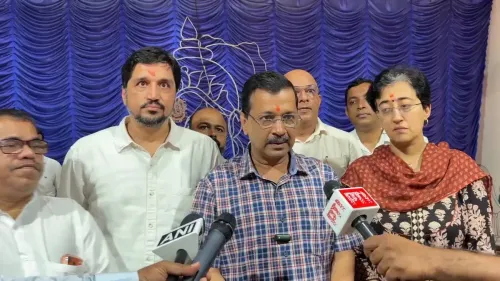
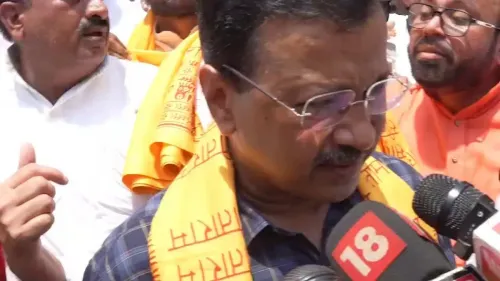
Kejriwal attends Sunderkand Path in Rohini, demands death penalty over Ram Mandir dacoity
Synopsis
AAP convenor Arvind Kejriwal attended a grand Sunderkand Path in Rohini, Delhi on 12 July 2026 and declared that Ram devotees present had vowed to secure the death penalty for those who committed dacoity at the Shri Ram Mandir in Ayodhya, calling it 'Lord Ram's command.'
Key Takeaways
Arvind Kejriwal attended a Sunderkand Path recitation in Rohini, Delhi on 12 July 2026 .
He demanded capital punishment for individuals alleged to have committed dacoity at Shri Ram Mandir, Ayodhya .
Kejriwal framed the demand as a collective vow taken by Ram devotees at the event.
He described the demand as 'the command of Lord Ram and our religious duty.' The Shri Ram Mandir was inaugurated on 22 January 2024 following a 2019 Supreme Court verdict .
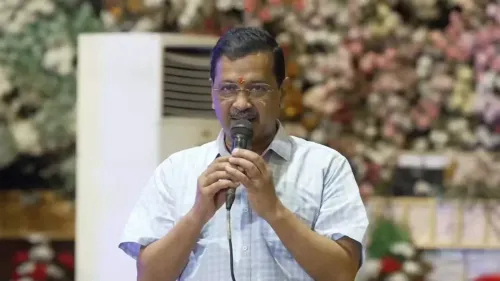
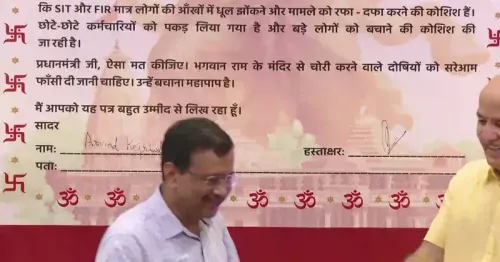
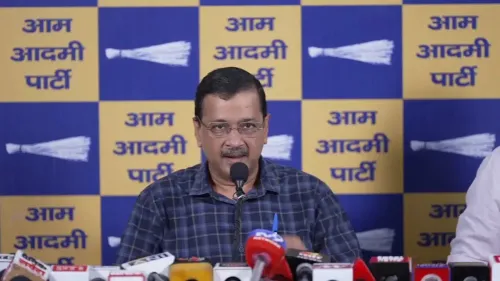
The post was shared with four images from the Rohini event.
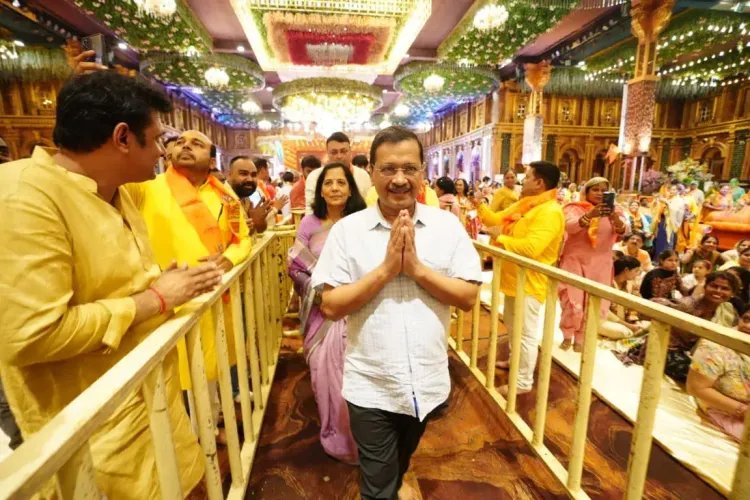
AAP convenor Arvind Kejriwal on Sunday, 12 July 2026, attended a grand Sunderkand Path recitation held in Rohini, Delhi, and used the occasion to demand capital punishment for those he described as perpetrators of a dacoity at Shri Ram Mandir in Ayodhya.
Context
Posting on X with the devotional salutation 'Siyavar Ramchandra ki jai' ('Victory to Lord Ram, consort of Sita'), Kejriwal said he was honoured to participate in the Sunderkand Path event in Rohini. He announced that all Ram devotees present took a collective vow: 'Shri Ram Mandir mein dakaiti karne wale mahapaapiyon ko phansi ki saza dilwakar hi dam lenge' — 'We will not rest until the great sinners who committed dacoity at Shri Ram Mandir are given the death penalty.'
Kejriwal added: 'This is the command of Lord Ram and our religious duty.' The post was accompanied by four images from the event.
Policy Backdrop
The Shri Ram Mandir in Ayodhya was inaugurated on 22 January 2024 following a landmark 2019 Supreme Court verdict that settled decades of legal dispute over the site. Since its inauguration, the temple has become one of the most prominent religious and political reference points in Indian public life.
A Sunderkand Path is a public recitation of the Sunderkand chapter from Tulsidas's Ramcharitmanas, a widely observed Hindu devotional practice. Holding such events in residential localities like Rohini — a densely populated northwest Delhi constituency — is common among community organisations and political figures seeking to engage with Hindu audiences.
Stakeholders and Impact
Kejriwal's remarks are directed at Ram devotees and Delhi voters, a constituency that the Aam Aadmi Party has actively courted in recent electoral cycles. By framing the demand for capital punishment in explicitly religious language — calling it 'Lord Ram's command' — the statement carries both a law-and-order message and a devotional register.
Indian politicians across the political spectrum routinely attend religious recitations and temple events. However, invoking the Ram Mandir and demanding the death penalty in the same breath signals that temple security has entered active political discourse, potentially prompting responses from other parties on questions of law, security, and religious sentiment.
What's Next
Statements from rival parties on Ram Mandir security and any related legislative proposals in Parliament are likely to follow. With assembly election cycles keeping Delhi politics in a state of continuous mobilisation, Kejriwal's remarks at a high-attendance devotional event are expected to reverberate in the coming days.
Point of View
He elevates the issue beyond a routine crime-and-punishment debate into the register of faith and duty. This mirrors a broader pattern across Indian parties of using temple-related discourse to consolidate Hindu voter sentiment, particularly in the post-Ayodhya inauguration period. The statement is likely to pressure rival parties into staking out their own positions on Ram Mandir security, raising the political temperature around an issue that sits at the intersection of religion, law, and electoral strategy.
NationPress
11 Oct 2026
Frequently Asked Questions
Why did Arvind Kejriwal attend the Sunderkand Path in Rohini?
Kejriwal attended the Sunderkand Path in Rohini, Delhi on 12 July 2026 as a devotional and community event, where he also made a public vow alongside Ram devotees to seek capital punishment for those accused of dacoity at the Shri Ram Mandir in Ayodhya.
What is Sunderkand Path?
Sunderkand Path is a public recitation of the Sunderkand chapter from Tulsidas's Ramcharitmanas, one of the most revered Hindu devotional texts. It is commonly organised in residential localities across India as a community religious practice.
What did Kejriwal say about the Ram Mandir dacoity?
Kejriwal declared that Ram devotees present at the event had taken a collective vow not to rest until those who committed dacoity at the Shri Ram Mandir are given the death penalty, calling it 'the command of Lord Ram and our religious duty.'
When was the Shri Ram Mandir in Ayodhya inaugurated?
The Shri Ram Mandir in Ayodhya was inaugurated on 22 January 2024 , following the landmark 2019 Supreme Court verdict that resolved the long-standing legal dispute over the site.
What is Arvind Kejriwal's current political position?
Arvind Kejriwal is the national convenor of the Aam Aadmi Party and former Chief Minister of Delhi.