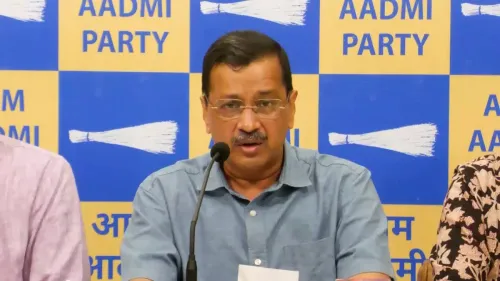
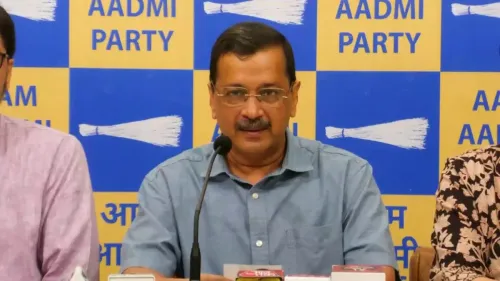
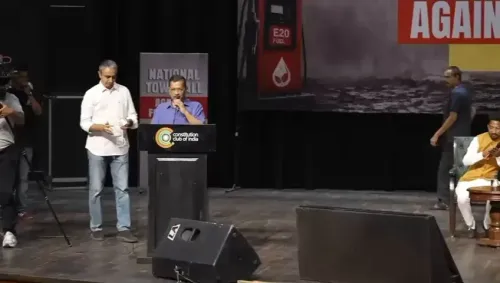
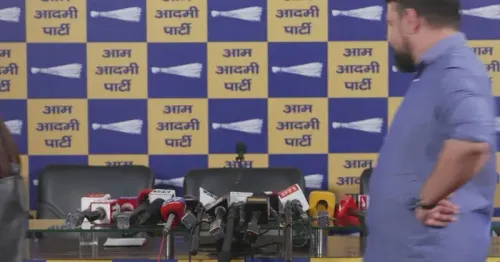
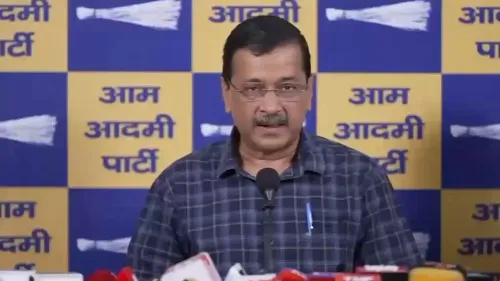
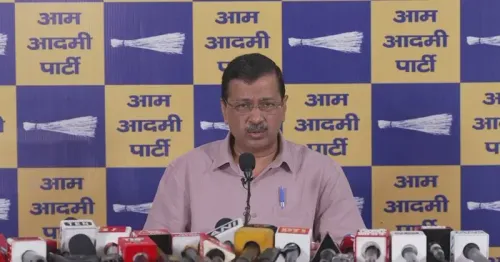
Kejriwal Holds Press Conference on 'Forced E20' in Goa
Synopsis
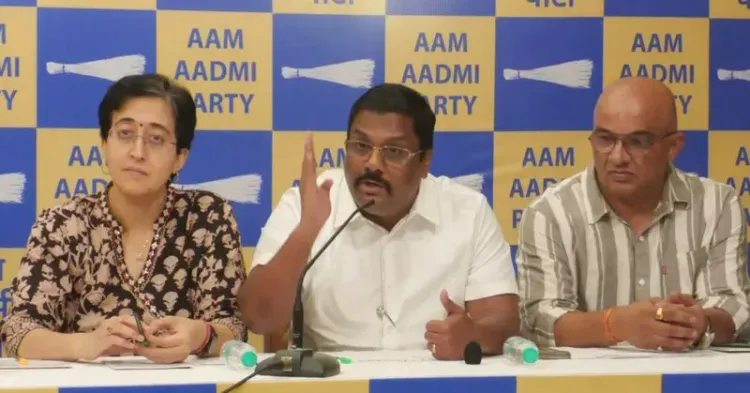
AAP convenor Arvind Kejriwal addressed a live press conference in Goa on 7 August 2026 targeting the compulsory rollout of E20 ethanol-blended petrol, framing it as a forced policy that denies vehicle owners — especially those with older engines — the choice of unblended fuel.
Key Takeaways
AAP convenor Arvind Kejriwal held a live press conference in Goa on 7 August 2026 on the issue of 'Forced E20' ethanol-blended petrol.
E20 refers to petrol blended with 20 percent ethanol , part of India's National Policy on Biofuels first set in 2018 .
The central Opposition concern is the absence of a non-blended petrol option at pumps, leaving owners of older vehicles with no alternative.
Goa was chosen as the venue, a state with high two-wheeler density and a large tourist vehicle population particularly sensitive to fuel quality and cost.
Consumer and automotive groups have raised concerns about mileage loss and engine compatibility for vehicles not designed for high-ethanol blends.
The specific demands or outcomes of the press conference remain subject to further reporting as the event falls outside verified public record.
A fuel policy dispute has landed in Goa — and AAP convenor Arvind Kejriwal is making it his fight. On Friday, 7 August 2026, Kejriwal addressed a live press conference in Goa, targeting what he called 'Forced E20' — the rollout of 20 percent ethanol-blended petrol at fuel stations, apparently without giving consumers the option of unblended fuel.
What E20 Is — and Why 'Forced' Is the Flashpoint
India's National Policy on Biofuels, 2018 set a target of 20 percent ethanol blending in petrol — originally by 2030, then accelerated in subsequent government roadmaps. The rationale is straightforward: cut petroleum import bills, support sugarcane farmers, and trim tailpipe emissions. On paper, a win on three fronts.
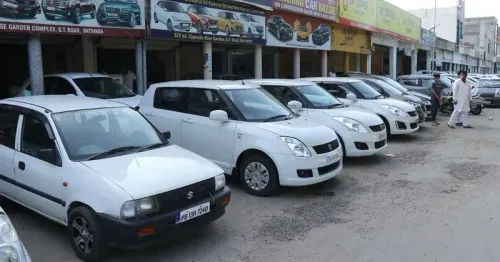
But the word Kejriwal chose — 'forced' — points directly at the consumer end of that policy. The Opposition's core grievance: when E20 becomes the only option at the pump, owners of older vehicles have no exit. Engine compatibility is not universal, and many two-wheeler and car owners report measurable mileage loss on blended fuel. No opt-out means no choice.
Why Goa, and Why Now
Goa is a telling venue. The state has a high density of two-wheelers, a large tourist-driven vehicle population, and a vocal middle class attuned to fuel costs. Any visible mileage drop or engine strain lands harder here than in states where public transport absorbs more commuter load. Bringing the press conference to Goa rather than Delhi signals that AAP is framing this as a national consumer issue with a state-specific edge — not merely a parliamentary debate.
Successive central governments have expanded ethanol mandates with broad industry and farm-lobby support. But the retail rollout — whether non-blended petrol remains available alongside E20 — has been uneven, and that gap is precisely where political opposition finds traction.
The Bigger Fuel-Choice Debate
Consumer and automotive voices have consistently raised two demands: transparent labelling at pumps, and the continued availability of standard petrol as an alternative. Without those safeguards, a well-intentioned climate and agriculture policy becomes, in the Opposition's framing, a mandate imposed on millions of vehicle owners who never consented to an engine experiment.
Kejriwal's intervention puts that demand on the political agenda in a state heading into its own electoral cycle — and dares the ruling establishment to defend a policy that hits ordinary commuters in the pocket every time they fill up.
The details of what Kejriwal announced or demanded at the press conference will shape whether this becomes a sustained campaign or a single-day salvo. But the framing — consumer rights versus a top-down mandate — is already sharp enough to travel.
Point of View
He shifts the debate from climate and farm policy to individual rights at the pump, terrain where the ruling dispensation is more exposed. Goa's high two-wheeler density and tourist economy make it a resonant backdrop. Whether the campaign gains legislative traction depends on whether specific data on mileage loss and engine damage can be marshalled — without that, it risks remaining a rhetorical salvo rather than a policy reversal.
NationPress
7 Aug 2026
Frequently Asked Questions
What is E20 petrol and why is it controversial?
E20 is petrol blended with 20 percent ethanol , mandated under India's National Policy on Biofuels to cut import costs and emissions. Controversy arises when unblended petrol is unavailable, leaving owners of older or incompatible vehicles no alternative and potentially causing mileage loss or engine wear.
Why did Kejriwal hold a press conference on E20 in Goa?
AAP convenor Arvind Kejriwal held a live press conference in Goa on 7 August 2026 to oppose what he called 'Forced E20' — the rollout of ethanol-blended fuel without offering consumers an unblended petrol option.
Does E20 petrol damage older vehicle engines?
Automotive experts and consumer groups have raised concerns that older two-wheelers and cars not designed for high-ethanol blends may experience reduced mileage and potential engine stress, though the degree varies by vehicle model and engine type.
What is India's ethanol blending target?
India's National Policy on Biofuels 2018 originally set a 20 percent ethanol blending target by 2030 , later advanced to an earlier timeline in subsequent government roadmaps.
Is non-blended petrol still available in Goa?
The availability of standard unblended petrol alongside E20 at retail outlets has been uneven across states; this is precisely the consumer-choice gap that Kejriwal's press conference sought to highlight in Goa .