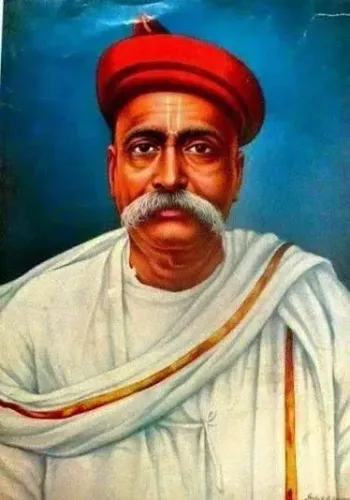
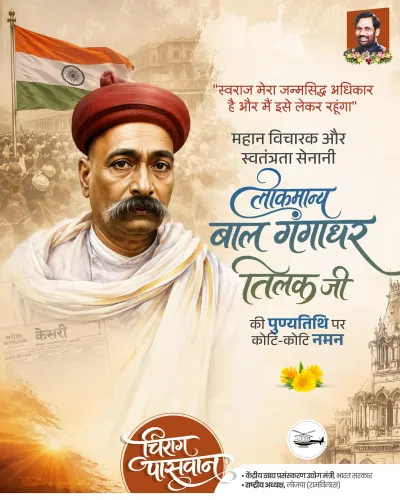
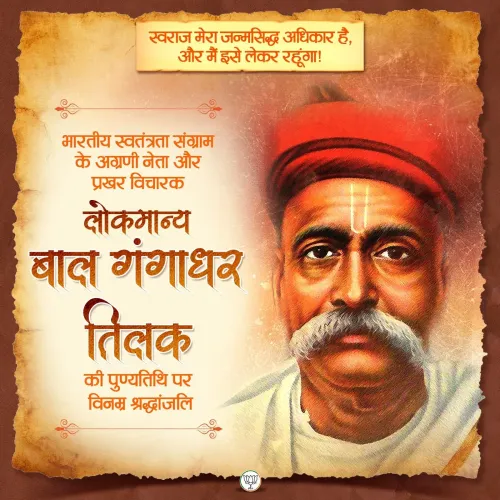
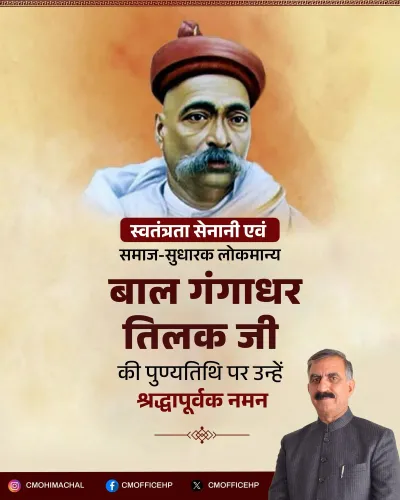
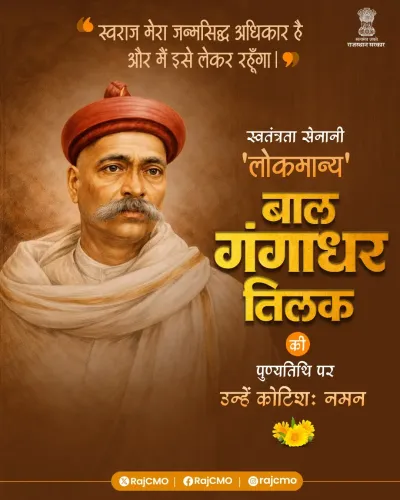
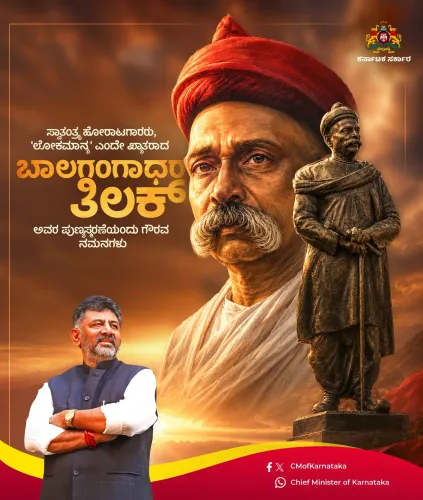
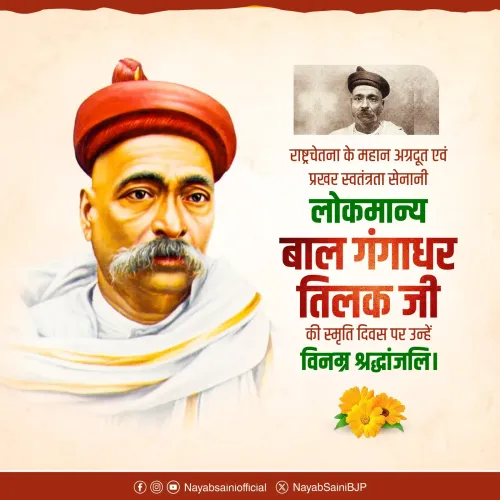
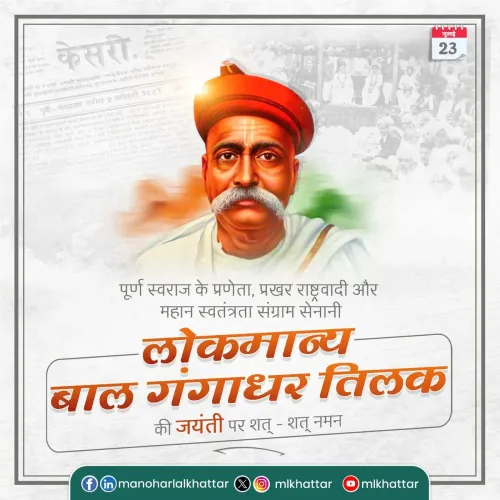
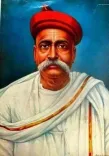
Kejriwal pays tribute to Bal Gangadhar Tilak on death anniversary
Synopsis
On Bal Gangadhar Tilak's death anniversary, AAP convenor Arvind Kejriwal paid tribute to the freedom fighter, honouring his iconic 'Swaraj is my birthright' declaration and his role in transforming India's independence movement into a mass struggle.
Key Takeaways
AAP convenor Arvind Kejriwal posted a tribute to Lokmanya Bal Gangadhar Tilak on his death anniversary, 1 August 2026 .
Kejriwal cited Tilak's slogan — 'Swaraj is my birthright' — as having given the independence struggle a new direction.
Tilak, who died on 1 August 1920 , pioneered mass mobilisation through Swadeshi, boycott, and public festivals like Ganesh Chaturthi .
Kejriwal described Tilak as an enduring source of inspiration for every Indian citizen.
Annual tributes to Tilak on this date are a cross-party tradition in Indian political life.
On the death anniversary of one of India's most consequential freedom fighters, AAP convenor Arvind Kejriwal paid solemn tribute to Bal Gangadhar Tilak on Saturday, 1 August 2026, invoking the legendary slogan that once shook the foundations of colonial rule.
Kejriwal wrote — 'Swatantrata andolan ke mahan nayak Lokmanya Bal Gangadhar Tilak ji ki punyatithi par unhe sadar naman' — ('Respectful homage to the great hero of the freedom movement, Lokmanya Bal Gangadhar Tilak, on his death anniversary.') He recalled Tilak's battle cry — 'Swaraj is my birthright' — as the force that gave the independence struggle a new direction, and described him as an enduring source of inspiration for every Indian.
The slogan that changed a movement
Bal Gangadhar Tilak, known by the honorific Lokmanya ('accepted by the people'), was among the earliest and most forceful voices demanding complete self-rule rather than incremental reform under British oversight. His declaration — 'Swaraj is my birthright, and I shall have it' — was not merely rhetoric; it reframed the independence struggle as a matter of fundamental right, galvanising ordinary Indians at a time when elite petitioning dominated nationalist politics.
Tilak championed the Swadeshi movement and the boycott of British goods, and used mass public festivals — most notably the Ganesh Chaturthi celebrations — as platforms for political mobilisation, pulling the freedom movement out of drawing rooms and into the streets. He passed away on 1 August 1920, a date that Indian political figures across the spectrum have since marked with annual tributes.
A cross-party ritual of remembrance
Kejriwal's post follows a well-established pattern in Indian public life: leaders from national and regional parties alike use Tilak's death anniversary to reaffirm their own connection to the nationalist tradition. The gesture signals continuity with India's founding values — self-determination, mass participation, and the rejection of foreign domination — themes that carry enduring electoral and cultural resonance.
For Kejriwal and the Aam Aadmi Party, invoking Tilak's legacy of mass mobilisation carries particular symbolic weight — a reminder that the most durable political movements are built not on elite consensus but on the conviction of ordinary citizens.
More than a century after Tilak's death, his insistence that self-rule is a birthright — not a concession to be negotiated — remains the sharpest needle in India's political compass.
Point of View
Which built its identity on grassroots mobilisation, the Tilak reference is not incidental. Across the political spectrum, death-anniversary tributes to independence-era icons function as low-cost, high-signal gestures of patriotic credibility. What is worth watching is whether such tributes are accompanied by substantive policy positions that echo the values being invoked.
NationPress
1 Aug 2026
Frequently Asked Questions
Why is 1 August significant for Bal Gangadhar Tilak?
1 August is the death anniversary of Bal Gangadhar Tilak , who passed away on this date in 1920 . Indian political leaders across parties mark the day with tributes to his contribution to the freedom movement.
What is the meaning of Tilak's slogan 'Swaraj is my birthright'?
The slogan — 'Swaraj is my birthright, and I shall have it' — declared that self-rule was a fundamental right of every Indian, not a privilege to be granted by colonial rulers. It shifted the tone of the independence movement from petitioning to assertion.
Who was Lokmanya Bal Gangadhar Tilak?
Lokmanya Bal Gangadhar Tilak was a prominent Indian nationalist leader of the early 20th century. He championed the Swadeshi movement, the boycott of British goods, and used mass public festivals to mobilise ordinary Indians in the freedom struggle.
What did Arvind Kejriwal say about Tilak on his death anniversary?
Arvind Kejriwal offered respectful homage to Tilak, recalled his 'Swaraj is my birthright' slogan as having given the independence struggle a new direction, and described him as an enduring source of inspiration for every Indian.
Why do Indian politicians pay tribute to Bal Gangadhar Tilak every year?
Tributes to Tilak on his death anniversary are a cross-party tradition in Indian public life, reflecting his foundational role in the independence movement and the enduring political and cultural resonance of his legacy of mass mobilisation and self-rule.