Rajasthan CMO pays tribute to Lokmanya Bal Gangadhar Tilak on death anniversary
Synopsis
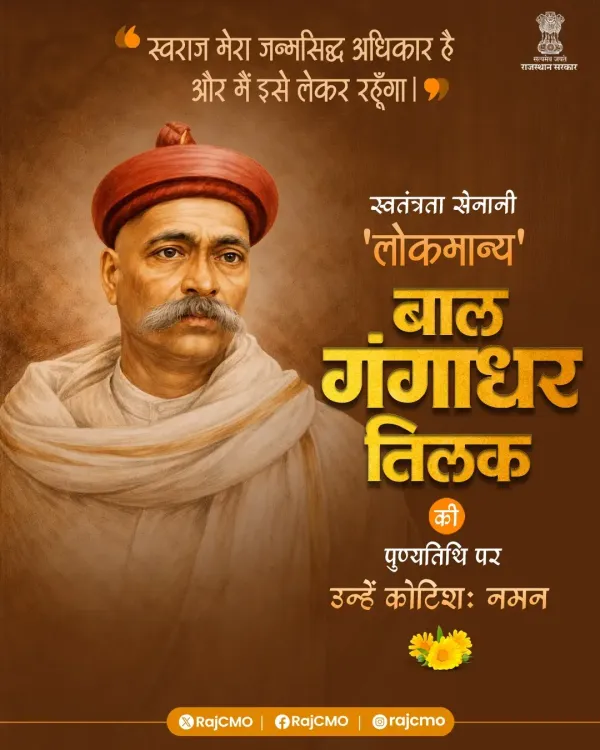
The Chief Minister's Office of Rajasthan marked Lokmanya Bal Gangadhar Tilak's death anniversary on 1 August 2026, invoking his iconic swaraj declaration and honouring his sacrifice as an enduring inspiration for national service.
Key Takeaways
The Chief Minister's Office of Rajasthan paid tribute to Lokmanya Bal Gangadhar Tilak on his death anniversary, 1 August 2026 .
The post invoked Tilak's iconic slogan: 'Swaraj is my birthright and I shall have it.' Tilak ( 1856–1920 ) was a nationalist leader who championed complete self-rule over gradual reform.
He popularised mass political gatherings through Ganesh Chaturthi and Shivaji Jayanti celebrations.
Official tributes to freedom fighters on their anniversaries are a consistent practice across Indian state and central governments.
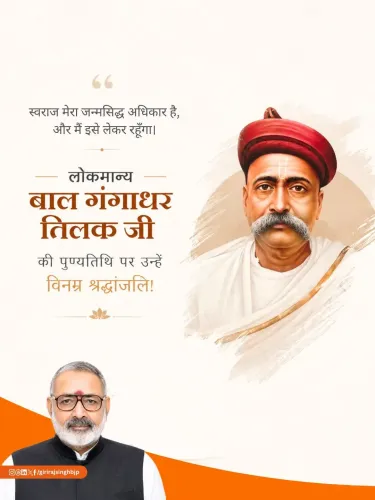
A freedom fighter's words, spoken over a century ago, still echo across India's corridors of power. On Saturday, 1 August 2026, the Chief Minister's Office of Rajasthan paid solemn homage to Lokmanya Bal Gangadhar Tilak on his death anniversary, invoking his legendary declaration — 'Swaraj mera janmasiddh adhikar hai aur main ise lekar rahunga' ('Swaraj is my birthright and I shall have it') — as a living source of inspiration for national service.
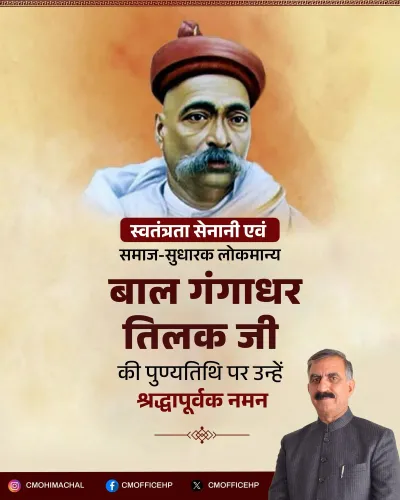
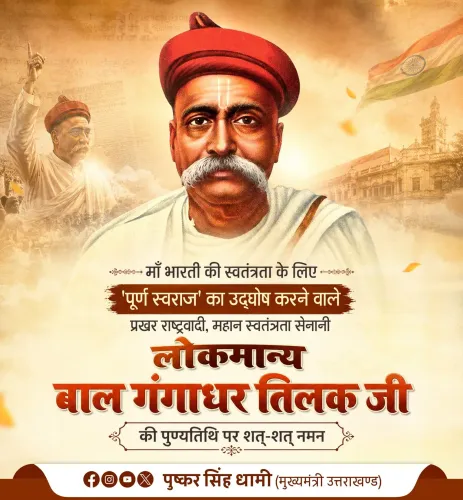
The CMO's post, shared in Hindi, offered what it called kotish naman — boundless salutations — to the fierce nationalist, describing his dedication, sacrifice, and martyrdom as forces that continue to inspire Indians toward service to the nation.
The man behind the slogan
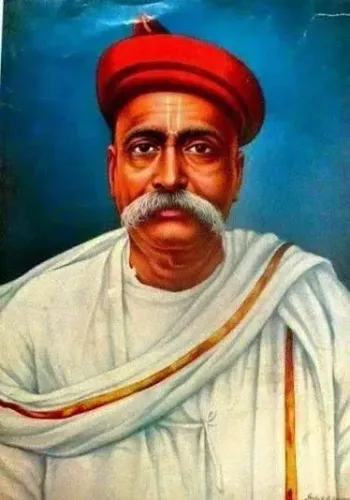
Bal Gangadhar Tilak (1856–1920), honoured with the title 'Lokmanya' — meaning 'accepted by the people as their leader' — was among the most radical and consequential voices of India's independence movement. A lawyer, mathematician, and journalist, he broke from the moderate school of political thought and demanded complete self-rule, not gradual reform under British tutelage. His slogan became the movement's battle cry, galvanising a generation of freedom fighters who had grown impatient with petitions and prayers. Tilak popularised the public celebration of Ganesh Chaturthi and Shivaji Jayanti as mass political gatherings — turning festivals into forums for nationalist consciousness at a time when public assembly was tightly controlled. He died on 1 August 1920, a date that Indian governments at every level have since marked with formal tributes.A ritual of remembrance, and what it signals
The Rajasthan CMO's tribute fits a well-established pattern across Indian state and central administrations: on the birth and death anniversaries of independence-era icons, official accounts issue statements that anchor present-day governance to the moral weight of the freedom struggle. The invocation of Tilak's swaraj slogan is particularly pointed — it frames public service not as bureaucratic duty but as a continuation of a century-old promise. For Rajasthan, a state with its own deep roots in the independence movement, such commemorations carry both historical resonance and political utility — reminding citizens that the state's leadership sees itself as a custodian of that legacy. Tilak's insistence that self-rule was a birthright, not a concession to be negotiated, remains one of the sharpest formulations in Indian political thought. That a state government reaches for it in 2026 is a reminder that the language of the freedom struggle still sets the terms of political legitimacy in India.Point of View
Rights-based tradition, not merely a ceremonial one. Across India's political spectrum, Tilak's legacy is claimed by multiple ideological camps, making him a rare consensus figure whose anniversary tributes carry low political risk but high symbolic value. The consistency of such commemorations across administrations underscores how the freedom struggle's moral authority continues to legitimise political power in post-independence India. Rajasthan's CMO, like counterparts elsewhere, uses this ritual to signal continuity with a national founding narrative that transcends party lines.
NationPress
15 Sept 2026
Frequently Asked Questions
When did Bal Gangadhar Tilak die?
Bal Gangadhar Tilak died on 1 August 1920 , and his death anniversary is observed annually across India with official tributes.
What is the famous slogan of Bal Gangadhar Tilak?
Tilak's most famous slogan is 'Swaraj is my birthright and I shall have it' — originally declared in Hindi as 'Swaraj mera janmasiddh adhikar hai aur main ise lekar rahunga' — which became a rallying cry of the Indian independence movement.
Why is Bal Gangadhar Tilak called Lokmanya?
The title 'Lokmanya' means 'accepted by the people as their leader.' It was conferred on Bal Gangadhar Tilak in recognition of his mass appeal and his role in mobilising ordinary Indians behind the demand for self-rule.
What did the Rajasthan CMO post on Tilak's death anniversary 2026?
The Chief Minister's Office of Rajasthan posted a tribute in Hindi on 1 August 2026 , offering boundless salutations to Tilak, citing his swaraj slogan and describing his sacrifice as an enduring inspiration for national service.
How did Tilak contribute to India's independence movement?
Bal Gangadhar Tilak championed complete self-rule over gradual reform, popularised mass political consciousness through public festivals like Ganesh Chaturthi and Shivaji Jayanti , and gave the independence movement its most electrifying slogan.