Kejriwal says India now poorer than Bangladesh in per capita income
Synopsis
AAP convenor Arvind Kejriwal on 21 August 2026 alleged that India's per capita income has fallen behind Bangladesh, charging PM Modi with failing the core promise of making India the world's richest nation. The claim revives a politically potent comparison rooted in IMF data trends since 2020.
Key Takeaways
Arvind Kejriwal posted on 21 August 2026 claiming India now lags behind Bangladesh in per capita income.
He directly linked the shortfall to PM Narendra Modi's 2014 election promise of making India the world's richest nation.
IMF data from 2020 first recorded Bangladesh overtaking India in nominal per capita GDP, driven by garment exports and remittances.
The specific August 2026 per capita figures cited by Kejriwal are unverified and await official data confirmation.
India's large aggregate GDP masks lower per-person figures across its 1.4 billion population , a recurring opposition talking point.
The government has historically countered such comparisons using PPP-based rankings and long-term targets like Viksit Bharat 2047 .
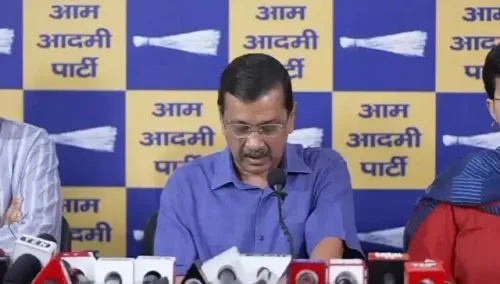
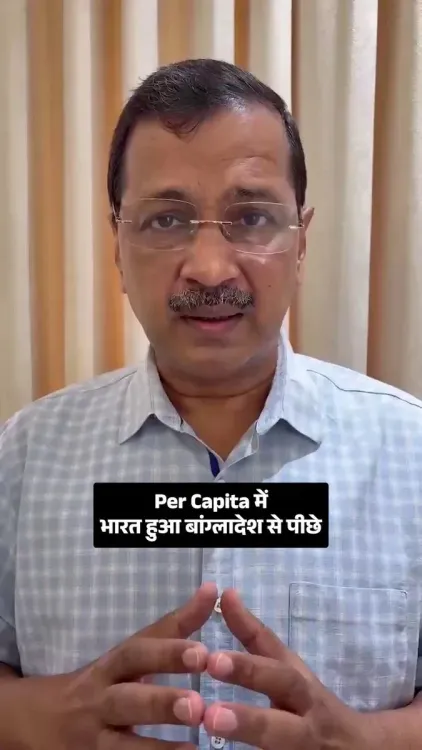
A pointed economic indictment landed on social media on Friday, 21 August 2026, as AAP convenor Arvind Kejriwal declared that India has fallen behind Bangladesh even in per capita income — framing it as the defining failure of the Modi era.
Posting in Hindi, Kejriwal wrote: 'आज per capita income में भारत बांग्लादेश से भी पीछे हो गया है' — 'Today, India has fallen behind even Bangladesh in per capita income.' He went further, reminding voters of the original promise: the country made Narendra Modi Prime Minister so he would make India the richest nation in the world. Instead, Kejriwal charged, Modi has made India poorer than Bangladesh.
How Bangladesh pulled ahead — and why it stings politically
The Bangladesh comparison is not new, but it never loses its edge in Indian political debate. IMF data from 2020 first showed Bangladesh overtaking India in nominal per capita GDP — a milestone driven by the neighbouring country's relentless focus on garment manufacturing and steady remittance inflows. India's far larger overall GDP obscures a crucial reality: spread across 1.4 billion people, per-person income figures tell a very different story than headline growth numbers. For the opposition, that gap is a ready weapon. Kejriwal's framing is precise — he is not attacking India's total economic size, he is attacking the lived standard of the average Indian. That is a harder number for the government to deflect with aggregate GDP rankings or purchasing-power-parity comparisons.Modi's 2014 promise versus the per capita reality
When Narendra Modi swept to power in 2014, the central promise was transformational growth — a seat at the top table of the global economy. Slogans like Viksit Bharat 2047 keep that aspiration alive. But opposition leaders, Kejriwal among the most vocal, have spent a decade measuring the gap between that promise and ground-level data. It is worth noting: the research background flags that the specific per capita claim as of August 2026 cannot be independently verified from available data at this time. No fresh official release from India's Ministry of Finance or updated IMF projections have been cited to confirm the current standing. The political charge is live; the precise numbers await official confirmation. What is not in dispute is the broader pattern — the Bangladesh comparison recurs in Indian political discourse precisely because it is uncomfortable, concrete, and human-scale in a way that trillion-dollar GDP figures are not. The next IMF or World Bank South Asia update will either arm the opposition further or hand the government a rebuttal. Until then, Kejriwal has put the per capita question squarely on the national agenda — and that question does not go away quietly.Point of View
He closes the loop between aspiration and accountability in a way that is difficult to dismiss with macro data alone. The Bangladesh comparison has been a durable opposition tool since 2020 precisely because it is concrete, neighbourly, and viscerally relatable to voters. Whether or not the August 2026 figures are confirmed, the political frame is already set: the next official data release becomes a verdict on the charge.
NationPress
21 Aug 2026
Frequently Asked Questions
Has India's per capita income really fallen below Bangladesh?
IMF data from 2020 showed Bangladesh overtaking India in nominal per capita GDP for the first time. Kejriwal's claim that India remains behind as of August 2026 is politically charged but the specific current figures have not yet been independently confirmed by official data releases.
Why does Bangladesh have a higher per capita income than India?
Bangladesh's per capita income growth has been driven by a concentrated focus on garment manufacturing and strong remittance inflows . India's much larger total GDP is spread across a population of over 1.4 billion , pulling down the per-person average.
What did PM Modi promise on the economy in 2014?
Narendra Modi was elected in 2014 on a platform of rapid economic transformation, promising to make India a leading global economy. Long-term targets like Viksit Bharat 2047 continue that ambition.
How does the government respond to per capita income comparisons with Bangladesh?
The Indian government typically counters such comparisons by citing purchasing-power-parity (PPP) rankings , where India fares better, and by pointing to India's overall GDP size and long-term growth trajectory rather than nominal per capita figures.
What is Viksit Bharat 2047?
Viksit Bharat 2047 is the Indian government's vision to make India a developed nation by the centenary of its independence in 2047 , with targets spanning economic growth, infrastructure, and social development.