White House China transhipment report on India lacks proof, names no company: Analysis
Synopsis
A White House report accusing India and 40-plus other countries of helping China dodge US tariffs names no Indian company, no shipment, and no cargo manifest. A Saviour magazine analysis argues the report conflates routine transhipment with fraud and that the author, Peter Navarro, has a documented record of anti-India rhetoric. New Delhi's two-sentence response may be exactly the right calibration.
Key Takeaways
The White House released a 25-page report on 13 August naming India among more than 40 countries allegedly aiding China's transhipment of exports to the US .
The report names no Indian company , importer, exporter, vessel, container number, or bill of lading.
Caroline Freund's research, cited by the White House, found Vietnam's rerouting share dropped from 16.1% to 1.8% under stricter firm-level matching — raising questions about the report's methodology.
Peter Navarro , who heads the office that produced the report, said India was 'well on our radar' within 48 hours of publication.
The MEA spokesperson said India would study the findings and that existing customs and rules-of-origin laws would govern any violations found.
A White House report released on 13 August that places India among more than 40 countries allegedly facilitating China's export transhipment to the United States contains no named Indian company, no shipment records, and no bill of lading to substantiate its claims, according to an analysis published in Saviour magazine. New Delhi has responded with deliberate restraint, promising to study the report's findings and methodology before taking any position.
What the White House Report Claims
The 25-page report, titled The Great Transhipment Scam: Rise, Scope, and Costs, was released by the White House Office of Trade and Manufacturing Policy on 13 August. It alleges that a range of countries, including India, have served as intermediate points through which Chinese goods are re-routed to circumvent US tariffs.
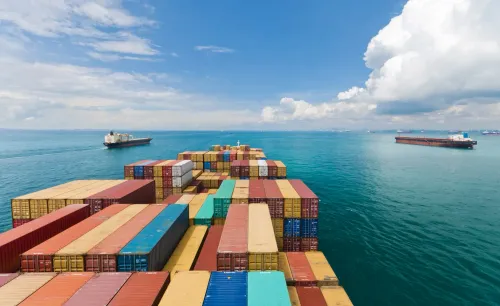
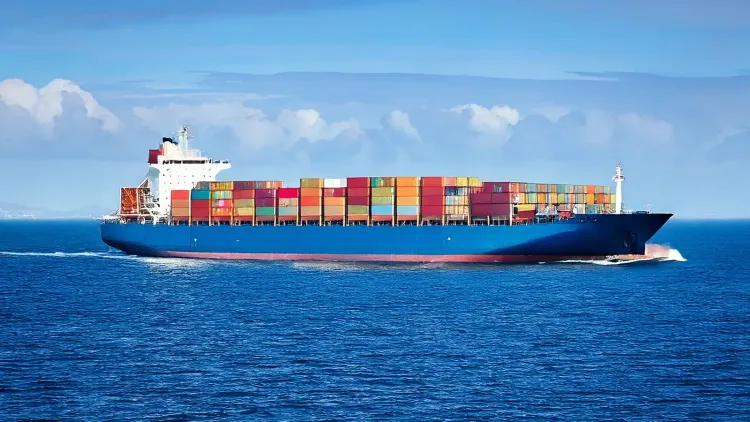
The Saviour analysis, authored by KBS Sindhu, draws a critical legal distinction: transhipment — cargo passing through an intermediate point en route to a final market — is routine global trade practice. It constitutes fraud only when the declared country of origin is falsified to evade tariffs applicable to the true origin. The report, the analysis argues, offers no such evidence against India.
The Evidentiary Gap
The report identifies India's Pune-Gujarat-Chennai production belt in the context of HS codes 8413-8414 (pumps and compressors), drawing a comparison with Cincinnati, Dayton, and Columbus in the United States. However, the Saviour analysis notes that Pune is an inland city, Gujarat encompasses multiple ports and industrial zones, and Chennai functions as both a manufacturing hub and a port. Converting that geographic description into a verifiable shipping route, without a cargo manifest, is an inferential leap the White House document itself declines to make, according to the article.
Notably, no Indian company, importer, exporter, freight forwarder, vessel, container number, or bill of lading is produced anywhere in the report. The analysis argues that what is alleged, at most, is that some shipments passing through Indian territory may have been mis-declared as to origin under US domestic customs law — a matter of individual importer liability under American statute, resolvable through American administrative and judicial processes against specific parties, and not something that implicates the Indian state or Indian industry as a whole.
Questions Over Methodology and Bias
The Saviour analysis also challenges the report's underlying data. It points out that Caroline Freund's own research — cited approvingly by the White House — found that Vietnam's apparent 16.1% 'rerouting' share collapsed to 1.8% once the methodology required matching the same firm, not merely the same tariff code in the same quarter. The analysis argues this methodological flaw undermines the report's broader conclusions.
The article further flags the track record of Peter Navarro, who heads the White House Office of Trade and Manufacturing Policy that produced the report. According to the analysis, within 48 hours of the report's release, Navarro stated on television that India was 'well on our radar.' This followed remarks the previous week in which he had accused unnamed 'Brahmins' of 'profiteering at the expense of the Indian people' over New Delhi's purchases of Russian oil — comments the analysis characterises as reflecting an anti-India bias.
India's Measured Official Response
Asked about the report at his 14 August media briefing, the Ministry of External Affairs (MEA) spokesperson responded in two sentences. 'We would like to study the findings and the methodology that has been adopted in detail,' he said, adding, 'We have robust laws and procedures governing customs, rules of origin and exports, and any instances of violation that may be there are dealt with in accordance with law.'
The Saviour analysis characterises this as an appropriate and sufficient response. A constitutional democracy with a population of more than 1.4 billion, the article argues, owes no confession to a report that names no defendant. The mature course, it concludes, is the quiet work of audits, reconciliations, and cooperation where genuinely warranted — irrespective of who is speaking from a podium in Washington.
What Happens Next
India has not committed to any formal rebuttal. The MEA's framing — study first, act under existing law — leaves room for bilateral customs cooperation without conceding the report's unsubstantiated framing. Trade analysts will watch whether the US follows up with specific company-level enforcement actions, which would shift the terrain from political assertion to legal process.
Point of View
Vessel, or manifest. That is not a trade enforcement document — it is a political framing device. Navarro's public commentary, including his reference to unnamed 'Brahmins' profiteering on Russian oil, signals that the animus here is at least partly personal and political. India's two-sentence MEA response is calibrated precisely right: engage the methodology, not the rhetoric. The real risk is that Washington escalates from assertion to actual tariff action, at which point the absence of evidence in the report becomes legally significant — and India's documented customs cooperation record becomes its strongest defence.
NationPress
21 Aug 2026
Frequently Asked Questions
What does the White House transhipment report say about India?
The report, released on 13 August, lists India among more than 40 countries allegedly helping China re-route exports to the US to avoid tariffs. It references India's Pune-Gujarat-Chennai production belt in the context of pumps and compressors but names no Indian company, shipment, or cargo document to support the allegation.
What is transhipment, and when does it become fraud?
Transhipment is the standard practice of routing cargo through an intermediate port or country on its way to a final destination. It becomes fraudulent only when the declared country of origin is falsified to evade tariffs that would otherwise apply. The Saviour analysis argues the White House report provides no evidence that India-linked shipments involved such falsification.
Why is Peter Navarro's role significant in this report?
Peter Navarro heads the White House Office of Trade and Manufacturing Policy that produced the report. Within 48 hours of its release, he stated India was 'well on our radar.' He had also previously accused unnamed 'Brahmins' of profiteering over India's Russian oil purchases — comments the Saviour analysis characterises as evidence of an anti-India bias in the report's framing.
How did India's government respond to the White House report?
The MEA spokesperson said at his 14 August briefing that India would study the report's findings and methodology in detail, and that the country's robust customs, rules-of-origin, and export laws would address any violations found. No formal rebuttal has been issued.
What flaw did analysts identify in the report's methodology?
The report cites researcher Caroline Freund's work approvingly, but the Saviour analysis points out that Freund's own findings show Vietnam's apparent 16.1% rerouting share fell to 1.8% once the same firm — not just the same tariff code in the same quarter — was required for a match. Critics argue this methodological gap undermines the report's broader country-level conclusions.