Kejriwal's Court Victory: A Threat to Rahul Gandhi's Opposition Dominance?
Synopsis
As global tensions rise, a significant political dynamic is shifting in India. Kejriwal's recent court relief raises questions about Rahul Gandhi's position as the primary opposition leader. What does this mean for the future of Indian politics?
Key Takeaways
Kejriwal's court relief reshapes political dynamics.
Congress expresses concern over AAP's rising influence.
Rahul Gandhi faces increasing internal and external challenges.
Electoral implications are significant for upcoming elections.
The opposition landscape is evolving rapidly.
New Delhi, March 1 (NationPress) Amid escalating tensions between Iran, Israel, and the US that dominate global news, a distinct political struggle is emerging domestically. This conflict involves former adversaries who have transitioned into allies and are now rivals in a shifting political landscape.
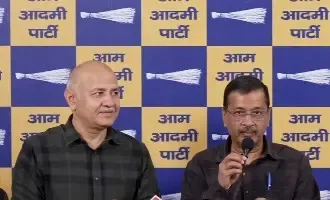
The recent court victory for Arvind Kejriwal in the Delhi excise policy case has sparked palpable anxiety within the Congress party, which has consistently presented itself as the primary opposition to the BJP. Following the Rouse Avenue Court's decision to dismiss the CBI charge sheet against Kejriwal, his associate Manish Sisodia, and 21 others, Congress leaders were visibly unsettled.
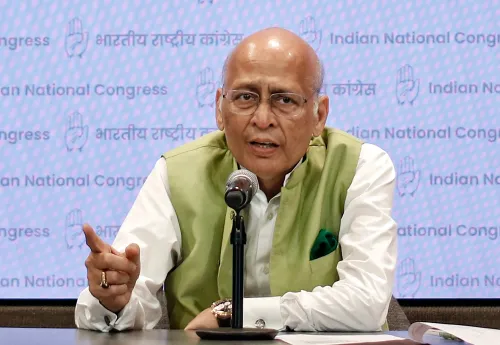
In a rapid response, Congress spokesperson Supriya Shrinate took to X to mock Kejriwal for showing emotion in light of the court ruling. A meme shared on her profile depicted the AAP leader in tears, juxtaposed with an image of Rahul Gandhi labeled as "our leader, a lion" facing "32 cases" compared to Kejriwal's "one case".
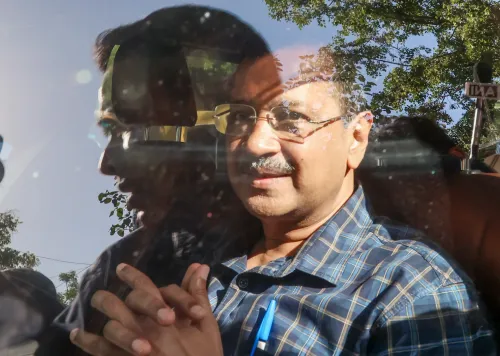
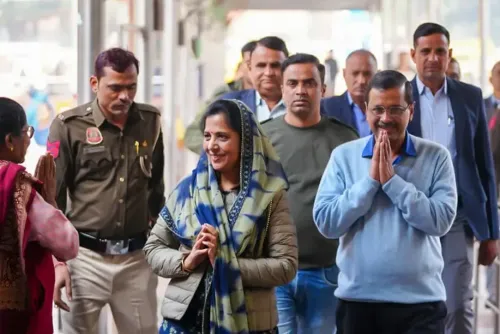
Shrinate's comments came in reaction to Kejriwal's emotional response outside the court on February 27, shortly after the verdict. While her remarks could be dismissed as hyperbolic political commentary, Congress President Mallikarjun Kharge's statements were more direct, reflecting the party's unease.
Speaking at the Congress' Kisan Mahachaupal in Barnala, Punjab, Kharge stated, "Crying and wailing won't achieve anything. If you wish to combat injustice, do so as Rahul Gandhi does. Kejriwal is lamenting about his lost dignity; if you are virtuous, you need not proclaim it—people will recognize it themselves."
This remark was a clear jab, indicating that Congress perceives Kejriwal's legal victory not merely as a judicial matter but as a significant political event.
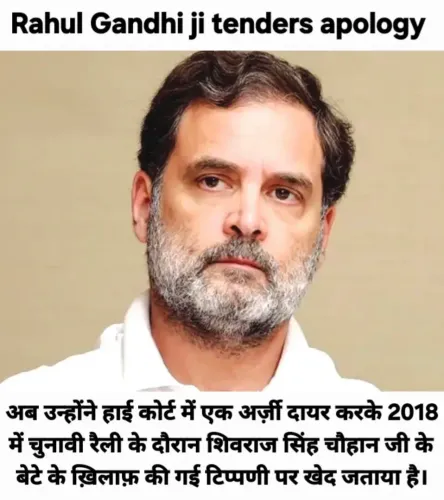
Rahul Gandhi remains the most visible figure opposing the Modi administration at the national level. While leaders like Mamata Banerjee and M.K. Stalin wield influence, their focus is primarily state-centric. Kejriwal, however, stands out as one of the few opposition figures with aspirations and appeal that transcend state lines, positioning himself to reclaim national relevance.
Conversely, Rahul Gandhi has struggled to unify his party or the wider opposition into a cohesive national alternative, with occasional internal dissent surfacing. Veteran Congress member Mani Shankar Aiyar has recently raised concerns over Rahul Gandhi's leadership, suggesting that the INDIA bloc might be better led by Mamata Banerjee or M.K. Stalin. This comment was made prior to Kejriwal's court relief, leaving open the possibility of Kejriwal entering that speculative leadership conversation.
Moreover, the controversy surrounding the AI Summit protest—especially the shirtless demonstration by Youth Congress activists—has drawn criticism not only from adversaries but also from various factions within the broader opposition landscape. Political optics are crucial, and actions that appear more theatrical than strategic can result in perception disparities.
Politics often turns coincidental events into opportunities. For months, AAP faced challenges amid arrests and allegations related to the liquor policy case. With the immediate legal threat now somewhat mitigated, Kejriwal finds himself in a position to breathe easier and potentially reclaim moral and political significance.
Congress has responded by labeling AAP as the "B team" of the BJP, conveniently overlooking its own history of alliances with AAP in Delhi—this critique may not hold water.
Kejriwal's legal victory carries substantial political weight. The timing in politics is rarely coincidental. The court's decision regarding the Delhi liquor policy case grants Kejriwal and the Aam Aadmi Party some breathing room and enhances their claim to moral and political importance.
The long-term implications of this moment remain uncertain, yet its electoral consequences are significant. Punjab is set to hold Assembly elections early next year, with AAP in power and Congress as the main challenger. Similarly, Gujarat presents a changing opposition landscape, with AAP working to solidify its position against Congress. In Goa, AAP aims to expand its influence in a region where Congress has typically been the leading opposition force.
Thus, Kejriwal's legal reprieve is more than a procedural matter; it reshapes the political optics. Even limited disenchantment can create opportunities. Should segments of the opposition voter base feel discontented, AAP may seek to occupy that space.
In a post-verdict press conference, Kejriwal made it clear he intends to fill any gaps in the opposition landscape. He sharply questioned Congress: "Kejriwal was jailed. Did Robert Vadra face jail time? Sanjay Singh went to jail. Did Rahul Gandhi? Did Sonia Gandhi? What is Congress claiming?" This statement was not just a defense; it served as a signal.
Whether Kejriwal can genuinely position himself as a viable national alternative to Rahul Gandhi is yet to be determined. However, this development ensures that Congress leadership must now navigate not only the BJP but also growing competition within the opposition realm.
At this juncture, the courtroom has shifted the narrative. The forthcoming political maneuvers will be closely watched.
(Deepika Bhan can be contacted at deepika.b@ians.in)
Point of View
The evolving political landscape in India poses significant challenges for traditional opposition figures. Kejriwal's court relief not only reshapes his political relevance but also forces Congress to reconsider its strategy amidst rising competition within the opposition.
NationPress
20 Sept 2026
Frequently Asked Questions
What was the outcome of Kejriwal's court case?
Kejriwal received legal relief when the Rouse Avenue Court dismissed the CBI charge sheet against him and others involved in the Delhi excise policy case.
How has Congress reacted to Kejriwal's court victory?
Congress officials expressed unease, with spokesperson Supriya Shrinate mocking Kejriwal's emotional response, while Congress President Kharge criticized his approach.
What implications does this have for Rahul Gandhi's position?
Kejriwal's victory challenges Rahul Gandhi's status as the primary opposition leader, raising questions about his ability to unify the opposition.
What are the upcoming political challenges for AAP?
AAP faces significant elections in Punjab and seeks to expand its influence in Gujarat and Goa, posing challenges for Congress.
What does Kejriwal's statement about Congress signify?
Kejriwal's remarks highlight his intent to challenge Congress's narrative and assert AAP's position in the opposition space.