BJP study camp at Kerala Congress institute sparks KPCC probe
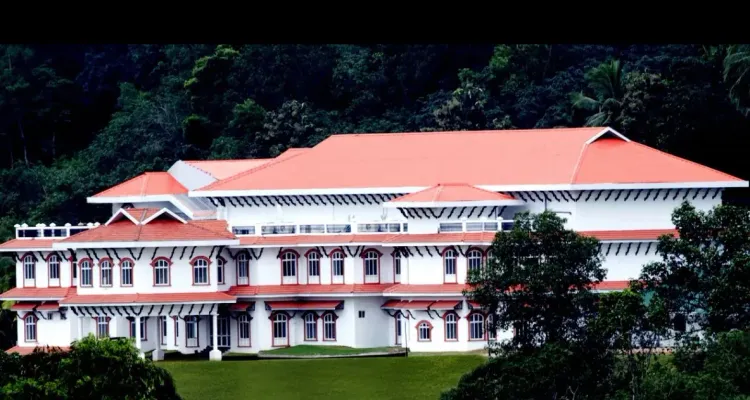
Synopsis
A BJP constituency study camp held inside the Congress-owned Rajiv Gandhi Institute of Development Studies in Kerala has triggered an internal KPCC inquiry and given the CPI(M) fresh ammunition to allege a 'tacit understanding' between the two parties — exposing a governance gap at one of Congress's flagship institutions.
Key Takeaways
The BJP's Kattakkada Assembly constituency committee held a two-day study camp on 27 and 28 June at the Rajiv Gandhi Institute of Development Studies , a Congress-owned facility in Neyyar Dam, Thiruvananthapuram .
The camp was inaugurated by BJP state vice-president and former IPS officer R.
The KPCC General Secretary has formally sought an explanation from institute officials; disciplinary action is reportedly under consideration.
Institute officials defended the booking, saying the hall is rented to organisations irrespective of political affiliation.
The CPI(M) cited the incident as evidence of a 'tacit understanding' between the BJP and the Congress in Kerala.
Party insiders allege oversight of affiliated institutions has weakened since KPCC president Sunny Joseph took on ministerial responsibilities.
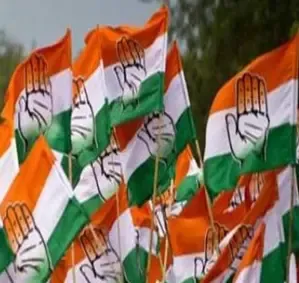
The Kerala Pradesh Congress Committee (KPCC) has ordered an inquiry into the management of the Rajiv Gandhi Institute of Development Studies at Neyyar Dam, Thiruvananthapuram, after the Congress-owned facility was rented out to host a Bharatiya Janata Party (BJP) study camp on 27 and 28 June, triggering a sharp internal revolt within the party.
What Happened
The institute's hall was hired by the BJP's Kattakkada Assembly constituency committee for a two-day study camp. The event was inaugurated by BJP state vice-president and former IPS officer R. Sreelekha, lending it a high-profile character that made the controversy harder to contain. Congress workers reacted with open outrage, questioning how an institution established to advance Congress ideology could be made available for a rival party's political programme.
KPCC Seeks Explanation
Following sustained pressure from the party rank and file, the KPCC General Secretary formally sought an explanation from those managing the institute. Party sources said the leadership wants to determine whether the decision was taken without prior approval and whether any procedural lapse occurred. Disciplinary action is reportedly being considered once the explanation is reviewed.
The institute's officials, however, have defended the booking, maintaining that the hall is routinely rented out to various organisations regardless of political affiliation. According to them, the BJP booking was processed in line with the institute's standard facility-hire practice.
The Institute's Significance
The Rajiv Gandhi Institute of Development Studies was established during the tenure of present Home Minister Ramesh Chennithala when he served as KPCC president. It was conceived as the Congress party's official centre for research, policy formulation, and political education — modelled on the CPI(M)'s EMS Academy. Over the years, it has hosted Congress leadership conclaves, training programmes, and key strategy sessions, including the semi-cadre training initiative introduced by former KPCC president K. Sudhakaran and deliberations on the formation of Congress Unit Committees.
The institute's chairperson is, by convention, the sitting KPCC president — a post currently held by Sunny Joseph. Party insiders allege, however, that affiliated institutions have received inadequate oversight since the KPCC chief assumed ministerial responsibilities.
CPI(M) Weighs In
The Communist Party of India (Marxist) (CPI(M)) has seized on the episode, describing it as an example of what it called a 'tacit understanding between the BJP and the Congress.' The characterisation, while contested by Congress, reflects the political capital rivals are drawing from the incident.
What Comes Next
The KPCC leadership is expected to act on the explanation once received, with disciplinary proceedings a possibility. The episode has also reignited a broader debate within the party about governance of its affiliated institutions and the adequacy of oversight mechanisms when office-bearers hold concurrent government positions.
Point of View
Even inadvertently, hands both rivals a ready-made narrative. The deeper issue is the structural conflict of interest when a party president doubles as a government minister, leaving affiliated bodies in an accountability vacuum. Until the KPCC resolves that tension, incidents like this will keep recurring.
NationPress
29 Jun 2026
Frequently Asked Questions
What happened at the Rajiv Gandhi Institute of Development Studies in Kerala?
The BJP's Kattakkada Assembly constituency committee held a two-day study camp at the Congress-owned Rajiv Gandhi Institute of Development Studies in Neyyar Dam, Thiruvananthapuram, on 27 and 28 June. The event was inaugurated by BJP state vice-president and former IPS officer R. Sreelekha, sparking an internal Congress controversy.
What action has the KPCC taken over the BJP camp?
The KPCC General Secretary has formally sought an explanation from the officials managing the institute. Party sources say disciplinary action is likely once the explanation is examined.
Why does the Rajiv Gandhi Institute of Development Studies matter to Congress?
The institute was established during Ramesh Chennithala's tenure as KPCC president to serve as Congress's official centre for research, policy formulation, and political education. It has historically hosted party leadership meetings, training camps, and strategy sessions, making the BJP booking politically sensitive.
How have institute officials responded to the controversy?
Institute officials have defended the decision, stating that the hall is routinely rented to various organisations regardless of their political affiliation and that the BJP booking followed the institute's standard facility-hire procedure.
What has the CPI(M) said about the incident?
The CPI(M) described the episode as an example of what it called a 'tacit understanding between the BJP and the Congress,' using it to reinforce its political narrative against both parties in Kerala.