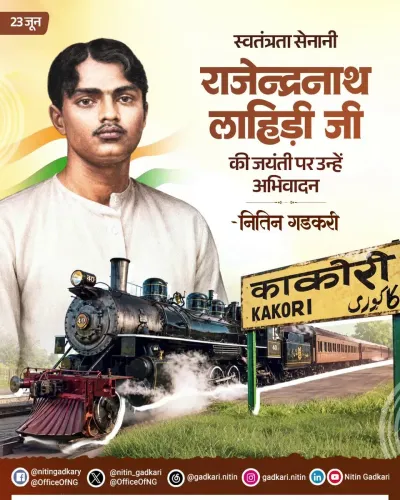
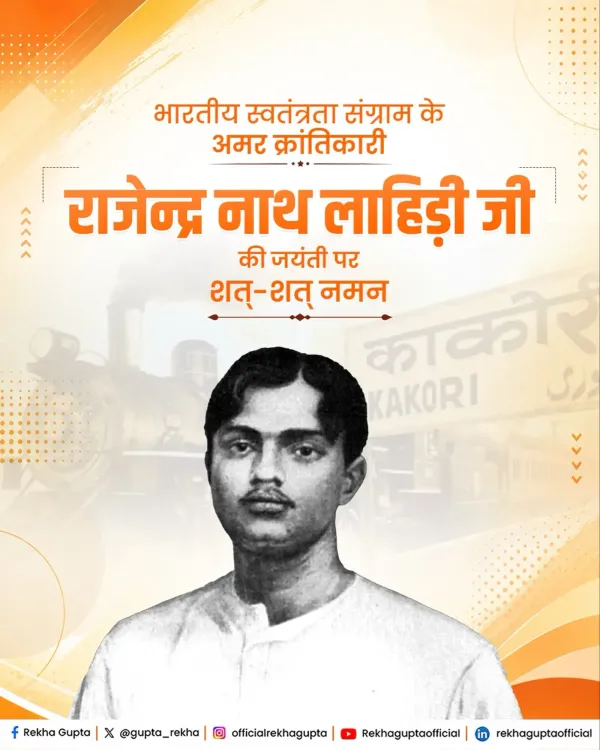
CM Rekha Gupta pays tribute to freedom fighter Rajendra Nath Lahiri
Synopsis
Delhi Chief Minister Rekha Gupta on 29 June 2026 paid homage to revolutionary freedom fighter Rajendra Nath Lahiri on his birth anniversary, saluting his courage, sacrifice, and role in the 1925 Kakori Train Action that made him one of India's celebrated martyrs.
Key Takeaways
Delhi CM Rekha Gupta posted a tribute to Rajendra Nath Lahiri on his birth anniversary on 29 June 2026 .
Rajendra Nath Lahiri was born on 29 June 1901 in Pabna district , now in Bangladesh.
He was a key member of the Hindustan Republican Association and a principal figure in the Kakori Train Action of 1925 .
Lahiri was hanged on 17 December 1927 at Gonda Jail , becoming one of the earliest martyrs of the Kakori case.
The tribute reflects the BJP government's ongoing effort to commemorate revolutionary freedom fighters alongside mainstream independence movement icons.
Delhi Chief Minister Rekha Gupta on Monday, 29 June 2026 paid tribute to freedom fighter and martyr Rajendra Nath Lahiri on his birth anniversary, honouring his sacrifice in India's independence struggle.
Context
In her post, CM Rekha Gupta offered 'shata-shata naman' — a respectful Hindi salutation meaning 'a hundredfold salute' — to Rajendra Nath Lahiri, describing him as a 'mahaan senaani evam amar shaheed' (great warrior and immortal martyr) of the freedom struggle. She wrote that his 'indomitable courage, sacrifice, and dedication to the liberation of the motherland will continue to inspire the people of this nation forever.'
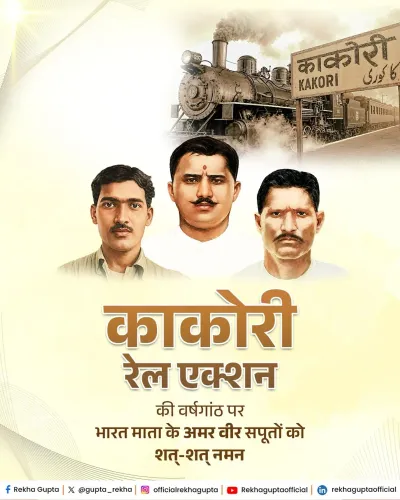
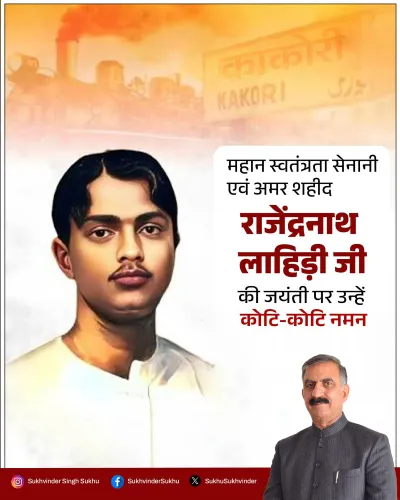
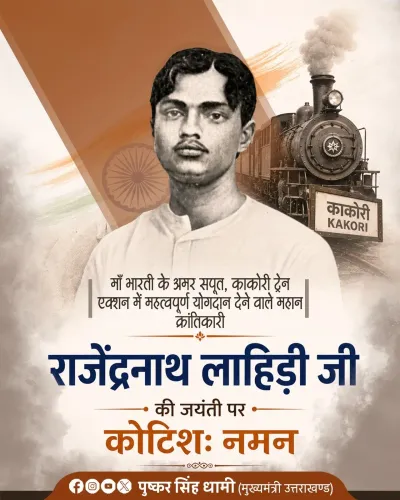
The tribute was accompanied by an image and was posted from the Chief Minister's official X account, reflecting the BJP government's consistent practice of commemorating lesser-celebrated figures of India's independence movement.
Who Was Rajendra Nath Lahiri
Rajendra Nath Lahiri was a prominent revolutionary freedom fighter born on 29 June 1901 in Pabna district, now in present-day Bangladesh. He was a key member of the Hindustan Republican Association (HRA), the revolutionary organisation that sought to overthrow British colonial rule through armed resistance.
Lahiri played a central role in the landmark Kakori Train Action of 1925, in which a group of revolutionaries looted a train carrying British government treasury funds near Kakori in present-day Uttar Pradesh. He was subsequently arrested, tried, and sentenced to death. Rajendra Nath Lahiri was hanged on 17 December 1927 at Gonda Jail, two days before his co-conspirators, making him one of the earliest martyrs of the Kakori case.
Policy Backdrop
The BJP-led government at the Centre and in several states has made it a priority to highlight the contributions of revolutionary freedom fighters who have historically received less mainstream recognition than figures of the non-violent independence movement. Rajendra Nath Lahiri is counted among revolutionaries like Ram Prasad Bismil, Ashfaqullah Khan, and Chandrashekhar Azad, whose legacies the party has sought to elevate through official commemorations.
As Delhi Chief Minister, Rekha Gupta has regularly used her public platform to mark the birth and death anniversaries of such figures, positioning the administration as a custodian of the broader, revolutionary strand of India's national memory.
Stakeholders and Impact
Tributes of this nature carry symbolic weight in shaping public historical consciousness, particularly among younger citizens for whom figures like Lahiri may be unfamiliar. The post, reaching CM Gupta's large following on X, serves to bring renewed attention to the Kakori Action and the sacrifices of its participants.
Historians and educators in Delhi have noted that official commemorations by sitting chief ministers can meaningfully influence curriculum emphasis and public discourse around lesser-known freedom fighters.
What's Next
With India's independence centenary approaching in 2047, political leaders across the spectrum are increasingly marking anniversaries of freedom fighters as part of broader 'Amrit Kaal' commemorative efforts. CM Rekha Gupta's tribute to Rajendra Nath Lahiri is likely part of a continuing series of such recognitions, signalling that the Delhi government will sustain its focus on amplifying revolutionary voices from India's independence era.
Point of View
Armed-resistance figures as central to India's freedom narrative — a strand of history the party argues has been underplayed. By marking such anniversaries from the Chief Minister's chair, the Delhi government signals that official memory-making is not merely ceremonial but ideologically purposeful. The gesture also serves to consolidate the party's image as a custodian of 'forgotten' martyrs ahead of India's independence centenary in 2047, when the competition to define the national freedom story will intensify across party lines.
NationPress
27 Sept 2026
Frequently Asked Questions
Who was Rajendra Nath Lahiri?
Rajendra Nath Lahiri was a revolutionary Indian freedom fighter born on 29 June 1901, best known for his role in the Kakori Train Action of 1925. He was a member of the Hindustan Republican Association and was hanged by the British on 17 December 1927 at Gonda Jail.
What was the Kakori Train Action?
The Kakori Train Action of 9 August 1925 was an operation by members of the Hindustan Republican Association who looted a British government treasury train near Kakori in present-day Uttar Pradesh. It became one of the most celebrated acts of armed resistance in India's independence movement.
Why did Delhi CM Rekha Gupta post about Rajendra Nath Lahiri?
29 June marks the birth anniversary of Rajendra Nath Lahiri. Delhi Chief Minister Rekha Gupta posted a tribute on X to honour his sacrifice and inspire citizens, in line with the BJP government's practice of commemorating revolutionary freedom fighters.
When was Rajendra Nath Lahiri executed?
Rajendra Nath Lahiri was hanged on 17 December 1927 at Gonda Jail in Uttar Pradesh, two days before his co-accused in the Kakori case were executed, making him one of the earliest martyrs of that trial.
What does 'shata-shata naman' mean?
'Shata-shata naman' is a Hindi phrase meaning 'a hundredfold salute' or 'deepest respects,' used in Indian political and cultural contexts to pay the highest tribute to a revered or martyred figure.