Edneer Mutt visit: Kerala CM Satheesan reflects on Basic Structure Doctrine legacy
Synopsis
Kerala CM V.D. Satheesan's visit to Edneer Mutt was a quiet but pointed reminder of one of India's most consequential legal battles. The 1973 Kesavananda Bharati verdict — born from a local land dispute in Kerala — gave the country the Basic Structure Doctrine, the ultimate judicial check on Parliament's power. More than five decades later, that doctrine remains fiercely relevant.
Key Takeaways
Satheesan visited the Edneer Mutt in Kasaragod on 20 November 2026 .
The mutt is an eight-century-old seat of Advaita Vedanta , formerly headed by the late Kesavananda Bharati .
On 24 April 1973 , a 13-judge Supreme Court bench ruled 7-6 in the Kesavananda Bharati case , establishing the Basic Structure Doctrine .
The doctrine holds that Parliament can amend the Constitution but cannot destroy its basic structure — including democracy, secularism, federalism, and judicial independence.
The case originated as a challenge to the Kerala Land Reforms Act affecting the mutt's properties.
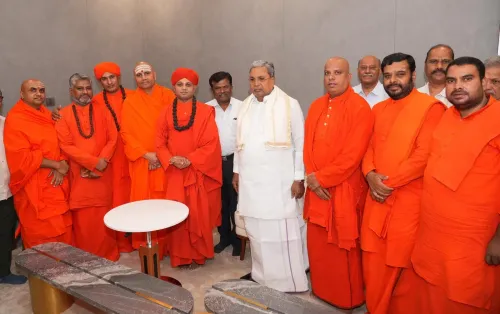
Satheesan was received by present spiritual head Sri Sri Sachidananda Bharati and described the visit as a 'memorable experience'.
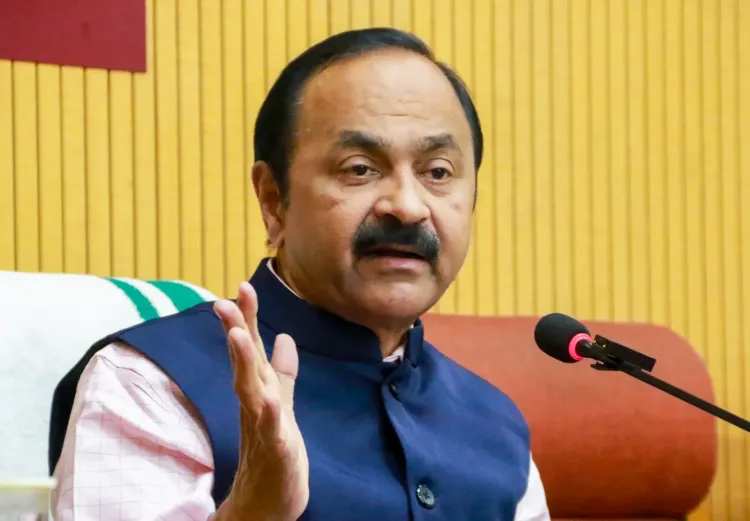
Kerala Chief Minister V.D. Satheesan visited the historic Edneer Mutt in Kasaragod on Friday, 20 November 2026, describing the experience as far more than a spiritual pilgrimage — it was, he said, a direct encounter with one of the most consequential chapters in India's constitutional history. The eight-century-old mutt is the institution at the centre of the landmark Kesavananda Bharati case, whose 1973 Supreme Court verdict gave India the Basic Structure Doctrine, a constitutional safeguard that endures to this day.
A Mutt With a Constitutional Legacy
The Edneer Mutt is a seat of Advaita Vedanta and has served as a centre of spiritual and cultural learning for over eight centuries. Yet its place in modern Indian history rests on a legal dispute initiated by its former head, the late Kesavananda Bharati, who challenged provisions of the Kerala Land Reforms Act that affected the mutt's properties. That challenge evolved into one of the most consequential constitutional battles the country has ever witnessed.
Chief Minister Satheesan was received at the mutt by its present spiritual head, Sri Sri Sachidananda Bharati, and later described the visit as a memorable experience. 'Beyond its spiritual significance, Edneer Mutt holds a special place in India's constitutional history,' he wrote in a post on social media, referencing the mutt's enduring contribution to both Kerala's cultural life and the nation's democratic framework.
What the Kesavananda Bharati Case Established
On 24 April 1973, a 13-judge Constitution Bench of the Supreme Court of India delivered its verdict in the Kesavananda Bharati case by a narrow 7-6 majority. The ruling held that while Parliament possesses the power to amend the Constitution, it cannot alter or destroy its basic structure. The judgment identified democracy, secularism, federalism, and the independence of the judiciary as among the essential features that no amendment can abrogate.
The verdict remains a cornerstone of Indian constitutional jurisprudence. It drew a firm boundary around Parliament's amending power at a time when fears of executive overreach were acute — fears that would prove prescient just two years later during the Emergency. Notably, the case began not as a challenge to parliamentary supremacy in the abstract, but as a dispute over land reform legislation in Kerala, illustrating how local grievances can catalyse defining national legal principles.
Satheesan's Acknowledgement of the Mutt's Contribution
In his post, Chief Minister Satheesan also paid tribute to the mutt's centuries-long contribution to education and cultural patronage. He said he was 'deeply touched' by the hospitality extended by the present spiritual head. His remarks bring together the two dimensions that define the Edneer Mutt's legacy — an unbroken tradition of spiritual and intellectual life, and an extraordinary, if unplanned, role in shaping the constitutional architecture of the world's largest democracy.
Why the Visit Matters in Present Context
Satheesan's visit comes at a time when the Basic Structure Doctrine continues to be invoked in debates over judicial appointments, constitutional amendments, and the boundaries of legislative authority. By publicly reflecting on the mutt's constitutional significance, the Chief Minister has drawn fresh attention to a doctrine that legal scholars argue remains the most important judicial check on majoritarian excess in Indian democracy. The visit underscores that the legacy of the Kesavananda Bharati judgment is not merely a matter of legal textbooks — it remains a living, contested principle at the heart of Indian governance.
Point of View
The very state whose land reform law triggered the original case, chose to publicly honour this legacy is a pointed signal. The doctrine was forged in a 7-6 split, meaning one vote in the other direction could have handed Parliament near-unlimited amending power. India's democracy has rested on that razor-thin margin ever since, and the fact that it still needs periodic restatement is itself telling.
NationPress
20 Nov 2026
Frequently Asked Questions
What is the Basic Structure Doctrine established by the Kesavananda Bharati case?
The Basic Structure Doctrine is the constitutional principle established by the Supreme Court of India on 24 April 1973 in the Kesavananda Bharati case. It holds that while Parliament can amend the Constitution, it cannot alter or destroy its basic features — including democracy, secularism, federalism, and the independence of the judiciary.
What is the Edneer Mutt and why is it significant?
The Edneer Mutt is an eight-century-old institution in Kasaragod, Kerala, serving as a centre of Advaita Vedanta and spiritual learning. It became a defining site in Indian constitutional history because its former head, the late Kesavananda Bharati, initiated the landmark Supreme Court case that produced the Basic Structure Doctrine in 1973.
Why did Kerala CM V.D. Satheesan visit the Edneer Mutt?
Chief Minister V.D. Satheesan visited the Edneer Mutt on 20 November 2026, where he was received by the present spiritual head Sri Sri Sachidananda Bharati. He described the visit as memorable and used a social media post to reflect on the mutt's dual legacy — its centuries of spiritual and cultural contribution and its pivotal role in India's constitutional history.
How did the Kesavananda Bharati case begin?
The case began as a legal challenge by Kesavananda Bharati, then head of the Edneer Mutt, to provisions of the Kerala Land Reforms Act that affected the mutt's property. The dispute escalated into a broader constitutional question about the limits of Parliament's power to amend the Constitution, eventually resulting in the 1973 Supreme Court verdict.
What was the verdict in the Kesavananda Bharati case?
A 13-judge Constitution Bench of the Supreme Court ruled 7-6 on 24 April 1973 that Parliament has the power to amend the Constitution but cannot destroy its basic structure. The judgment is considered one of the most consequential in the history of Indian constitutional law.