CM Fadnavis Pays Tribute to Birsa Munda on Smruti Din

Synopsis
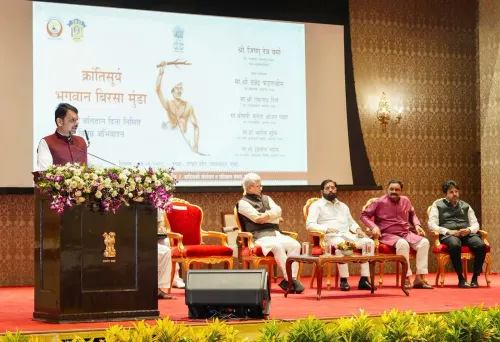
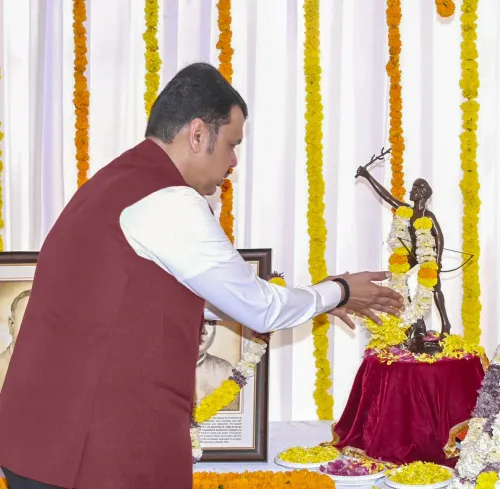
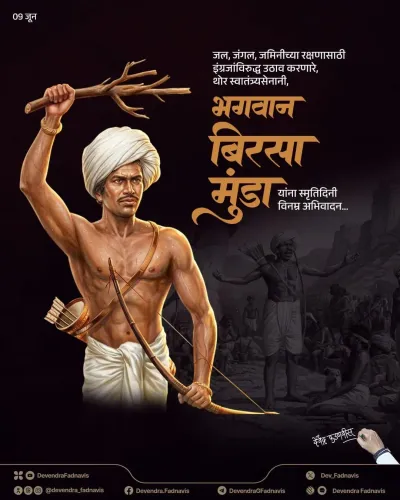
Maharashtra Chief Minister Devendra Fadnavis on June 9, 2026, paid tribute to Bhagwan Birsa Munda on his Smruti Din, honouring the Adivasi leader's Ulgulan rebellion and his enduring symbol as protector of jal, jungle and zameen in India's freedom movement.
Key Takeaways
CM Devendra Fadnavis posted a tribute to Bhagwan Birsa Munda on June 9, 2026 , his annual death anniversary.
Birsa Munda led the Ulgulan rebellion (1899–1900) against British land alienation and forest laws in present-day Jharkhand .
He died in British custody in Ranchi on June 9, 1900 , aged approximately 25.
The Forest Rights Act, 2006 codified tribal claims over land and forests — rights first articulated during Birsa Munda's movement.
Maharashtra has a significant Adivasi population in districts such as Gadchiroli, Nandurbar and Palghar , making forest-rights implementation a key state issue.
The tribute aligns with the BJP's broader integration of tribal icons into the national freedom narrative, including Janjatiya Gaurav Divas on November 15 .
Maharashtra Chief Minister Devendra Fadnavis on Tuesday, June 9, 2026, paid homage to tribal freedom fighter Bhagwan Birsa Munda on his death anniversary, honouring the Adivasi leader's enduring legacy in India's independence struggle.
Context
Posting on June 9 — observed annually as Birsa Munda's Smruti Din (remembrance day) — CM Fadnavis described him as a 'visionary tribal leader whose fight for justice and dignity left an enduring mark on India's freedom movement.' In Marathi, the Chief Minister offered 'humble salutations on the remembrance day' to the jal, jungle va jaminiche rakshankarte — 'protector of water, forests and land' — and thor swatantrya sainik, Adivasi jananayak, meaning 'great freedom fighter and tribal people's leader.'
Birsa Munda died on June 9, 1900, in British custody at Ranchi, aged approximately 25, making every June 9 a day of national remembrance for Adivasi communities and freedom-movement scholars alike.
Policy Backdrop
The core of Birsa Munda's rebellion — the Ulgulan uprising of 1899–1900 — was a direct challenge to British-era land alienation and restrictive forest laws that dispossessed tribal communities of their ancestral rights over water, forests and land. His movement's demands found legislative expression more than a century later in the Scheduled Tribes and Other Traditional Forest Dwellers (Recognition of Forest Rights) Act, 2006, which codified individual and community rights over forest land and resources.
Maharashtra, home to a significant Adivasi population spread across districts including Gadchiroli, Nandurbar, Palghar and Nashik, remains a key state in the ongoing implementation of forest-rights claims under this legislation. The state government's tribal sub-plan and forest-rights processing have been subjects of sustained attention from welfare organisations and the judiciary.
Stakeholders and Impact
Annual commemorations of Birsa Munda carry both cultural and political weight. For Adivasi communities and tribal welfare organisations, the day is an occasion to assess the progress — or lack thereof — in translating the Ulgulan's demands into ground-level policy outcomes such as individual forest-rights titles and community resource management.
For the BJP and allied governments, integrating Birsa Munda into the mainstream national freedom narrative reflects a broader political strategy of recognising tribal icons, a pattern visible in the renaming of Janjatiya Gaurav Divas (observed on his birth anniversary, November 15) as a national celebration. CM Fadnavis's post aligns Maharashtra's state government with this national positioning.
What's Next
Observers of tribal policy in Maharashtra will watch for any state-level announcements around this anniversary — including updates on pending forest-rights claims, allocations under the tribal sub-plan, or commemorative programmes in Adivasi-majority districts. The pace of forest-rights title distribution and the resolution of disputed claims remain live issues for communities whose aspirations trace directly to the movement Birsa Munda led over 125 years ago.
Point of View
The post implicitly connects a 19th-century rebellion to contemporary forest-rights debates, lending the tribute policy relevance beyond ceremony. The annual cadence of such commemorations also creates an expectation of follow-through: tribal welfare organisations routinely use these moments to spotlight gaps in forest-rights title distribution and sub-plan spending. Whether the tribute translates into measurable policy action in Maharashtra's Adivasi districts will be the sharper test of its significance.
NationPress
24 Oct 2026
Frequently Asked Questions
Who was Bhagwan Birsa Munda and why is he remembered?
Bhagwan Birsa Munda was a tribal leader from present-day Jharkhand who led the Ulgulan rebellion (1899–1900) against British land alienation and forest laws. He is remembered as a symbol of Adivasi resistance and a key figure in India's freedom movement, honoured for his fight to protect tribal rights over water, forests and land.
When is Birsa Munda's Smruti Din observed?
Birsa Munda's Smruti Din, or death anniversary, is observed on June 9 every year. He died in British custody in Ranchi on June 9, 1900.
What did Devendra Fadnavis say about Birsa Munda?
Maharashtra CM Devendra Fadnavis described Birsa Munda as a 'visionary tribal leader whose fight for justice and dignity left an enduring mark on India's freedom movement' and offered humble salutations on his Smruti Din.
What is the connection between Birsa Munda and the Forest Rights Act?
The Scheduled Tribes and Other Traditional Forest Dwellers (Recognition of Forest Rights) Act, 2006 codified individual and community rights over forest land and resources — rights that Birsa Munda's Ulgulan rebellion first demanded over a century earlier against British-era dispossession.
Why does the BJP commemorate Birsa Munda?
The BJP has integrated Birsa Munda into the national freedom narrative as part of its outreach to Adivasi communities. The government designated November 15 — his birth anniversary — as Janjatiya Gaurav Divas, a national celebration of tribal heritage and contributions to India's independence struggle.