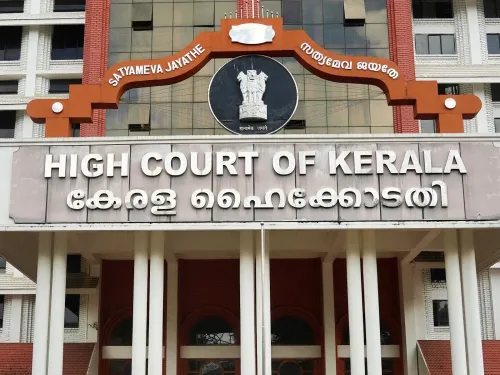
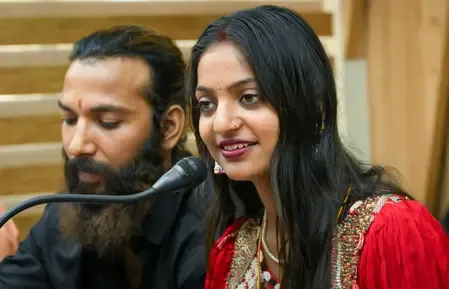
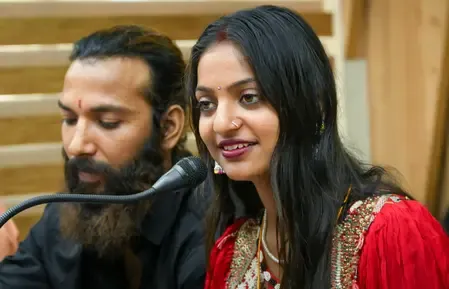
Kerala HC bars transfer of Kumbh Mela viral star out of Kochi
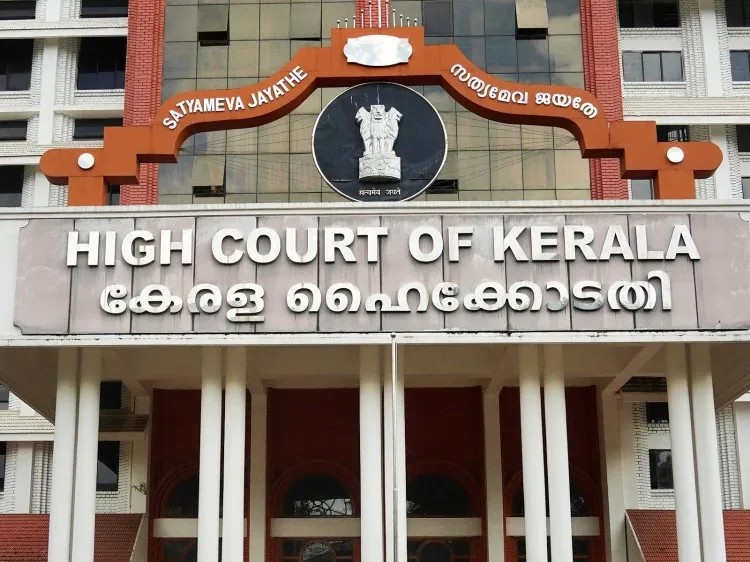
Synopsis
The Kerala High Court has stepped in to shield the woman known as the Kumbh Mela viral star from being transferred to Madhya Pradesh Police, citing her fears of honour killing. With a tribal commission, two state police forces, and competing birth certificate records all in play, this case has become a flashpoint over women's autonomy, jurisdictional authority, and the limits of tribal welfare bodies.
Key Takeaways
Kerala High Court on 28 July barred the removal of the Kumbh Mela viral star from Kochi without court permission.
Justice Bechu Kurian Thomas issued the interim order while hearing her writ petition for police protection.
The National Commission for Scheduled Tribes (NCST) had asked the Kerala DGP to hand her over to Madhya Pradesh Police following a complaint that she was a minor at marriage.
Her counsel argued she was 18 years and 3 months old at the time of marriage and fears an honour killing if returned to her family.
Her original birth certificate was allegedly cancelled without her knowledge; that cancellation is being contested before the Madhya Pradesh High Court .
The case is listed for further hearing next week .
The Kerala High Court on Tuesday, 28 July issued an interim order protecting the woman widely known as the Kumbh Mela viral star, directing the Kerala government to ensure she is not removed from the jurisdictional limits of Kochi against her will or without the court's explicit permission. The order effectively blocks any move to hand her over to the Madhya Pradesh Police without prior judicial approval.
What the Court Ordered
Justice Bechu Kurian Thomas issued the direction while hearing the woman's writ petition seeking police protection. The court stated clearly: 'The State shall ensure that she is not removed from the jurisdictional limits of Kochi against her will until the writ petition is finally decided.' The interim order also continued the police protection previously granted to the petitioner.
Why the Case Reached This Point
The court intervened after being informed that the National Commission for Scheduled Tribes (NCST) had written to the Kerala Director General of Police, asking that the woman be handed over to the Madhya Pradesh Police in accordance with due process. The NCST was acting on a complaint filed by a social worker who alleged the woman was a minor when she married Mohammed Farmaan. The Commission had itself directed that appropriate High Court orders be obtained before its directions were implemented.
The Petitioner's Fears and Legal Arguments
The woman's counsel argued before the court that she feared for her life if returned to Madhya Pradesh, contending she could face an honour killing if compelled to go back to her family. The counsel submitted that she was 18 years and three months old at the time of her marriage, and that her original birth certificate was subsequently cancelled without her knowledge. That cancellation, the counsel noted, has already been challenged before the Madhya Pradesh High Court.
The Court's Note on Security
While continuing police protection, Justice Bechu Kurian Thomas orally observed that the police could only protect the woman if they knew her whereabouts, noting that providing security would be difficult if she remained in hiding. The court clarified that whenever she faced an immediate threat, she should contact the woman protection officer assigned to her case for prompt assistance.
Background and What Comes Next
The woman first secured police protection from the Kerala High Court in June. That interim protection was briefly withdrawn after police reported they could not trace her, but was restored last week after she again approached authorities seeking safety. This comes amid a broader national conversation about the rights of women in inter-community marriages and the jurisdictional limits of tribal welfare commissions. The case is scheduled for further hearing next week.
Point of View
A state police force, and a High Court all assert jurisdiction over the same individual, whose writ prevails? The NCST's directive to the Kerala DGP — asking one state's police to hand over a person to another state's police — is an unusual exercise of quasi-judicial authority that the Kerala High Court has now effectively suspended. The honour killing fear raised by the petitioner's counsel is unverified but cannot be dismissed; Indian courts have seen enough such cases to treat the claim seriously. What is missing from mainstream coverage is scrutiny of the birth certificate cancellation — a document dispute that could either validate the NCST's concern or reveal administrative overreach. Until that is resolved, the woman remains caught between competing institutional claims, with the High Court as her only stable anchor.
NationPress
28 Jul 2026
Frequently Asked Questions
Who is the Kumbh Mela viral star and why is she in the news?
She is a woman who gained widespread public attention after going viral during the Kumbh Mela. She is currently at the centre of a legal dispute in Kerala, where the High Court has issued an interim order protecting her from being transferred out of Kochi against her will.
Why did the Kerala High Court intervene in this case?
The court intervened after being informed that the National Commission for Scheduled Tribes had asked the Kerala Director General of Police to hand the woman over to the Madhya Pradesh Police. She had filed a writ petition seeking police protection, and the court issued an interim order blocking her removal from Kochi without its permission.
What is the role of the National Commission for Scheduled Tribes in this case?
The NCST acted on a complaint from a social worker who alleged the woman was a minor when she married Mohammed Farmaan. It directed the Kerala DGP to hand her over to the Madhya Pradesh Police in accordance with due process, while also specifying that appropriate High Court orders must be obtained first.
What are the petitioner's key legal arguments?
Her counsel argued that she was 18 years and 3 months old at the time of her marriage, making her an adult. He also contended that her original birth certificate was cancelled without her knowledge — a move being challenged before the Madhya Pradesh High Court — and that she faces a risk of honour killing if returned to her family.
What happens next in the case?
The Kerala High Court has continued police protection for the woman and listed the case for further hearing next week. The court noted that she must stay in contact with the assigned woman protection officer to receive timely security assistance.