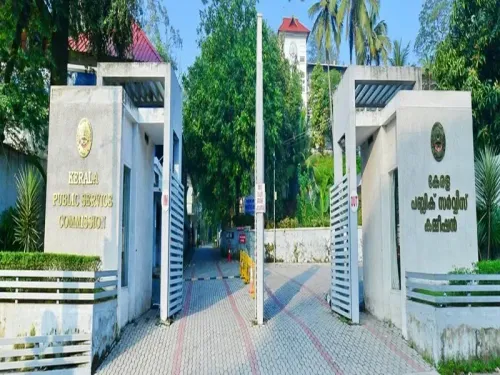
Kerala PSC Vigilance probe demanded over decade of recruitment fraud
Synopsis
The Save University Campaign Committee has formally demanded a Vigilance probe into the Kerala PSC, alleging that 38 of 44 Fisheries Department appointments went to students of one university, question papers were leaked through insider networks, and a DYFI leader's PSC appointment was engineered to control exam setters. The allegations, if proven, point to systemic capture of a constitutional body.
Key Takeaways
The Save University Campaign Committee (SUCC) submitted a memorandum on 3 July demanding a Vigilance probe into the Kerala PSC .
Of 44 appointments in the Fisheries Department, reportedly 38 went to students of KUFOS , many allegedly linked to the SFI .
The Fisheries Director had recommended an external probe, but no action has been taken.
Allegations of manipulation span at least 6 posts including KAS , DSP (Special Recruitment) , and Assistant Professor in Law Colleges .
Sasikumar alleged insider control over question paper setters and linked a recent DYFI appointment to that network.
The PSC board's Chairman and 15 members were all appointed by the Pinarayi Vijayan government between 2016 and 2026 .
The Save University Campaign Committee (SUCC) on Friday, 3 July demanded a comprehensive Vigilance probe into alleged irregularities in recruitment by the Kerala Public Service Commission (PSC) spanning the past decade, covering corruption, question paper leaks, and the undisclosed income sources of PSC members. The demand was placed before the Governor, Chief Minister, and Home Minister through a formal memorandum.
The Allegations at the Centre
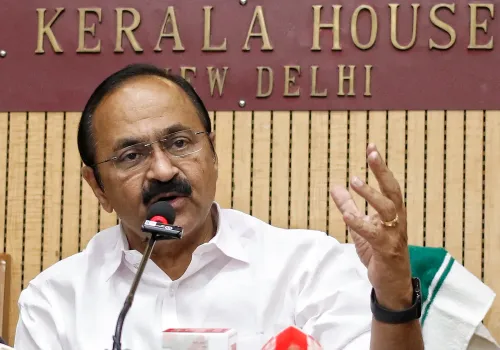
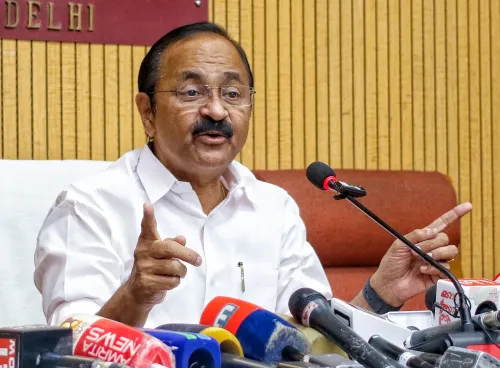
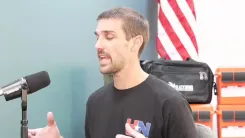
SUCC Chairman R.S. Sasikumar alleged that a series of controversies had seriously eroded the transparency and credibility of the PSC — a constitutional body that serves as the primary gateway to government employment for lakhs of job aspirants in Kerala. The present PSC board comprises a Chairman and 15 members, all appointed by the Pinarayi Vijayan government between 2016 and 2026.
The memorandum claimed that in the recruitment of Extension Officers in the Fisheries Department, students affiliated with the Kerala University of Fisheries and Ocean Studies (KUFOS) — particularly leaders of the Students' Federation of India (SFI) — received undue preference. Of the 44 appointments made, reportedly 38 were KUFOS students. Individuals associated with the university allegedly participated in both preparing the question paper and serving on the interview board, while highly qualified candidates from other universities were reportedly overlooked.
Notably, the committee pointed out that the Fisheries Director had recommended an external agency investigation into this matter, but no action has been taken to date.
Other Posts Flagged for Irregularities
The memorandum raised similar concerns across multiple recruitment processes. Alleged irregularities were cited in the selection for the post of Chief Industrial and Infrastructure Officer in the State Planning Board, where answer scripts were reportedly not properly evaluated and the rank list was allegedly published in haste to benefit politically connected candidates.
Comparable allegations were levelled against recruitments for Assistant Information Officer, Deputy Superintendent of Police (Special Recruitment), Assistant Professor in Law Colleges, Kerala Administrative Service (KAS), and University Public Relations Officer. The committee claimed that mandatory procedures were bypassed and examination sub-committees were sidelined in these processes.
Question Paper Leaks and Political Influence
Sasikumar alleged that a group comprising the PSC Chairman and certain members had taken control of the appointment of question paper setters, facilitating advance access to question papers and enabling manipulation of written examinations. He further alleged that the recent appointment of a relatively young woman leader of the Democratic Youth Federation of India (DYFI) as a PSC member was a calculated move to influence the selection of question setters.
The committee also questioned why the PSC had not conducted a thorough probe into how student leaders accused in the earlier University College violence case — linked to the Civil Police Officer (CPO) rank list controversy — managed to secure top positions in the rank list.
Impact on Job Seekers and What the SUCC Wants
According to the memorandum, these developments have fostered a widespread public perception that the PSC has become heavily politicised, eroding confidence among genuine job seekers and reportedly pushing talented youth to migrate abroad in search of secure employment. The SUCC has urged the government to order a high-level Vigilance investigation by independent and competent officers into all the allegations at the earliest opportunity.
This is not the first time the Kerala PSC has faced scrutiny — question paper leak controversies have surfaced repeatedly over the past several years, making this latest demand part of a longer pattern of accountability concerns around the body.
Point of View
Interview boards, and member appointments are all allegedly drawn from the same political ecosystem. The Fisheries Department case is particularly striking — 38 of 44 appointments from one university is a statistical outlier that warrants independent scrutiny regardless of political affiliation. That the Fisheries Director's own recommendation for an external probe went unheeded is itself a governance failure. Kerala's PSC has historically been regarded as one of the more credible state recruitment bodies in India; if the politicisation charge holds, the damage to public trust — and to the career prospects of thousands of aspirants — will outlast any single government.
NationPress
2 Oct 2026
Frequently Asked Questions
What is the Kerala PSC Vigilance probe demand about?
The Save University Campaign Committee (SUCC) has demanded a Vigilance investigation into alleged corruption, question paper leaks, and political favouritism in Kerala Public Service Commission (PSC) recruitments over the past decade. The demand was submitted in a memorandum to the Governor, Chief Minister, and Home Minister on 3 July.
What is the Fisheries Department recruitment controversy?
Of 44 Extension Officer appointments in the Fisheries Department, 38 were reportedly students of the Kerala University of Fisheries and Ocean Studies (KUFOS), many allegedly affiliated with the SFI. Individuals linked to the university reportedly set the question paper and sat on the interview board, while candidates from other universities were allegedly overlooked.
Who are the PSC members and who appointed them?
The current Kerala PSC board has a Chairman and 15 members, all of whom were appointed by Chief Minister Pinarayi Vijayan's government between 2016 and 2026. The SUCC has demanded that the income sources of these members be investigated.
What other recruitments have been flagged in the memorandum?
The SUCC memorandum flags alleged irregularities in at least six recruitment processes, including Chief Industrial and Infrastructure Officer in the State Planning Board, Deputy Superintendent of Police (Special Recruitment), Kerala Administrative Service (KAS), Assistant Professor in Law Colleges, Assistant Information Officer, and University Public Relations Officer.
What action has been taken so far?
As of 3 July, no formal investigation has been ordered. The Fisheries Director had reportedly recommended an external agency probe into the Extension Officer appointments, but that recommendation has not been acted upon, according to the SUCC memorandum.