Kerala waste-free mission stalled by IAS turf war in Local Self-Government Dept
Synopsis
Kerala's zero-waste ambition is being quietly undermined from within — two senior IAS officers in the Local Self-Government Department are running rival clean-up campaigns after a reported turf war split responsibilities. The result: two parallel programmes, a divided department, and real questions about whether local bodies can deliver on the government's waste-free Kerala target.
Key Takeaways
A reported turf war between Local Self-Government Department Secretary T.V.
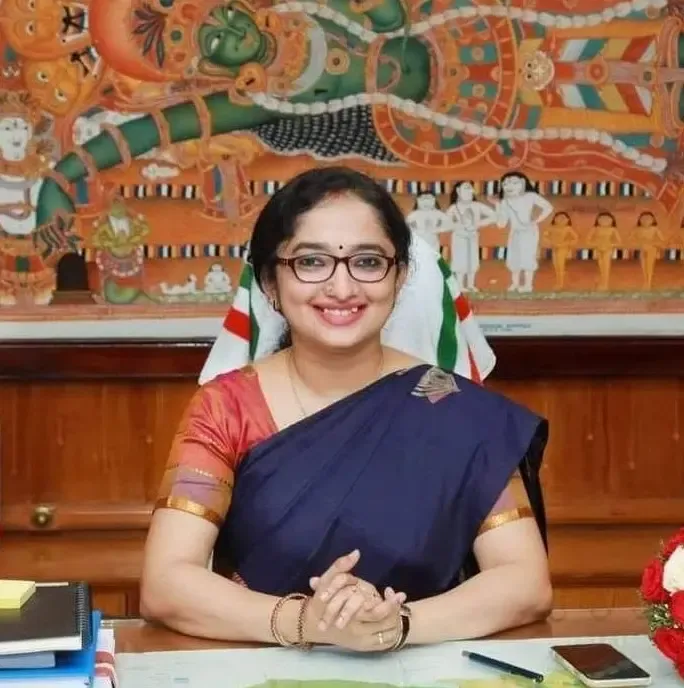
Anupama and Principal Director Dr Divya S.
Iyer has divided Kerala's waste-management drive.
Two parallel initiatives — 'Nirmalam' and the 'IC 100 Challenge' — are now running simultaneously for essentially the same goal.
Anupama has reportedly been excluded from the IC 100 Challenge, while Divya had earlier complained of being sidelined from Nirmalam.
Divya is married to K.S.
Sabarinathan , a former Congress MLA from Aruvikkara and current Thiruvananthapuram Corporation councillor, adding a political dimension to the dispute.
Political intervention is reportedly underway to demarcate responsibilities and restore coordination before the rift affects local bodies' implementation.
Kerala's ambitious waste-free Kerala mission is facing internal turbulence after a reported turf war between two senior women IAS officers in the state's Local Self-Government Department led to the launch of two parallel programmes for the same goal. The dispute, centred in Thiruvananthapuram, has raised serious concerns about administrative coordination and the effective use of public resources at a critical juncture for the state's zero-waste ambitions.
Two Campaigns, One Goal
The reported differences between Local Self-Government Department Secretary T.V. Anupama and Principal Director Dr Divya S. Iyer have resulted in two distinct waste-management initiatives running simultaneously. The 'Nirmalam' campaign, launched under Anupama's leadership, forms part of the government's 100-day action plan for a clean Kerala. A separate initiative — the 'IC 100 Challenge' — focuses on identifying garbage-vulnerable points, cleaning them, and maintaining them waste-free for 100 days.
According to sources, Divya had complained to the Local Self-Government Minister that she was not given adequate importance or a meaningful role in the Nirmalam programme, and raised concerns that major departmental decisions were being taken without consulting her. The subsequent rollout of the IC 100 Challenge is widely viewed in official circles as an attempt to address those concerns by carving out a distinct role for her.
A Department Divided at the Top
The unusual arrangement has, however, created a fresh complication: Anupama, the departmental secretary, has reportedly been kept out of the IC 100 Challenge entirely. This means both senior officers are now effectively operating parallel tracks on what is notionally the same mission. Observers within the department have flagged concerns about duplication of administrative resources, overlapping jurisdictions, and confused messaging to local bodies tasked with implementation.
Notably, this is not a minor operational disagreement — both campaigns draw on the same network of municipal bodies and panchayats, raising the risk of conflicting instructions reaching ground-level functionaries.
The Political Dimension
Divya's public profile carries a distinct political dimension. She is married to K.S. Sabarinathan, a former two-term Indian National Congress (Congress) MLA from Aruvikkara and currently a Thiruvananthapuram Corporation councillor. Sabarinathan is the son of late Congress leader and former Assembly Speaker G. Karthikeyan. The couple married in 2017, when Sabarinathan was a sitting MLA and Divya was serving as a sub-collector. Critics argue the political lineage adds a layer of sensitivity to any administrative dispute involving her.
Political Intervention and What Comes Next
The controversy has reportedly forced political intervention, with efforts underway to resolve the differences and clearly demarcate responsibilities between the two senior officers. The Local Self-Government Department itself has acknowledged the scale of the waste-management challenge and the need for coordinated action across various agencies and local governments.
The immediate question is whether the reported internal friction will delay or dilute coordination with local bodies at a time when the government has set an ambitious target of transforming Kerala into a zero-waste state. How quickly the political leadership can resolve the dispute — and whether a unified command structure can be restored — will determine whether Kerala's waste-free mission stays on course.
Point of View
A turf battle is almost inevitable. Kerala's Local Self-Government Department appears to have addressed a grievance by creating a new programme rather than by resolving the underlying ambiguity of roles. The result is a duplication of effort that the state can ill afford on a mission as operationally complex as achieving zero waste across thousands of local bodies. The political dimension — a senior IAS officer married to a former Opposition MLA — adds a layer of sensitivity that may complicate a clean administrative resolution. The government needs to publish a single, unified command structure for the waste-free mission before the confusion cascades to the panchayat level.
NationPress
7 Oct 2026
Frequently Asked Questions
What is the turf war in Kerala's Local Self-Government Department about?
It is a reported dispute between Department Secretary T.V. Anupama and Principal Director Dr Divya S. Iyer over roles and decision-making authority within the waste-free Kerala mission. The friction has led to two parallel clean-up programmes — Nirmalam and the IC 100 Challenge — being run simultaneously for the same objective.
What are the Nirmalam campaign and the IC 100 Challenge?
Nirmalam is a waste-management initiative launched under T.V. Anupama's leadership as part of the government's 100-day clean Kerala action plan. The IC 100 Challenge, separately rolled out, focuses on identifying garbage-vulnerable points, cleaning them, and keeping them waste-free for 100 days — a task widely seen as addressing Dr Divya S. Iyer's demand for a distinct role.
Why does Dr Divya S. Iyer's political connection matter in this context?
Dr Divya S. Iyer is married to K.S. Sabarinathan , a former two-term Congress MLA from Aruvikkara and a sitting Thiruvananthapuram Corporation councillor. Critics argue this political lineage adds sensitivity to any administrative dispute involving her, particularly when the ruling government and the Congress are on opposing sides.
How will this dispute affect Kerala's zero-waste mission?
The primary risk is confused implementation at the local body level, where panchayats and municipal councils may receive overlapping or conflicting instructions from two separate departmental tracks. Administrative resources could also be duplicated, slowing progress toward the government's target of making Kerala a zero-waste state.
What steps are being taken to resolve the dispute?
Political intervention has reportedly been initiated, with efforts underway to resolve differences between the two officers and clearly demarcate their responsibilities. However, no formal announcement of a unified command structure for the waste-free mission has been made as of yet.