India-born cheetah KGP12 delivers four cubs at Kuno; population hits 56
Synopsis
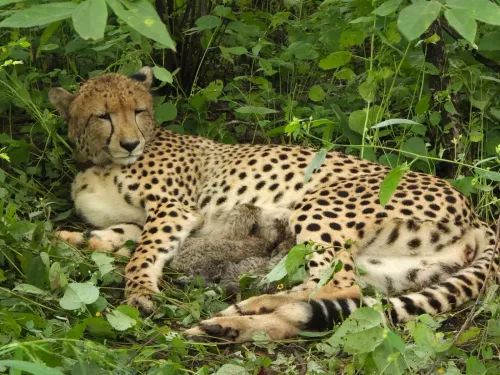
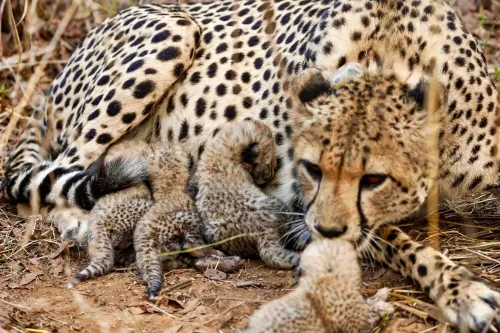
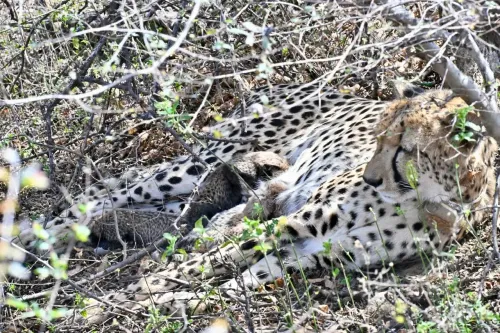
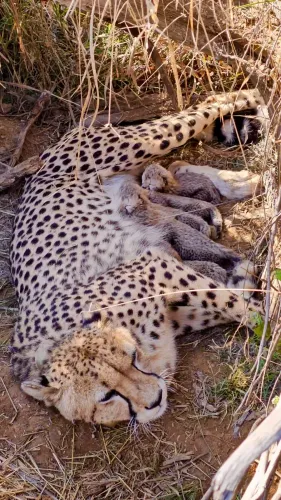
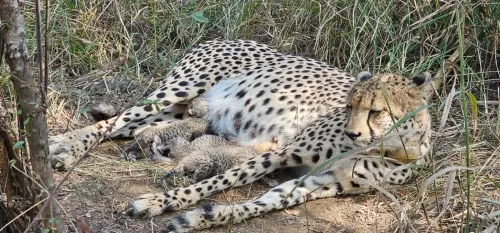
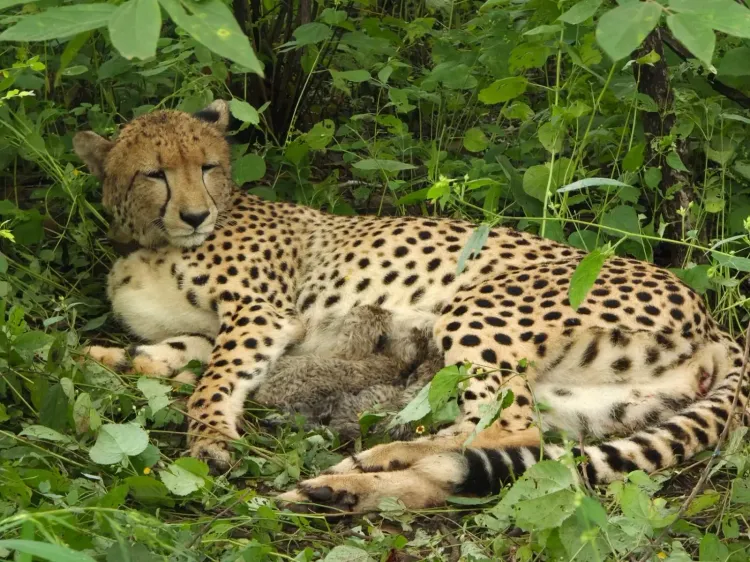
Just one day after Project Cheetah marked its fourth anniversary, an India-born cheetah named KGP12 — daughter of a South African-origin mother — delivered four cubs at Kuno National Park, taking India's cheetah count to 56. It is the first time an entirely India-born cheetah has reproduced successfully, marking the clearest sign yet that the species declared extinct here in 1952 could one day sustain itself.
Key Takeaways
KGP12 , an India-born female cheetah, delivered four cubs at Kuno National Park , Madhya Pradesh, on or around 18 September 2026 .
India's total cheetah population has risen from 52 to 56 ; Kuno now hosts 53 cheetahs.
The number of cheetahs born in India has reached 36 .
KGP12 was born in India in 2024 ; her mother Gamini arrived from South Africa in 2023 — making these cubs second-generation Indian-born cheetahs.
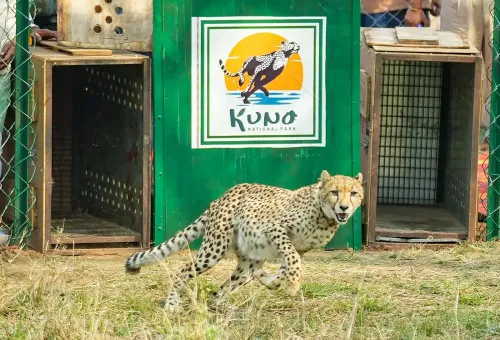
Project Cheetah was launched on 17 September 2022 by PM Narendra Modi , when the first eight cheetahs from Namibia were released at Kuno.
The cheetah was declared extinct in India in 1952 ; the new births strengthen hopes for a self-sustaining wild population.
An India-born female cheetah, KGP12, has given birth to four cubs at Kuno National Park in Madhya Pradesh, pushing the country's total cheetah count to 56 — a landmark moment for Project Cheetah that arrived just a day after the reintroduction programme marked its fourth anniversary on 17 September 2026. The development signals a crucial transition: the project is no longer merely sustaining imported animals but producing and raising generations born entirely on Indian soil.
Key Development
Union Environment, Forest and Climate Change Minister Bhupender Yadav announced the births, calling it 'a truly historic and joyous moment for Project Cheetah.' In a post on social media platform X, Minister Yadav wrote: 'Four years, four new lives — a beautiful symbol of hope, resilience and the growing success of cheetah conservation in India.' He also congratulated the entire Kuno and Project Cheetah team. Forest staff spotted the cubs and are currently monitoring them from a safe distance to minimise disturbance.
Who Is KGP12 and Why Her Birth Matters
KGP12 was born in India in 2024, making her a first-generation Indian-born cheetah. Her mother, Gamini, was among the female cheetahs brought from South Africa in February 2023. KGP12's successful delivery of four cubs now makes her a second-generation mother — a rare conservation milestone that demonstrates the reintroduced population is not just surviving but reproducing naturally under Indian ecological conditions. Of the 36 cheetahs now born in India, this cohort represents the first offspring of an entirely India-born parent.
Current Population and Distribution
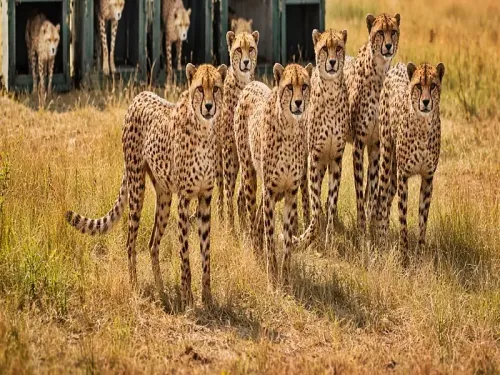
With the latest arrivals, India's cheetah population stands at 56, up from 52 prior to these births. Kuno National Park hosts 53 of them, while three remain at the Gandhi Sagar Wildlife Sanctuary, also in Madhya Pradesh. The total number of cheetahs born in India has now reached 36. Notably, cheetahs arrived in batches — first eight from Namibia in September 2022, then more from South Africa in 2023, and a further cohort from Botswana in 2026.
Project Cheetah: Four Years in Review
Project Cheetah was formally launched on 17 September 2022, when Prime Minister Narendra Modi released the first batch of cheetahs from Namibia at Kuno. The early phase was marked by adaptation challenges and some deaths; however, the programme has since moved into a phase of consolidation. Breeding females have become a consistent feature, and survival rates among Indian-born cubs have improved with each passing season. Officials and wildlife conservationists have welcomed the new births as a positive indicator of natural population growth.
Road Ahead for India's Cheetah Conservation
The cheetah had been declared extinct in India in 1952, making its return one of the most ambitious wildlife reintroduction efforts in the country's history. The birth of four cubs to an India-born mother strengthens the case for a self-sustaining population, though experts caution that long-term viability will require expanded habitat, genetic diversity management, and reduced human-wildlife conflict. The Kuno team continues intensive monitoring and habitat management to ensure the well-being of the new cubs and the broader, expanding population.
Point of View
Which is the only long-term test that matters. Yet the programme still faces structural questions: Kuno's carrying capacity, genetic bottlenecking from a small founding population, and the absence of a second large, established habitat. Four cubs are cause for genuine optimism, but sustained success will require the government to move as decisively on habitat expansion as it has on headline announcements.
NationPress
18 Sept 2026
Frequently Asked Questions
Which cheetah gave birth at Kuno National Park in September 2026?
India-born female cheetah KGP12 gave birth to four cubs at Kuno National Park in Madhya Pradesh around 18 September 2026. KGP12 was born in India in 2024, making her the first entirely India-born cheetah known to have reproduced successfully.
What is the current cheetah population in India after the new births?
India's cheetah population now stands at 56, up from 52 before the latest births. Kuno National Park hosts 53 of them, while three are at Gandhi Sagar Wildlife Sanctuary in Madhya Pradesh.
What is Project Cheetah and when was it launched?
Project Cheetah is India's ambitious wildlife reintroduction programme to bring the cheetah back to the country, where the species was declared extinct in 1952. It was launched on 17 September 2022 by Prime Minister Narendra Modi, who released the first eight cheetahs from Namibia at Kuno National Park.
Why is KGP12's delivery considered a milestone for cheetah conservation?
KGP12 is herself India-born (in 2024), the daughter of South African-origin cheetah Gamini. Her cubs are effectively second-generation Indian-born cheetahs, demonstrating that reintroduced animals are adapting and breeding across generations under Indian ecological conditions — a key marker of programme success.
How many cheetahs have been born in India so far?
A total of 36 cheetahs have now been born in India since the start of Project Cheetah. The latest four cubs from KGP12 are among the most significant, as they are offspring of an entirely India-born parent for the first time.