Project Cheetah: 5 cubs born at Kuno, India's cheetah count reaches 60
Synopsis
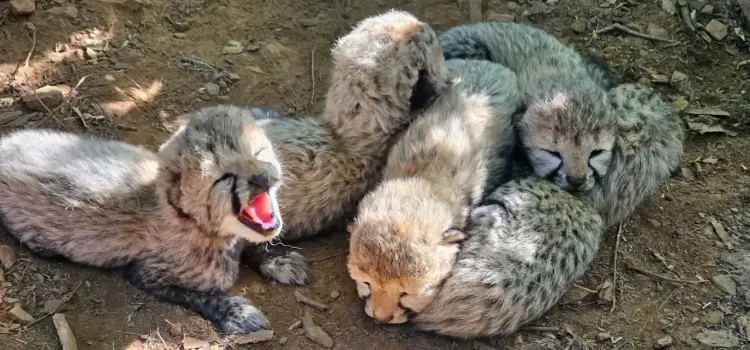
A 32-month-old India-born cheetah at Kuno National Park has given birth to five healthy cubs — the first of the Botswana genetic lineage on Indian soil — taking the national cheetah count to 60, with 41 now India-born. It is the clearest signal yet that Project Cheetah's bet on natural reproduction is paying off.
Key Takeaways
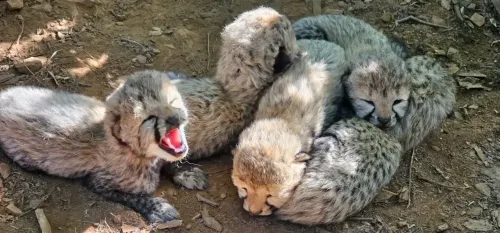
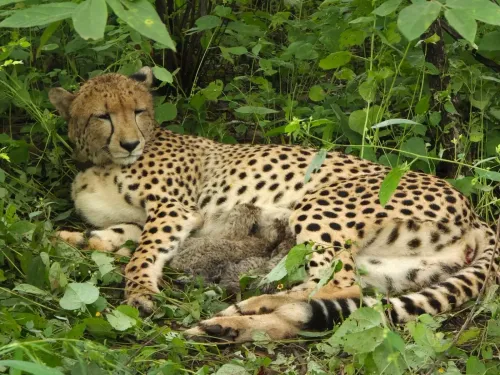
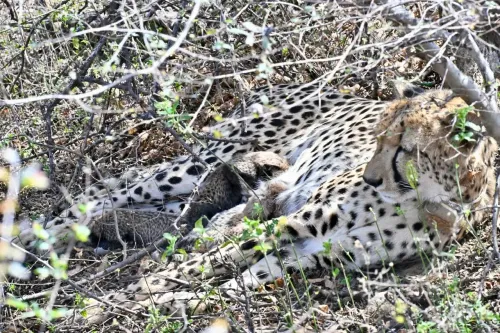
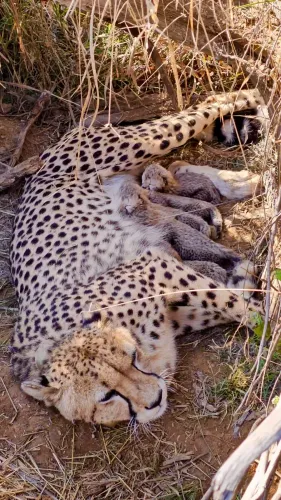
Female cheetah KJP21 gave birth to five healthy cubs at Kuno National Park on 5 October 2026 .
India's total cheetah population now stands at 60 , including 41 India-born cheetahs .
KJP21 is the third India-born female to reproduce, after Mukhi and KGP12 .
The cubs introduce the Botswana genetic lineage to India for the first time, as their father is a Botswanan male cheetah.
Project Cheetah began with 20 cheetahs from Namibia and South Africa, later supplemented by 9 from Botswana .
Expansion plans include Gandhisagar Wildlife Sanctuary and the Banni grasslands in Gujarat .
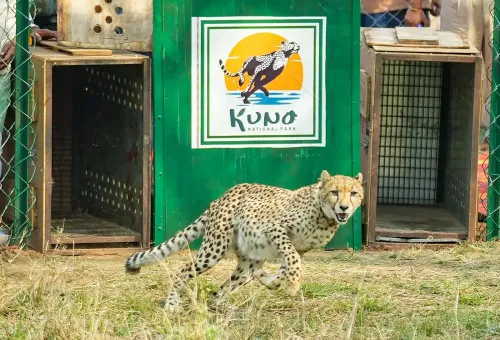
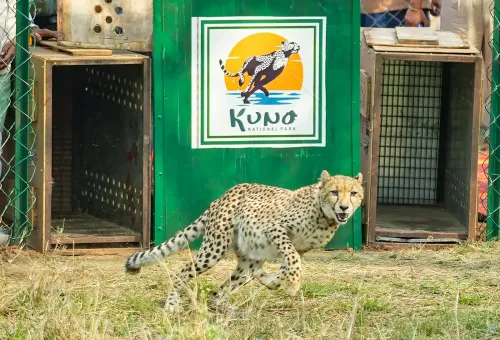
Kuno National Park in Madhya Pradesh recorded a landmark moment on Monday, 5 October 2026, as a 32-month-old India-born female cheetah, identified as KJP21, gave birth to five healthy cubs, pushing India's total cheetah population to 60 — of which 41 are now India-born. Union Minister for Environment, Forest and Climate Change Bhupender Yadav hailed the development as a significant milestone in the revival of the species on Indian soil.
A Historic Birth and a New Genetic Lineage
KJP21 becomes the third India-born female cheetah to successfully reproduce under Project Cheetah, following Mukhi and KGP12. Notably, the five newborns mark the beginning of the Botswana lineage in India, as their father is a Botswanan male cheetah — adding a new genetic strand to the country's growing cheetah population. Yadav described this as 'another generation of cheetahs born on Indian soil, adding a new chapter to the story of cheetah reintroduction in India.'
What Project Cheetah Has Achieved
Launched to reverse the cheetah's extinction in India, Project Cheetah began with the translocation of a founder population of 20 cheetahs from Namibia and South Africa, later supplemented by 9 cheetahs from Botswana through coordinated international cooperation and scientific planning. According to the government, survival rates of introduced individuals and cubs are in line with — and in certain cases better than — global benchmarks, demonstrating the effectiveness of scientific management and monitoring protocols.
Expanding the Landscape
Kuno National Park serves as the primary site for population establishment, while Gandhisagar Wildlife Sanctuary has been developed as an additional habitat to support further expansion. Both sites are part of a larger interconnected landscape across central India designed to facilitate natural dispersal and genetic exchange. Preparatory work is also underway to extend the project to new areas, including the Banni grasslands in Gujarat, where habitat readiness and prey augmentation measures have reportedly reached satisfactory levels.
Scientific Indicators and What Comes Next
Scientific monitoring indicates that cheetahs are adapting well to Indian conditions, with stable ranging behaviour, effective prey utilisation, and no significant physiological stress observed across different management settings. Minister Yadav extended congratulations to veterinarians, field staff, managers, and all personnel associated with the project for their dedication and commitment. With 41 of the 60 cheetahs now India-born, the programme's long-term objective of establishing a self-sustaining wild population is gaining measurable traction.
Point of View
But the fact that 41 of those animals were born here. Natural reproduction in a reintroduction programme is notoriously difficult to sustain, and three consecutive India-born females successfully giving birth suggests the project has cleared its hardest biological hurdle. The introduction of Botswana genetics is also significant: genetic diversity is the silent killer of small, isolated wildlife populations, and this lineage expansion is sound science, not optics. The real test now shifts to landscape connectivity — whether Kuno, Gandhisagar, and Banni can function as a genuine metapopulation rather than isolated pockets, which will determine whether these 60 animals become a lasting wild presence or a managed reserve curiosity.
NationPress
5 Oct 2026
Frequently Asked Questions
How many cheetahs are there in India now?
India's total cheetah population has reached 60 following the birth of five new cubs at Kuno National Park on 5 October 2026. Of these, 41 are India-born cheetahs, reflecting the programme's growing reproductive success.
What is Project Cheetah and when did it begin?
Project Cheetah is India's initiative to reintroduce the cheetah after its extinction in the country. It was launched with the translocation of 20 founder cheetahs from Namibia and South Africa, later supplemented by 9 cheetahs from Botswana through international scientific cooperation.
Who is KJP21 and why is this birth significant?
KJP21 is a 32-month-old India-born female cheetah at Kuno National Park who gave birth to five healthy cubs on 5 October 2026. She is the third India-born female to reproduce under Project Cheetah, and her cubs are the first to carry the Botswana genetic lineage on Indian soil.
Where will India's cheetah population expand next?
Beyond Kuno National Park, Gandhisagar Wildlife Sanctuary in Madhya Pradesh has been prepared as an additional habitat. Preparatory work is also underway for the Banni grasslands in Gujarat, where habitat readiness and prey augmentation have reportedly reached satisfactory levels.
How has the government assessed the success of Project Cheetah so far?
According to the government, survival rates of introduced cheetahs and cubs are in line with, and in some cases better than, global benchmarks. Scientific monitoring also shows stable ranging behaviour, effective prey utilisation, and no significant physiological stress across management settings.