Priyank Kharge accuses Centre of using CBI, ED to destabilise Karnataka govt
Synopsis
Karnataka Home Minister Priyank Kharge has gone on the offensive, accusing the Centre of deploying the CBI, ED, and sting operations to unseat the Congress government — and simultaneously demanding the resignation of Chief Election Commissioner Gyanesh Kumar over alleged misuse of Form-7 electoral deletions to falsely declare living voters dead. The twin broadside puts both central agencies and the poll body under sharp political scrutiny.
Key Takeaways
Karnataka Home Minister Priyank Kharge accused the Centre of using the CBI , Income Tax Department , and Enforcement Directorate to destabilise the state's Congress government on 8 October 2026 .
Shivakumar had earlier expressed concern at a Cabinet meeting that BJP and JD(S) could conduct sting operations against ministers.
Kharge alleged BJP leaders filed false Form-7 applications under the Special Intensive Revision (SIR) to delete living voters from electoral rolls, an offence carrying up to one year's imprisonment .
He demanded the resignation of Chief Election Commissioner Gyanesh Kumar and called for an open press conference on the SIR controversy.
On the KPSC recruitment scam, Kharge claimed the investigation would expose the commission's chairman and certain BJP leaders, citing documentary evidence.
He urged Union Minister H.D.
Kumaraswamy to 'maintain dignity' and refrain from making evidence-free allegations.
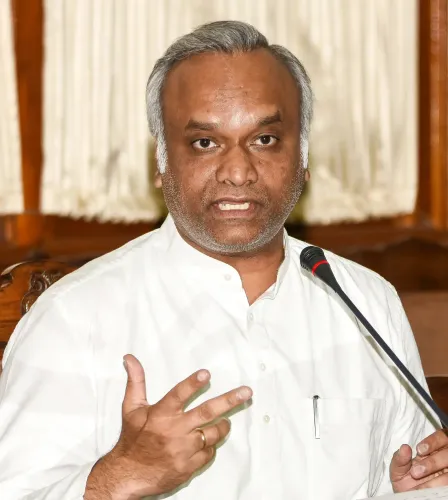
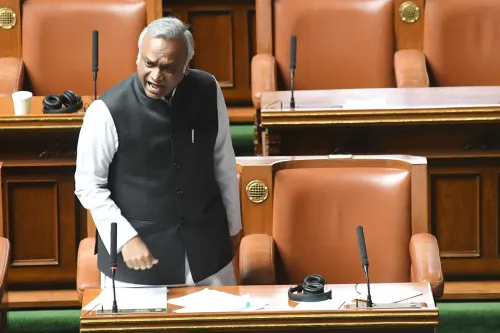
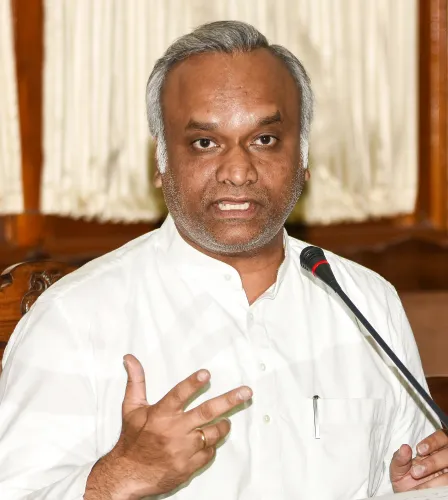
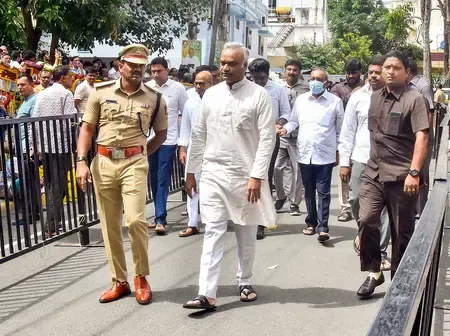
Karnataka Home Minister Priyank Kharge on Thursday, 8 October 2026, publicly accused the Centre of orchestrating a systematic campaign to destabilise the Congress government in Karnataka, alleging deployment of central agencies — including the Central Bureau of Investigation (CBI), the Income Tax Department, and the Enforcement Directorate (ED) — alongside sting operations. Kharge claimed such methods formed part of the Bharatiya Janata Party (BJP)'s Standard Operating Procedure against Opposition-ruled states.
Why the Sting Operation Concern Surfaced
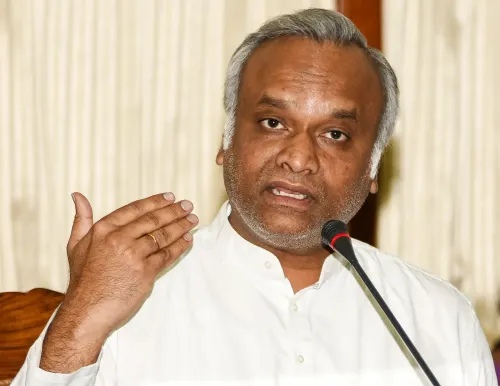
The allegations came in direct response to questions about whether Congress legislators and ministers feared being targeted through sting operations. The issue gained traction after Chief Minister D.K. Shivakumar reportedly expressed apprehension at a Cabinet meeting that the BJP and Janata Dal (Secular) (JD(S)) could conduct covert sting operations against his ministers. Kharge, speaking to reporters in Bengaluru, contended that the Centre's desperation to remove the Karnataka government stemmed from the BJP's own 'inefficient and ineffective leadership' in the state.
He alleged that similar tactics had previously been employed in Madhya Pradesh, Assam, Maharashtra, and Goa, though he maintained that neither he nor his colleagues had engaged in any wrongdoing.
Electoral Roll Revision Row and Form-7 Allegations
Kharge also trained his sights on the Special Intensive Revision (SIR) of electoral rolls, alleging misuse of Form-7 applications. He claimed that BJP leaders were submitting false Form-7 applications to seek the deletion of voters' names by falsely declaring living persons as deceased. He said some affected citizens had already approached authorities to confirm they were alive and demanded that criminal cases be registered against those who filed incorrect declarations.
Notably, Kharge pointed out that applicants submitting Form-7 are legally required to certify that the information is accurate, and face up to one year of imprisonment or a fine if the declaration is found to be false. He also referenced reports of displacement notices being served on BJP National General Secretary (Organisation) B.L. Santhosh, suggesting the SIR exercise had raised concerns even among prominent political figures.
He questioned how pre-printed Form-7 applications — already containing voters' names, Electoral Photo Identity Card (EPIC) numbers, addresses, and reasons for deletion — were being generated across the country, arguing that access to such detailed, machine-readable electoral data was not ordinarily available to booth-level functionaries.
Demand for Chief Election Commissioner's Resignation
Kharge demanded the resignation of Chief Election Commissioner Gyanesh Kumar, alleging that the SIR process was designed to protect the ruling dispensation at the Centre. He questioned why Kumar had not addressed the media directly on the controversy, noting that the CEC had previously held press conferences to criticise the Congress. He called for an open press conference where Kumar could answer questions about the electoral revision exercise.
Responding to BJP charges that the Congress was spreading misinformation, Kharge asked why the party was defending the Election Commission of India (ECI) rather than allowing the poll body to speak for itself.
KPSC Scam and Political Exchanges
On the arrests in the Karnataka Public Service Commission (KPSC) recruitment scam, Kharge asserted that the ongoing investigation would expose the involvement of the commission's chairman and certain BJP leaders. He said his allegations were grounded in documentary evidence accumulated over the past decade.
Responding to Union Minister H.D. Kumaraswamy's public allegations against him, Kharge asked the former Karnataka Chief Minister to 'maintain dignity' and exercise restraint in making claims without evidence, given his standing as a Union Minister and former Chief Minister.
On a proposed protest against the Chief Election Commissioner in Bengaluru, Kharge, speaking in his capacity as Home Minister, affirmed that anyone wishing to demonstrate peacefully could submit an application and would receive the necessary protection — underscoring that his role was to ensure a conducive environment for lawful demonstrations.
What Happens Next
The BJP has yet to formally respond to the specific charges raised on Thursday. The electoral roll controversy is expected to intensify as civil society groups and Opposition parties push for greater transparency from the ECI. The KPSC investigation remains ongoing, with Kharge signalling that further disclosures are imminent. How the Centre responds — and whether the Election Commission addresses the Form-7 allegations publicly — will shape the political temperature in Karnataka in the weeks ahead.
Point of View
The electoral roll controversy, and the KPSC scam into a single BJP-accountability narrative ahead of what looks like a prolonged political war in Karnataka. The Form-7 allegation is the most legally consequential thread: if pre-printed deletion applications with machine-readable voter data are circulating among party workers, that raises genuine questions about data access that the Election Commission cannot answer through silence. The Congress, however, faces its own credibility test — Chief Minister Shivakumar's cabinet-level sting-operation fears, if not followed up with evidence, risk looking like preemptive deflection rather than substantiated whistleblowing.
NationPress
8 Oct 2026
Frequently Asked Questions
What did Priyank Kharge allege against the Centre on 8 October?
Karnataka Home Minister Priyank Kharge alleged that the Centre was attempting to destabilise the Congress government in Karnataka by deploying the CBI, Income Tax Department, and Enforcement Directorate, and by facilitating sting operations. He called these tactics part of the BJP's Standard Operating Procedure against Opposition-ruled states.
What is the Form-7 electoral roll controversy Kharge raised?
Kharge alleged that BJP workers were submitting pre-printed Form-7 applications under the Special Intensive Revision (SIR) exercise to falsely declare living voters as deceased and seek their deletion from electoral rolls. He noted that making a false declaration on Form-7 carries a penalty of up to one year's imprisonment or a fine, and demanded cases be registered against those responsible.
Why did Kharge demand the resignation of Chief Election Commissioner Gyanesh Kumar?
Kharge alleged that the SIR process was being used to protect the ruling dispensation at the Centre and that Kumar had failed to publicly address the controversy. He argued that the CEC, who had previously held press conferences critical of the Congress, should now hold an open briefing to answer questions about the electoral revision exercise.
What is the KPSC scam and what did Kharge say about it?
The Karnataka Public Service Commission (KPSC) recruitment scam involves alleged irregularities in the commission's hiring process, leading to recent arrests. Kharge asserted that the investigation would expose the KPSC chairman and certain BJP leaders, and said his allegations were backed by documentary evidence.
Why did Chief Minister Shivakumar raise the sting operation concern at a Cabinet meeting?
Chief Minister D.K. Shivakumar reportedly expressed apprehension at a Cabinet meeting that the BJP and JD(S) could target Congress ministers through covert sting operations. Kharge, responding to media questions on the matter, said the Centre's motivation was to dislodge a Congress government it saw as politically inconvenient.