Did Kharge Pay Tribute to Field Marshal K. M. Cariappa on His Birth Anniversary?
Synopsis
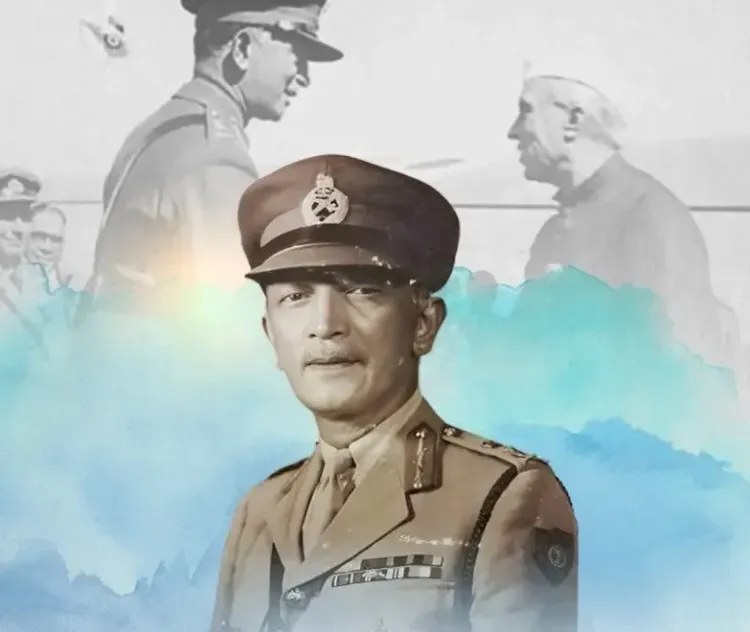
On January 28, Congress President Mallikarjun Kharge pays heartfelt tribute to Field Marshal K. M. Cariappa on his birth anniversary. Highlighting his legacy of courage and leadership, the Congress party honors this monumental figure in Indian military history, whose contributions continue to inspire future generations.
Key Takeaways
Mallikarjun Kharge pays tribute to Field Marshal K.
Cariappa on his birth anniversary.
Cariappa was the first Indian Commander-in-Chief of the Indian Army.
His military career spanned over three decades, including the 1947 Indo-Pakistan War .
He established significant military units that promoted inclusivity.
Cariappa's legacy inspires future generations of military leaders.
New Delhi, Jan 28 (NationPress) Congress President Mallikarjun Kharge on Wednesday paid his heartfelt respects to Field Marshal K. M. Cariappa on the occasion of his birth anniversary, characterizing him as a monumental national figure whose life epitomized courage, determination, and valour.
Kharge took to the social media platform X to pay tribute to the esteemed former Army chief.
“On the birth anniversary of Field Marshal K. M. Cariappa, we express our respectful salutations to a monumental national figure whose life was a testament to courage, determination, and valour. Throughout his illustrious military career spanning three decades, he commanded Indian forces during the 1947 Indo-Pakistan War and made history as the first Indian to serve as Commander-in-Chief of the Indian Army in 1949,” Kharge remarked, reflecting on his invaluable contributions.
“May his exemplary service continue to motivate us all, and may we eternally remember and honor his legacy,” he further added.
The Congress party also commemorated Field Marshal Cariappa and his legendary acts of bravery.
“We pay tribute to Field Marshal K. M. Cariappa, the first Indian Commander-in-Chief of the Indian Army, whose courage and leadership remain etched in our memories. He is a symbol of courage, integrity, and national pride. Jai Hind,” the party stated in a post.
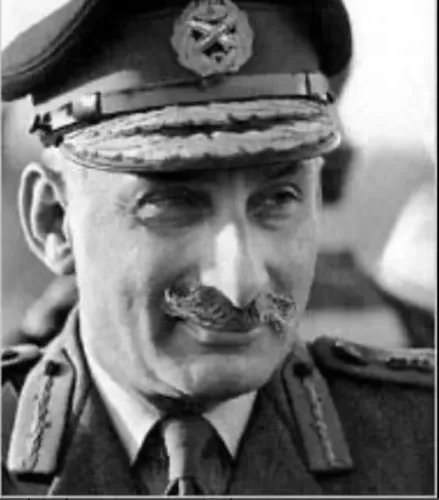
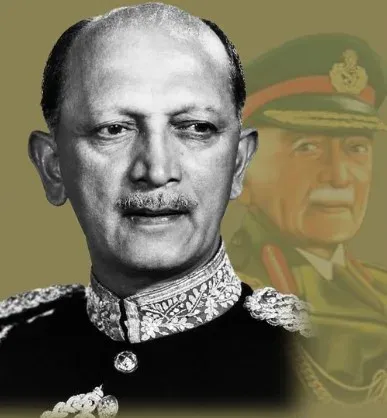
Kodandera Madappa Cariappa was born on January 28, 1899, in Shanivarsanthe in the Coorg district of the former Mysore state, now recognized as Kodagu district in Karnataka. Cariappa, a distinguished Indian military officer, later became the first Chief of Staff of the Indian Army following India's liberation from British rule.
Cariappa underwent military training during World War I from 1914 to 1918, although he did not engage in active service during that period. In 1919, amid growing demands from Indian leaders for the inclusion of Indian officers in the British Indian Army, Cariappa was chosen as part of the first group of Indian candidates for officer training. He was sent to Indore for training and subsequently commissioned into the Carnatic Infantry in Bombay, now Mumbai.
His military career progressed steadily. Cariappa ascended to the rank of lieutenant in 1923, captain in 1927, major in 1938, lieutenant colonel in 1942, and brigadier in 1946. During British rule, he held several significant positions, including service in the Middle East from 1941 to 1942 and in Burma, now Myanmar, from 1943 to 1944. In 1942, he became the first Indian officer to command a unit. By the end of World War II, he was inducted into the Order of the British Empire for his service.
At the time of the partition of the Indian subcontinent in 1947, just before independence, Cariappa played a pivotal role in managing the complex task of distributing military assets between the newly established nations of India and Pakistan. After independence, he was appointed as the Deputy Chief of the General Staff with the rank of major general. He was later promoted to lieutenant general and took command of the Eastern Army in November 1947. In January 1948, he became the Army Commander of the Delhi and East Punjab Command, which is now known as the Western Command.
In January 1949, Cariappa was appointed as the first Indian Commander-in-Chief of the Indian Army, succeeding British General Sir Roy Bucher. As Army chief, he was tasked with the significant responsibility of transforming the colonial-era force into a truly national army.
During this transformative period, he established two vital units—the Guards Brigade in 1949, later referred to as the Brigade of the Guards, and the Parachute Regiment in 1952. These units were groundbreaking in their recruitment practices, allowing soldiers from all castes and classes. In recognition of his leadership, he was awarded the Legion of Merit, a U.S. military decoration, by then President Harry S. Truman in 1949.
Point of View
It is imperative to recognize the significance of honoring figures like Field Marshal K. M. Cariappa, who played a pivotal role in shaping India's military history. His leadership and unwavering dedication serve as a reminder of the values we should uphold as a nation. The tribute from Congress President Mallikarjun Kharge reflects the collective respect for such monumental figures in our history, ensuring that their legacies continue to inspire future generations.
NationPress
20 Sept 2026
Frequently Asked Questions
Who was Field Marshal K. M. Cariappa?
Field Marshal K. M. Cariappa was the first Indian Commander-in-Chief of the Indian Army and played a crucial role during India's independence.
What did Mallikarjun Kharge say about Cariappa?
Mallikarjun Kharge described Cariappa as a towering national figure whose life embodied courage, determination, and valour.
When was K. M. Cariappa born?
K. M. Cariappa was born on January 28, 1899.
What was Cariappa's role during the 1947 Indo-Pakistan War?
Cariappa led the Indian forces during the 1947 Indo-Pakistan War, showcasing his military leadership.
What is Cariappa's legacy?
Cariappa's legacy includes being a symbol of courage and integrity and his efforts in transforming the Indian Army post-independence.