Khattar addresses CPWD's 172nd Annual Day, pitches SANKALP vision
Synopsis
Union Minister Manohar Lal Khattar addressed CPWD's 172nd Annual Day at Vigyan Bhawan on 12 July 2026, calling on the department to embrace innovation, sustainable construction, and transparency under a new SANKALP framework aligned with PM Modi's Viksit Bharat vision.
Key Takeaways
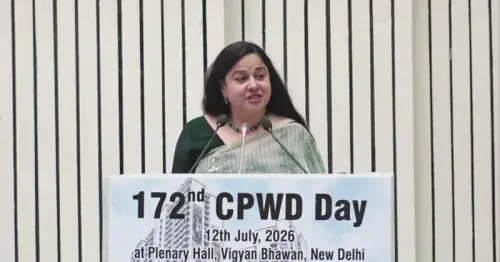
Union Minister Manohar Lal Khattar addressed CPWD's 172nd Annual Day at Vigyan Bhawan, New Delhi on 12 July 2026 .
CPWD has been India's primary central public works agency since 1854 , executing iconic government buildings and infrastructure projects.
Khattar introduced the SANKALP acronym — Speed, Accessibility, Nek Niyat, Kartavya Nishtha, Adoption of Technology, Lokhit, and Pardarshita — as a guiding framework for the department.
The minister linked CPWD's mandate to PM Modi's Viksit Bharat vision for India to achieve developed-nation status by 2047 .
Key priorities cited include advanced technology adoption, sustainable construction practices , and ensuring transparency and accountability at every project stage.
Policy context includes the National Infrastructure Pipeline (2019) and the PM Gati Shakti National Master Plan (2021) , both of which have heightened expectations from CPWD.
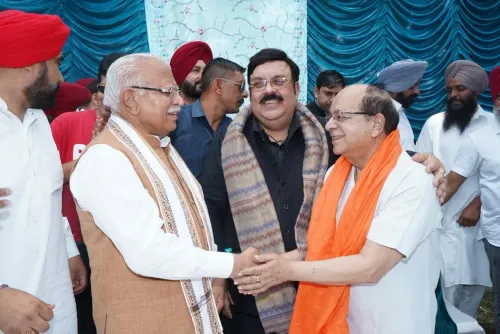
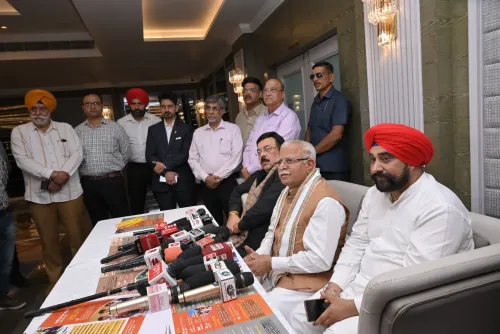
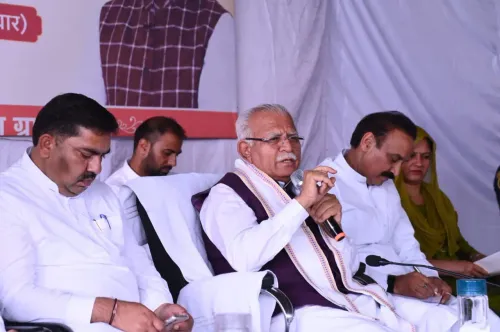
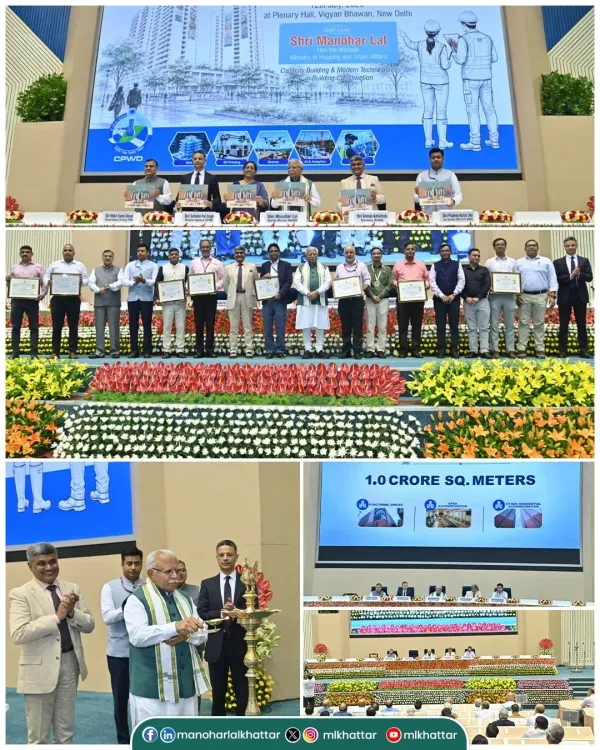
Union Power Minister Manohar Lal Khattar addressed the 172nd Annual Day celebrations of the Central Public Works Department (CPWD) at Vigyan Bhawan, New Delhi, on Sunday, 12 July 2026, calling on the organisation to lead India's infrastructure growth with innovation, technology, and transparency.
Context
Khattar, who holds the charge of Housing and Urban Affairs in addition to Power, used the occasion to outline a forward-looking mandate for CPWD — the central government's primary agency for designing, constructing, and maintaining public buildings and infrastructure. Addressing the gathering, he underscored that 'for over a century and a half, CPWD has been at the forefront of India's infrastructure journey, creating institutions, public assets, and iconic landmarks that have contributed significantly to the nation's development.'
The event was held at Vigyan Bhawan, New Delhi's premier convention centre that itself stands as one of CPWD's landmark constructions, lending symbolic weight to the occasion.
Policy Backdrop
CPWD traces its institutional lineage to 1854, when it was established as the Public Works Department under British India, and was reorganised post-independence into the Central Public Works Department. Over the decades it has executed some of the most consequential public construction projects in the country, from Parliament buildings to central government offices and residential complexes.
The minister's address comes against the backdrop of two major policy frameworks: the National Infrastructure Pipeline, announced in 2019, which set multi-year targets for central and state infrastructure spending, and the PM Gati Shakti National Master Plan, launched in 2021, which integrated planning across ministries to accelerate multimodal infrastructure delivery. Both frameworks have placed renewed demands on CPWD for faster, more transparent, and technology-driven project execution.
Khattar anchored his address in Prime Minister Narendra Modi's Viksit Bharat [Developed India] vision — the national roadmap targeting developed-nation status for India by 2047. He framed CPWD's role as integral to achieving that ambition, stating that 'as India's infrastructure aspirations continue to grow, CPWD has an even greater responsibility to lead with innovation, embrace advanced technologies, adopt sustainable construction practices, and deliver projects that uphold the highest standards of quality, durability and structural integrity.'
The SANKALP Framework
The minister introduced a guiding framework for the department encapsulated in the acronym SANKALP — standing for Speed, Accessibility, Nek Niyat (Honest Intent), Kartavya Nishtha (Duty and Dedication), Adoption of Technology, Lokhit (Public Welfare), and Pardarshita (Transparency). He called on CPWD officials and engineers to 'move forward with the spirit of SANKALP to create infrastructure that is citizen-centric and stands the test of time.'
The framework reflects a broader pattern in the current government's communication strategy — using structured, value-based acronyms to translate policy intent into operational culture within central agencies. Emphasis on transparency and accountability at every stage is particularly notable given longstanding scrutiny of public works departments over cost overruns and project delays.
Stakeholders and Impact
CPWD's mandate spans thousands of central government facilities across India, making its operational efficiency directly relevant to a wide range of stakeholders — from central ministries and defence establishments to ordinary citizens who use government hospitals, post offices, and public buildings. The construction sector, including contractors, material suppliers, and engineering consultancies that work with the department, will be watching for any formal guidelines or procurement reforms that may follow from the minister's stated priorities.
Khattar's call for sustainable construction practices also signals alignment with India's international climate commitments, as the built environment is a significant contributor to carbon emissions. Any structural shift in CPWD's material and design standards could have ripple effects across the broader public infrastructure ecosystem.
What's Next
The policy directions articulated at the 172nd Annual Day are expected to feed into CPWD's operational planning for the coming year. Observers will watch for formal circulars or guidelines codifying the SANKALP principles, particularly around technology adoption and sustainability standards. With the next Union Budget cycle approaching, any increase in capital allocation for central public works — and the accountability mechanisms attached to it — will be a key indicator of how seriously these commitments are translated into institutional practice.
Point of View
With its explicit emphasis on transparency and technology, reflects the ruling establishment's consistent effort to rebrand legacy bureaucratic departments as modern, citizen-centric institutions — a narrative that dovetails with the Viksit Bharat 2047 arc. However, the real test will be whether these articulated principles produce measurable changes in CPWD's project delivery timelines and accountability mechanisms, or remain aspirational rhetoric. With the budget cycle approaching, any capital allocation tied to enforceable performance benchmarks will be the clearest indicator of genuine intent.
NationPress
12 Jul 2026
Frequently Asked Questions
What is CPWD and why is its Annual Day significant?
CPWD, the Central Public Works Department, is the Indian government's primary agency for designing, building, and maintaining central government infrastructure. Its Annual Day marks the organisation's founding and is typically used by the overseeing minister to set policy direction for the year ahead.
What does the SANKALP framework stand for?
SANKALP stands for Speed, Accessibility, Nek Niyat (Honest Intent), Kartavya Nishtha (Duty and Dedication), Adoption of Technology, Lokhit (Public Welfare), and Pardarshita (Transparency) — a guiding framework articulated by Minister Khattar for CPWD's functioning.
What is the Viksit Bharat vision that Khattar referenced?
Viksit Bharat is Prime Minister Narendra Modi's national vision for India to achieve developed-nation status by 2047, the centenary of independence, through sustained growth in infrastructure, technology, and governance.
Where was CPWD's 172nd Annual Day held?
The 172nd Annual Day celebrations of CPWD were held at Vigyan Bhawan in New Delhi on 12 July 2026.
What policy frameworks underpin India's current public infrastructure push?
Two key frameworks shape the current push: the National Infrastructure Pipeline announced in 2019, which set multi-year spending targets, and the PM Gati Shakti National Master Plan launched in 2021, which integrates planning across ministries for faster multimodal infrastructure delivery.